The two-week notice is an autopsy, not a diagnosis. By the time it lands on your desk, the decision was made months ago, probably the same week a recruiter slid into that employee’s LinkedIn inbox and found an open door. You’ve already lost the institutional knowledge, the client relationships, the onboarding investment. All that’s left is the paperwork.
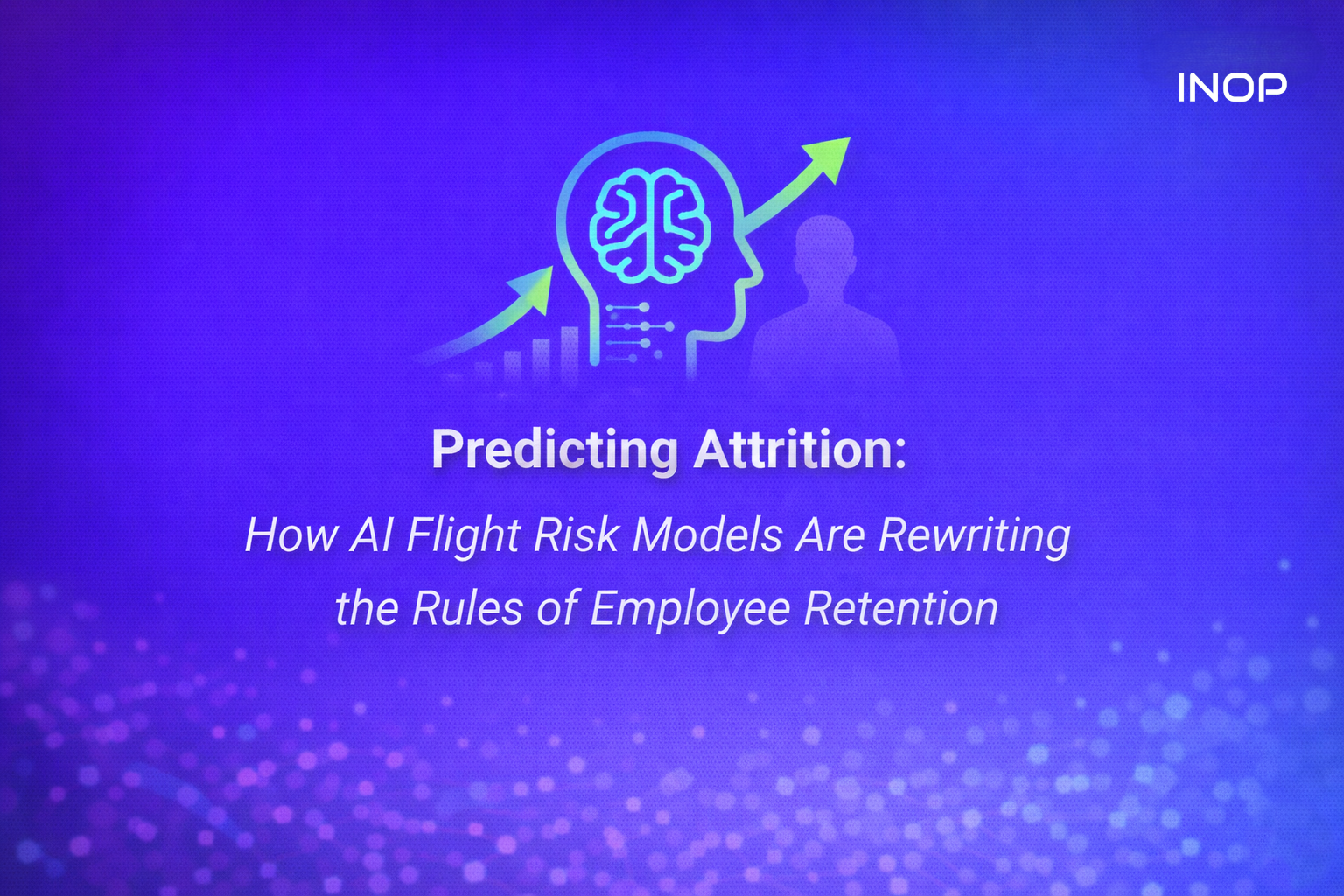
This is the brutal reality of reactive retention. Annual engagement surveys, quarterly pulse checks, exit interviews, these are all lagging indicators. They tell you what already went wrong. Predicting attrition before it happens requires a fundamentally different approach: one built on behavioral data, structural signals, and AI that can spot the patterns human managers consistently miss.
The shift is already underway. Modern HR functions are moving from “why did they leave?” to “what told us they were going to?” Predictive HR analytics is the mechanism making that possible, and organizations that adopt it are building a measurable competitive advantage in talent retention.
Why Gut Feeling and Pulse Surveys Fail
Let’s start with an uncomfortable truth: your most at-risk employees are the least likely to tell you they’re leaving.
Employees who have mentally checked out disengage from surveys first. They skip them, rush through them, or give deliberately neutral answers to avoid triggering a conversation they’re not ready to have. The result? Your survey data looks stable right up until your highest performers start walking out the door.
The scale of disengagement driving these departures is quantified in the Deloitte 2025 Gen Z and Millennial Survey, which found that 42% of Gen Z respondents struggle to perform to the best of their ability due to burnout, and 35% feel mentally distanced from their work. These are not edge cases. They are structural signals that show up in behavioral data long before a resignation letter does, and they are precisely what AI flight risk models are built to detect before the damage is irreversible.
The manager layer isn’t more reliable. Even your best people leaders carry subjective biases, they rate employees they like as “highly engaged” regardless of behavioral shifts. In hybrid and remote environments, the visibility gap gets worse. A manager might go two weeks without a meaningful one-on-one with a direct report. By the time they notice something is off, that employee has already had three interviews with a competitor.
Gut feeling and pulse surveys share the same fatal flaw: they depend on someone noticing. AI flight risk models don’t wait for anyone to notice.
The Anatomy of an AI Flight Risk Signal
Predictive attrition modeling is one of the four ways AI contributes directly to workforce optimization in 2026: it converts a lagging indicator, the resignation letter, into a leading one, giving HR 60 to 90 days of intervention time before replacement hiring becomes the only option. What makes it an optimization tool rather than just a retention tool is what happens when the retention decision is weighed against redeployment, reskilling, or succession planning as alternatives to backfill hiring.
AI doesn’t read minds. It reads patterns. Specifically, it reads the patterns left behind by every employee who has ever quit, and then scans your current workforce for the same signatures.
The data feeding these models falls into three categories:
1. Career Trajectory and Structural Data
This is the baseline layer, the hard numbers that define whether an employee’s career is stalling relative to their peers.
- Time in role vs. company average for promotion: If the average tenure before a promotion at your company is 18 months and someone has been in their seat for 30, that’s a structural signal.
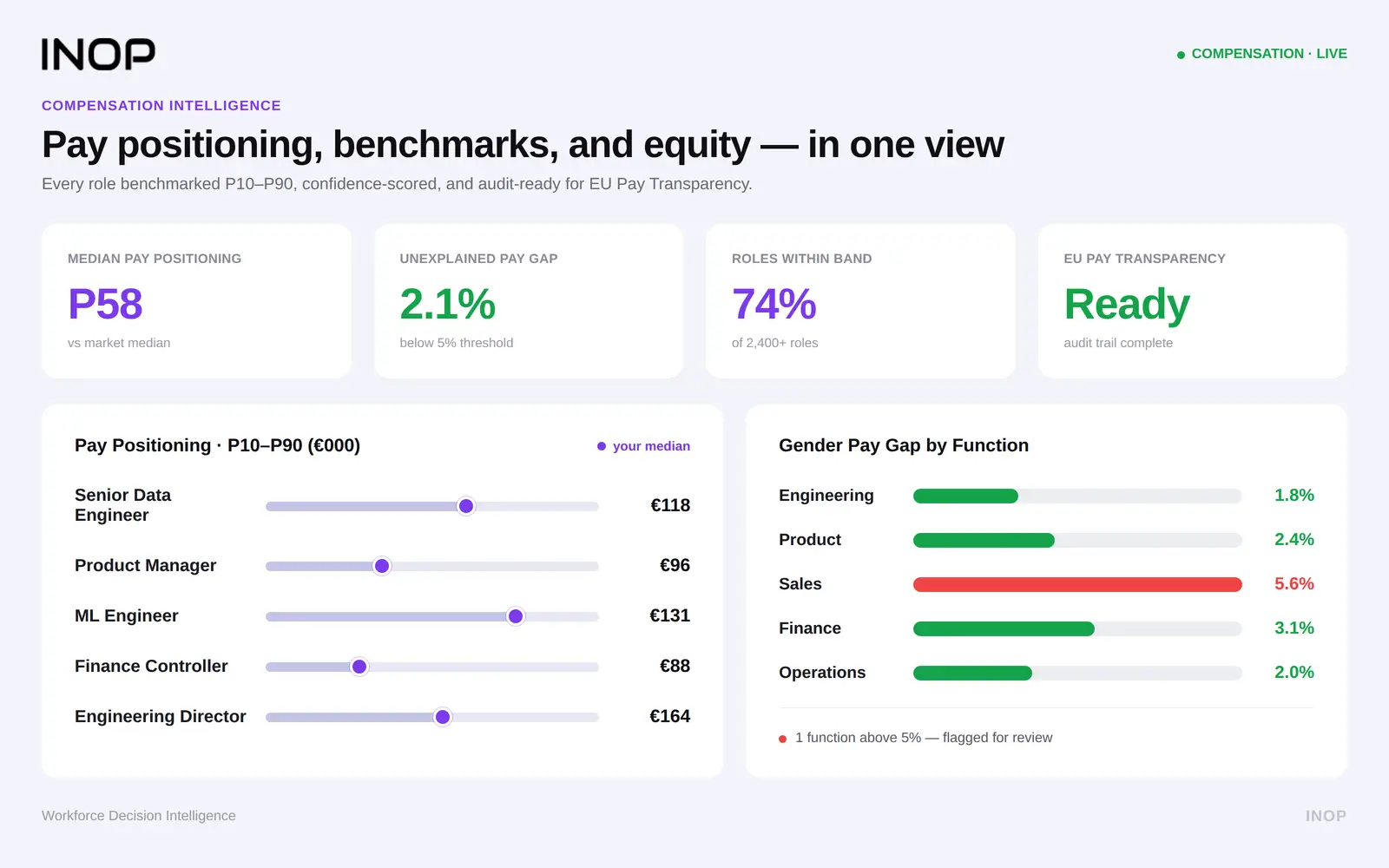
- Compa-ratio vs. real-time market benchmarks: If an employee is being paid at 88% of current market rate for their skill set, a recruiter offering market rate is not competing with you, they’re offering a raise. The model flags this gap before it becomes a resignation.
2. Engagement and Collaboration Metadata, The “Digital Exhaust”
This is where the model gets sophisticated, and where it’s important to be precise: AI flight risk models analyze metadata, not message content. The system is not reading emails or Slack messages. It’s observing behavioral patterns at scale.
What does that look like in practice?
- Sudden drops in cross-departmental collaboration: An employee who previously attended four cross-functional meetings a week and now attends one is displaying a measurable withdrawal pattern.
- Shifts in after-hours login activity: This is counterintuitive, but a spike in after-hours logins can indicate burnout, a well-documented precursor to voluntary exit. A sudden drop in after-hours engagement from a previously high-output employee can signal detachment.
- Calendar density changes: Fewer internal meetings scheduled by the employee, more blocks of “unavailable” time.
None of this requires monitoring the content of anyone’s communications. The behavioral signal lives entirely in the metadata.
Explore how AI flight risk models can predict attrition before it happens
3. Market and External Factors
Internal data only tells part of the story. The external market exerts enormous pull on your workforce, and predictive attrition models increasingly incorporate external signals:
- Surges in hiring demand for specific skill sets: If every major tech firm suddenly starts posting for senior ML engineers and 12% of your engineering team fits that profile, that’s a retention risk event, even if no one has sent a single application yet.
- Internal structural disruptions: Leadership changes, departmental reorgs, or M&A activity create uncertainty. Employees in affected teams show measurably higher exit probability in the 90 days following a major organizational change.
How Predictive Attrition Models Work
The mechanics are straightforward, even if the execution is sophisticated.
The model starts by ingesting historical data from employees who have voluntarily left the organization. It identifies the behavioral and structural precursors those employees shared, the common signature that preceded resignation. Then it scans the current workforce for employees displaying those same signatures, at similar intensity levels, within similar timeframes.
The output is a risk score, typically bucketed as High, Medium, or Low probability of exit, assigned to individuals in critical roles. Some platforms layer in a “replacement cost” calculation, so you’re not just seeing who might leave, but the dollar-weighted risk of each departure. A high-risk senior engineer with specialized institutional knowledge represents a fundamentally different business problem than a high-risk entry-level coordinator.
This is where predicting attrition stops being an HR exercise and starts being a CFO conversation.
The Privacy Imperative: Ethics in HR Analytics
There is no version of this that works without employee trust. Deploy AI flight risk models carelessly and you won’t just fail at retention, you’ll accelerate exit by creating a culture of surveillance anxiety.
The solution is not to avoid the technology. It’s to deploy it responsibly, transparently, and within clear ethical guardrails.
Anonymization and aggregation are non-negotiable. The most defensible models flag that a role or a team carries elevated exit risk, rather than generating individual surveillance profiles. When individual scoring is used, access should be tightly controlled, limited to HR leadership, not surfaced to direct managers who may act on the information in ways that create legal exposure.
Transparency builds adoption. Organizations that communicate openly, “we use workforce analytics to identify retention risks so we can invest in our people proactively”, consistently see better outcomes than those that operate in the shadows. Employees are far more accepting of analytics when the purpose is clearly framed as investment in their careers, not monitoring of their behavior.
Legal compliance is the floor, not the ceiling. GDPR, CCPA, and emerging AI governance frameworks place specific obligations on how workforce data can be collected, processed, and acted upon. Before deploying any predictive HR analytics tool, legal and HR leadership must align on data governance policies. This isn’t a box-checking exercise, it’s the foundation that makes the entire program defensible.
Done right, ethical AI deployment in HR is a competitive differentiator. Done wrong, it’s a liability.
How reliably managers act on these signals depends on something most attrition model implementations overlook: whether the organization has built the AI readiness infrastructure that creates trust in model outputs. In organizations without that foundation, an accurate flight risk score sits unused because the receiving manager does not understand it well enough to act on it confidently. Building an AI enabled workforce is what closes that gap, not between the model and the data, but between the model output and the management decision it was built to inform.
From Prediction to Intervention: The Playbook
Knowing someone might leave is operationally worthless if you don’t have a structured response protocol. The risk score is the starting gun, not the finish line.
The Stay Interview
When an employee surfaces as high-risk, the first move is a structured conversation, not a panic-driven retention bonus. The stay interview is a deliberate, low-pressure dialogue focused on career goals, challenges, and what would make the role more compelling. The key constraint: don’t reveal that the AI flagged them. Frame it as standard career development practice. If you’re doing stay interviews consistently across the organization, that framing holds.
Questions worth asking:
- What aspect of your current role is most energizing?
- Where do you feel most underutilized?
- What would need to change for you to see yourself here in three years?
Targeted Upskilling
A significant percentage of flight risk is not about compensation, it’s about boredom. High performers who feel like their ceiling has been reached inside your organization will find an organization that offers them a higher one.
Targeted upskilling and internal mobility are among the most cost-effective retention levers available. Connecting a high-risk employee with a stretch assignment, a sponsored certification, or a lateral move into a growth area costs a fraction of backfill. [Explore how to prioritize your learning budget in Reskilling vs. Upskilling: Where to Invest Your Budget.]
Compensation Adjustments
When the model flags a significant compa-ratio gap, the conversation becomes financial. Proactive market-rate corrections (made before an employee has a competing offer in hand) are far more effective than counter-offers made after the fact. Counter-offers have a documented poor long-term retention rate; proactive adjustments signal respect and foresight.
These adjustments need to clear finance before HR can act. [Use the framework in Financial Scenario Planning to model how targeted compensation corrections fit within your talent budget without creating internal equity problems.]
Predicting Attrition Changes the ROI of HR
Every voluntary departure costs an organization between 50% and 200% of that employee’s annual salary when you account for recruitment, onboarding, productivity loss, and knowledge transfer. For a mid-sized organization losing 15% of its workforce annually, that math compounds into a nine-figure problem fast.
Predicting attrition changes HR from a cost center that replaces broken parts into a strategic engine that prevents breakdowns. It gives CHROs data-backed leverage in board conversations. It gives CFOs a quantifiable return on HR technology investment. It gives people managers an early warning system that makes them more effective without requiring them to become amateur psychologists.
The two-week notice will always exist. But with early warning signs surfaced months in advance, it no longer has to catch you off guard.