Imagine two employees in the same role, but one consistently solves complex problems, learns new technologies faster, and brings measurable value to projects. Should both be paid the same just because they hold the same title? In today’s fast-changing economy, the answer is increasingly no. This is where skill based compensation steps in, a pay strategy that aligns earnings with skills, competencies, and impact rather than just job titles or tenure.
This article explores how skill-based pay works, why it matters, and how organizations can design fair, future-ready compensation systems. We’ll look at the skills-based pay model, its benefits for employers and employees, and practical steps to implement it successfully.
What Is Skill-Based Compensation?
Skill-based compensation is a pay structure where employees are rewarded for the skills they acquire, demonstrate, and apply in their work. Unlike traditional pay models that focus on job roles, education, or seniority, this approach prioritizes capability and contribution.
At its core, the model recognizes three things:
- Skills drive value: The more relevant skills employees possess, the more they can contribute.
- Continuous learning matters: Upskilling leads to upward mobility and higher pay.
- Flexibility is rewarded: Employees who adapt to changing demands are more valuable.
This framework is particularly relevant in industries where technology and processes evolve rapidly, such as healthcare, IT, and advanced manufacturing.
Why Organizations Are Moving Toward Skills-Based Pay
Companies face a workforce reality: roles are changing faster than job descriptions can keep up. According to a World Economic Forum report, 50% of all employees will need reskilling by 2025. Traditional pay structures simply don’t account for this pace of change.
The shift toward a skills-based pay model helps address:
- Talent attraction and retention: Skilled employees want recognition beyond titles.
- Workforce flexibility: Employees cross-trained in multiple areas can fill critical gaps.
- Fairness and transparency: Employees understand how their skills tie directly to compensation.
It also ensures companies remain competitive by directly linking learning initiatives to performance outcomes.
Building a Skills-First Pay Structure
Designing a system of skill based compensation requires a balance between strategy and execution. A strong framework typically involves:
Identifying Core and Emerging Skills
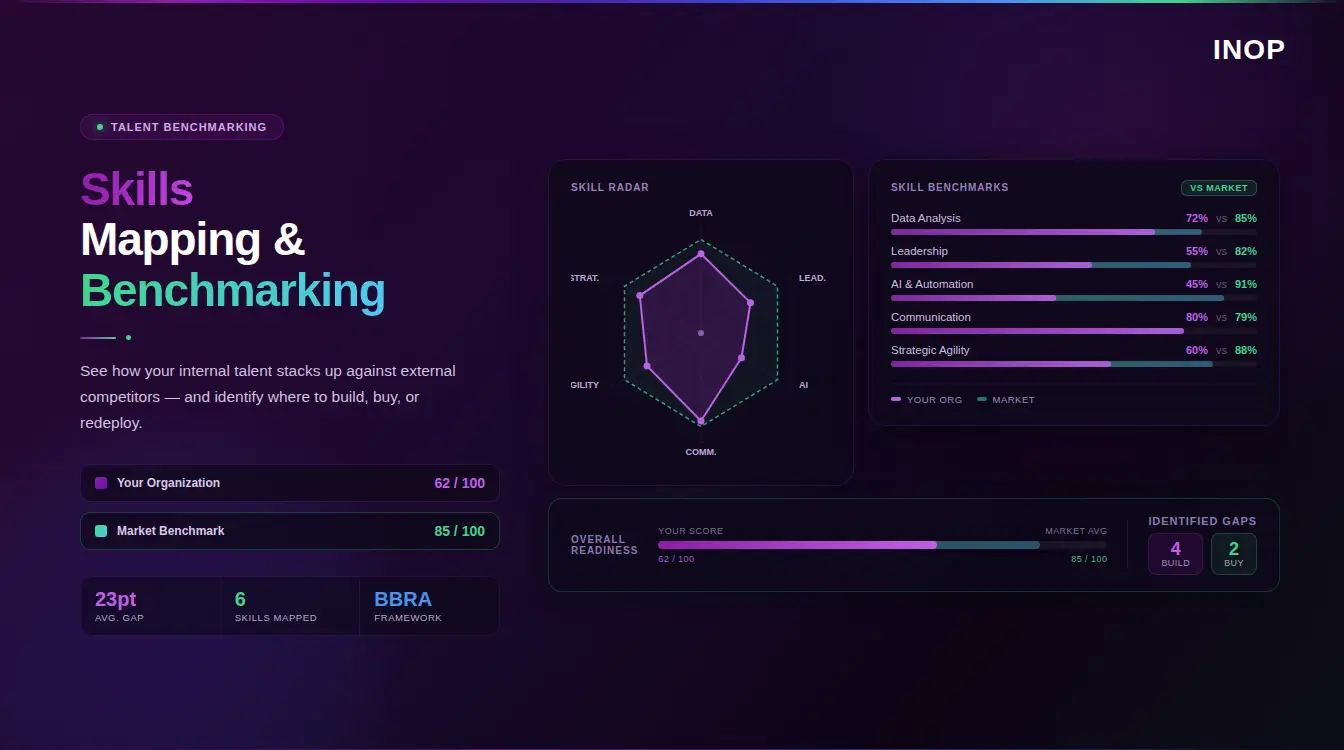
Organizations must begin by conducting a skill audit to understand existing strengths and gaps. This process identifies both core job skills and emerging capabilities critical for future success.
Defining Clear Compensation Tiers
Pay should be tied to demonstrable skill levels, often categorized into tiers (beginner, intermediate, advanced). This ensures transparency and gives employees a clear path to growth.
Leveraging Compensation Intelligence
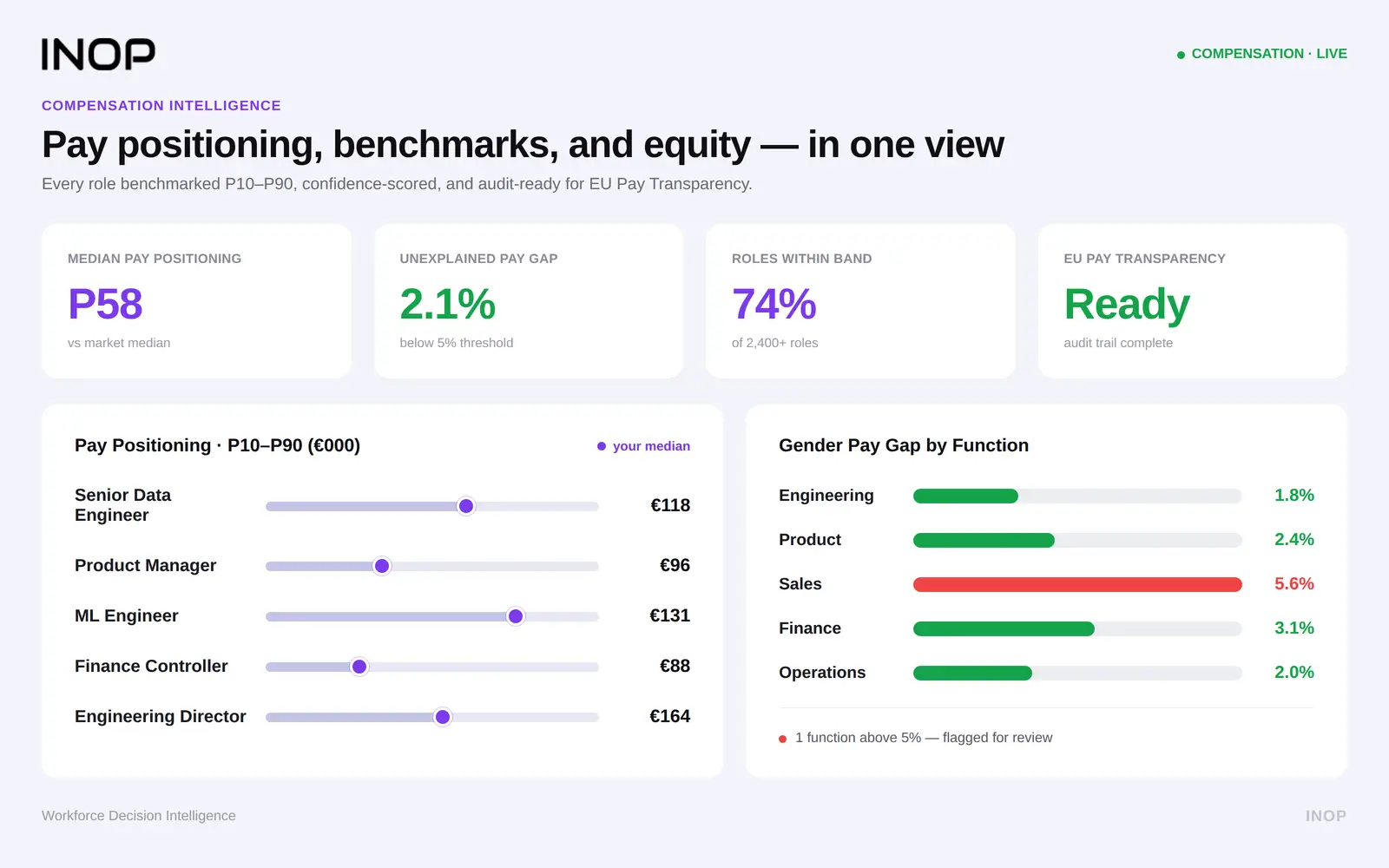
Modern tools allow HR leaders to benchmark pay against skill data in the market, ensuring fair and competitive structures. Using compensation intelligence once in the design process can bridge internal goals with external realities, preventing pay inequities while keeping businesses competitive.
Encouraging Continuous Upskilling
Employees should see a direct link between developing new skills and increasing their earning potential. This encourages ongoing learning aligned with business needs.
Benefits of Skill-Based Compensation for Employers
Employers who adopt this model see tangible benefits, including:
- Greater workforce agility: Cross-skilled employees can shift into different roles without additional hires.
- Reduced turnover: When skills are fairly recognized, employees are more likely to stay.
- Stronger ROI on training: Learning investments yield measurable returns through improved performance.
- Better alignment with strategy: Pay aligns with the evolving needs of the business.
A Deloitte study found that companies using skills-based practices are 63% more likely to achieve results in workforce transformation compared to those relying on traditional models.
Benefits of Skill-Based Compensation for Employees
For employees, this model shifts the focus from external credentials to their actual abilities and contributions. Key benefits include:
- Fair recognition: Workers are rewarded for what they know and apply, not just job tenure.
- Career mobility: Employees can advance horizontally or diagonally, not just upward.
- Motivation to learn: With pay tied to growth, employees have a real incentive to upskill.
- Resilience in the job market: A skills portfolio strengthens employability across industries.
This approach empowers employees to take control of their earning potential and career trajectory.
Challenges and Considerations
Despite its advantages, implementing a skills-based pay structure comes with challenges:
- Assessment accuracy: Measuring skills objectively can be complex.
- Manager bias: Without standardized frameworks, evaluations risk inconsistency.
- Administrative load: Tracking skills and updating pay structures requires robust systems.
- Cultural shifts: Moving away from seniority-based pay may face resistance.
Overcoming these challenges often requires a phased rollout, transparent communication, and ongoing alignment between HR, leadership, and employees.
Future of Compensation in a Skills-Driven Economy
The workforce is shifting toward skills-first strategies across hiring, development, and pay. As automation and AI reshape job roles, businesses will increasingly rely on adaptable employees with diverse skill sets.
In the coming years, organizations that prioritize skill based compensation will not only attract top talent but also remain resilient amid rapid industry changes. Employees, in turn, will benefit from more equitable and future-proof career opportunities.
Conclusion
Skill-based compensation represents a profound shift in how we value and reward work. By focusing on skills rather than static roles, organizations foster agility, fairness, and growth in a skills-driven economy.
For employers, this model builds a stronger, more competitive workforce. For employees, it creates transparent, empowering career pathways. The key lies in designing systems that balance fairness, business needs, and continuous learning.
Now is the time for HR leaders and organizations to rethink compensation strategies. If you want to stay ahead of workforce trends, start exploring how a skills-based pay model could transform your organization.
What do you think? Would you prefer your pay to reflect your job title or your skills? Share your thoughts in the comments — your perspective could help spark an important conversation.
Frequently Asked Questions
What is the main advantage of skill-based compensation?
It rewards employees for their actual skills and contributions, creating fairer and more motivating pay systems.
How is skill-based pay different from traditional pay?
Traditional pay focuses on titles and tenure, while skill-based pay prioritizes demonstrated abilities and learning.
What industries benefit most from skill-based pay?
Industries undergoing rapid change, like IT, healthcare, and advanced manufacturing, see the strongest impact.
How do companies measure skills for pay decisions?
They typically use skill audits, standardized assessments, and performance benchmarks to evaluate capabilities.
Is skill-based compensation sustainable long term?
Yes, when supported by clear frameworks, continuous skill tracking, and transparent communication, it creates lasting value for both employers and employees.