In personal finance, human capital risk means the risk to an individual’s future earning power. This guide covers the organizational meaning: the risk that people-related issues, such as skill gaps, key person dependency, attrition, or misaligned leadership, prevent a business from executing its strategy.
What Is Human Capital Risk? Meaning & Definition
The concept of human capital risk refers to the potential negative financial and operational impacts on a business caused by its workforce. Unlike traditional financial or cybersecurity risks, human capital risk focuses on the unpredictable nature of people. If a business fails to manage talent effectively, it exposes itself to severe vulnerabilities that can derail organizational growth, disrupt operations, and damage employer brand reputation.
Human Risk Examples in Business
To truly understand the threat that human capital risk poses, leaders must look at concrete, real-world scenarios. These are not theoretical edge cases, they are the workforce events that derail strategies, inflate costs, and damage organizations that failed to see them coming.
The risks described on this page are not theoretical.
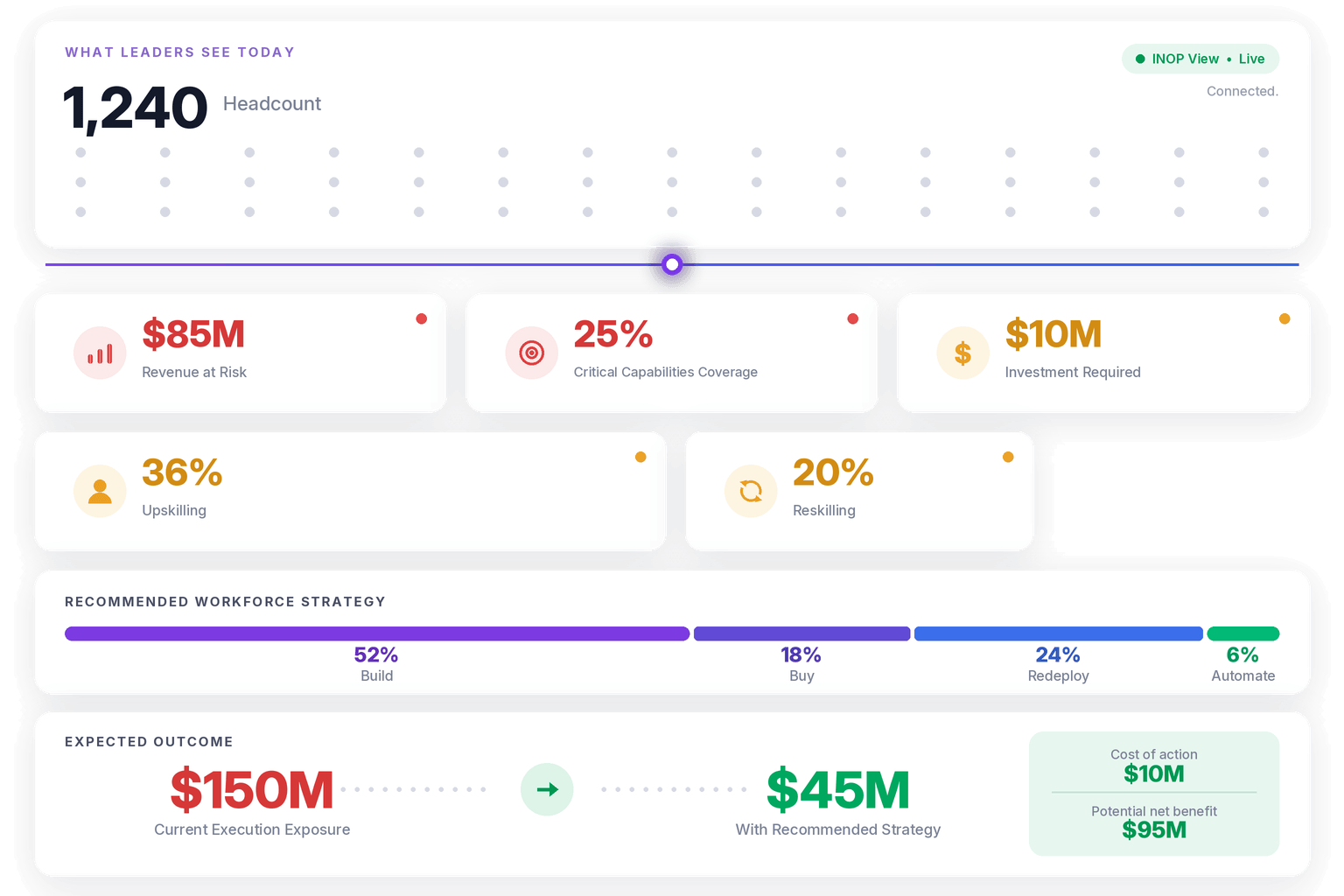
We are working with organisations navigating large-scale transitions where a scaling, restructuring or changing workforce must be modelled against an operational target, capability gaps quantified, opportunities identified, and the full cost of closing those gaps (and the cost of inaction) made visible to leadership and boards as execution materiality. In every case, the biggest execution risk was not financial or operational. It was whether the workforce could deliver. INOP quantifies that risk in terms boards and CFOs can act on.
See how INOP quantifies execution materiality for your organisation
1. Critical Talent Shortage in a Core Function A SaaS company builds its 2026 product roadmap around a major AI-powered feature. Halfway through the development cycle, the organization realizes it has only two engineers with the required machine learning expertise. both of whom are being actively recruited by competitors at significantly higher compensation. Unable to hire fast enough in a talent market with a global shortage of ML specialists, the product launch is delayed by two quarters, costing the business both revenue and competitive positioning. This is availability risk and capability risk compounding simultaneously.
2. Key Person Dependency A mid-market professional services firm generates 60% of its revenue through relationships managed by a single senior partner. When that partner unexpectedly resigns to join a competitor, taking client relationships and institutional knowledge with them, the firm faces an immediate revenue crisis with no succession plan in place. The cost is not just the departed employee’s salary; it is the client attrition, the emergency recruitment costs, and the months of lost productivity while a replacement ramps up.
3. Employee Burnout Leading to Mass Attrition A retail organization pushing aggressive post-pandemic growth targets chronically understaffs its store management teams. Over 18 months, manager burnout rates climb silently, undetected because the company lacks any formal engagement monitoring. When a competitor opens nearby locations with better pay and scheduling, 40% of store managers leave within a 90-day window. The cost of replacing each manager, including recruitment, onboarding, and lost productivity, exceeds 150% of their annual salary.
4. Succession Planning Failure at the Executive Level A publicly listed manufacturing company’s long-tenured CEO announces an unexpected early retirement. The board, having never formalized a succession plan, is forced into a reactive external search that takes eight months. During this period, strategic initiatives stall, two key executives depart amid the uncertainty, and the company’s share price drops as investors interpret the leadership vacuum as an organizational risk signal. A succession plan that would have cost relatively little to maintain becomes a crisis that costs the business far more.
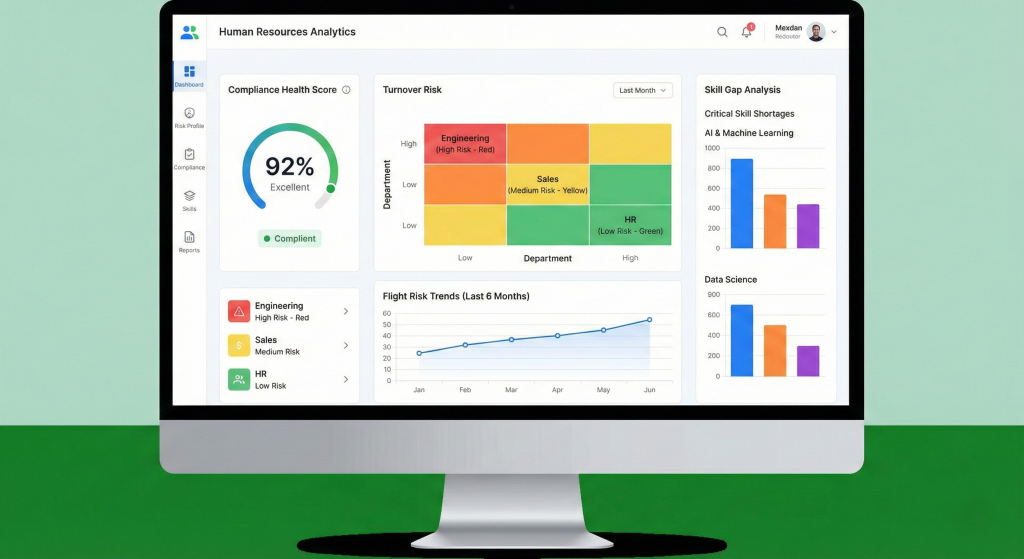
Translating these risk signals into leadership action requires more than a risk register. A properly structured HR Analytics Dashboard surfaces human capital risk in the financial language that boards and CFOs respond to: projected replacement costs, concentration risk thresholds, attrition probability by critical role cluster, and capability gaps quantified against strategy timelines. Without that translation layer, human capital risk remains an HR concern rather than a governance priority.
5. Workforce Misclassification A fast-growing logistics company scales rapidly by classifying a large portion of its delivery workforce as independent contractors rather than employees, a common cost-reduction strategy. Following a regulatory audit, authorities determine that the workers meet the legal definition of employees under local labor law. The company faces retroactive penalties covering unpaid benefits, taxes, and social contributions, alongside a class-action lawsuit from affected workers. What began as a workforce cost strategy becomes one of the most expensive compliance failures in the company’s history.
6. Cultural Risk and Reputational Collapse A technology scale-up with a publicly celebrated “high-performance culture” begins experiencing a pattern of senior employees posting detailed accounts of a toxic internal environment on Glassdoor and LinkedIn. Within weeks, the company’s employer brand score collapses. Candidate acceptance rates for open roles drop significantly, and several enterprise clients request reassurance meetings regarding the organization’s internal governance. The talent pipeline, built over years, is materially damaged in a matter of months by a cultural risk that was never formally assessed or managed.
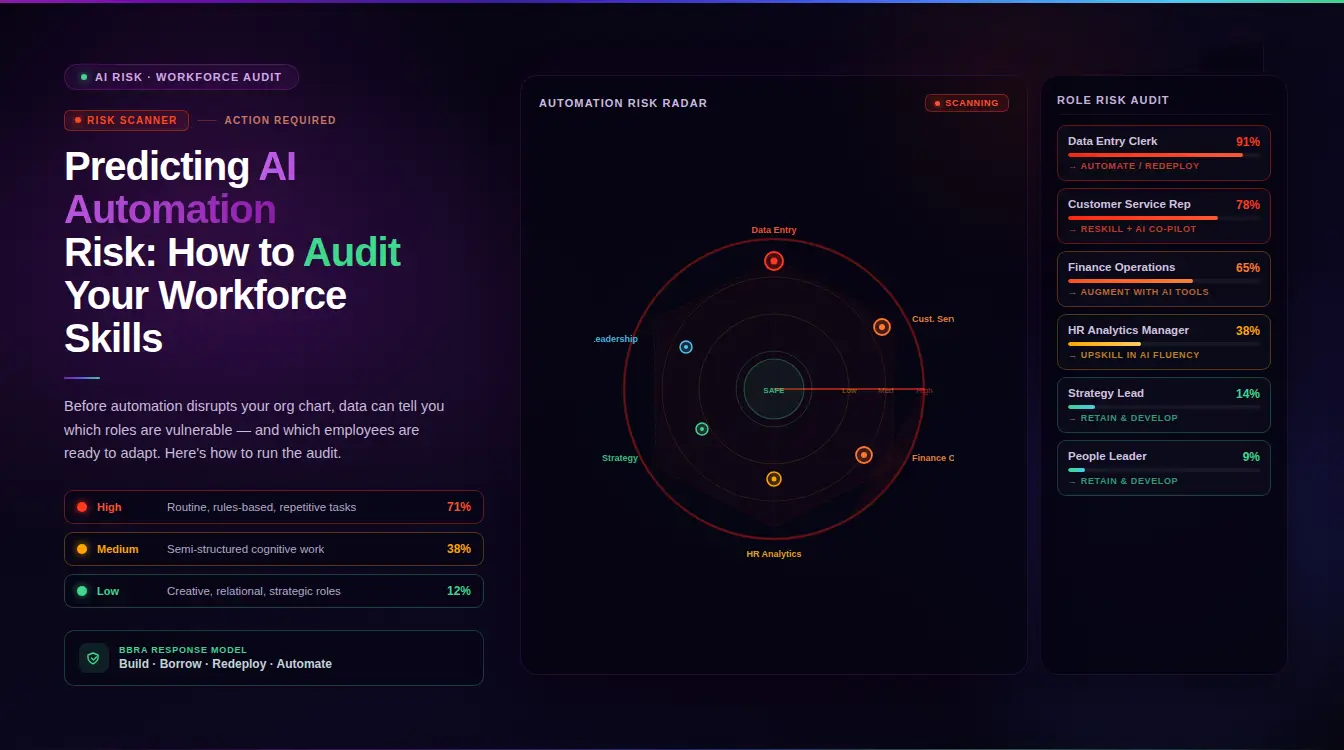
7. AI Displacement Risk A credible response to AI displacement risk starts with a precise understanding of what automation risk actually measures. It is not the odds that a job disappears. It is the exposure a specific task carries to being performed by AI or software instead of a person. Two employees with the same job title can carry very different real exposure depending on how their week breaks down between routine, rules-based tasks and work requiring judgment or relational context. Managing the risk correctly requires scoring at that level, not at the role level. A financial services firm automates a significant portion of its junior analyst workflow using large language models, eliminating the business need for a cohort of roles that had previously served as the entry point for talent development. Two years later, the firm faces a critical shortage of mid-level analysts, because the pipeline that used to develop them no longer exists. By optimizing for short-term cost reduction, the organization created a long-term capability gap that now threatens its capacity to execute on complex client mandates. AI displacement risk is not just about jobs lost today, it is about the talent that will not exist tomorrow.
8. The Cost of a Bad Hire Perhaps the most common, and most underestimated, form of human capital risk is the routine bad hire. A mid-level manager is brought on after a rushed process, spends six months underperforming, disrupts team cohesion, and ultimately exits or is let go. What looks like a one-time setback is actually a compounding financial event. According to the U.S. Department of Labor, the cost of a bad hire reaches at least 30% of that employee’s first-year salary, and SHRM places the true figure between 50% and 200% when you account for recruiting, onboarding, lost productivity, and team morale damage. For a senior role, that single hiring mistake can exceed $240,000 in total losses.
Managing AI displacement risk effectively requires more than an awareness of which roles are at risk. It requires a quantified, data-led view of capability exposure, which is precisely what predictive HR analytics is designed to deliver. By modeling capability decay timelines, succession pipeline depth, and automation impact by competency cluster, CHROs can convert AI displacement from an existential concern into a structured, financially grounded workforce investment decision.
Artificial Intelligence and Skills Obsolescence
While AI is often viewed as a solution, the rapid adoption of Generative AI is simultaneously acting as a massive risk catalyst. This technological shift accelerates the loss of human capital value through sudden “skills obsolescence.” Capabilities that were highly valued just a year ago are now easily automated, rendering parts of the workforce obsolete overnight if they are not rapidly upskilled.
Furthermore, the unchecked use of these tools introduces severe compliance and security threats. Employees uploading proprietary code or sensitive client data to public, unapproved AI platforms creates immediate operational vulnerabilities. To protect the organization, leaders must implement AI human capital risk management protocols, tracking exactly how AI is impacting their required skill sets and establishing secure frameworks for its use before it causes irreversible damage.
To protect the organization, leaders must track exactly which emerging skills for 2030 are replacing obsolete capabilities and implement rapid upskilling protocols before it causes irreversible damage.
The Growing Threat of Compliance and Human Capital Risk
Among all workforce vulnerabilities, compliance and human capital risk is often the most financially damaging. As governments worldwide crack down on corporate governance, the legal landscape surrounding the workforce is becoming a minefield for HR leaders.
This risk goes far beyond basic payroll errors. Today, compliance and human capital risk includes:
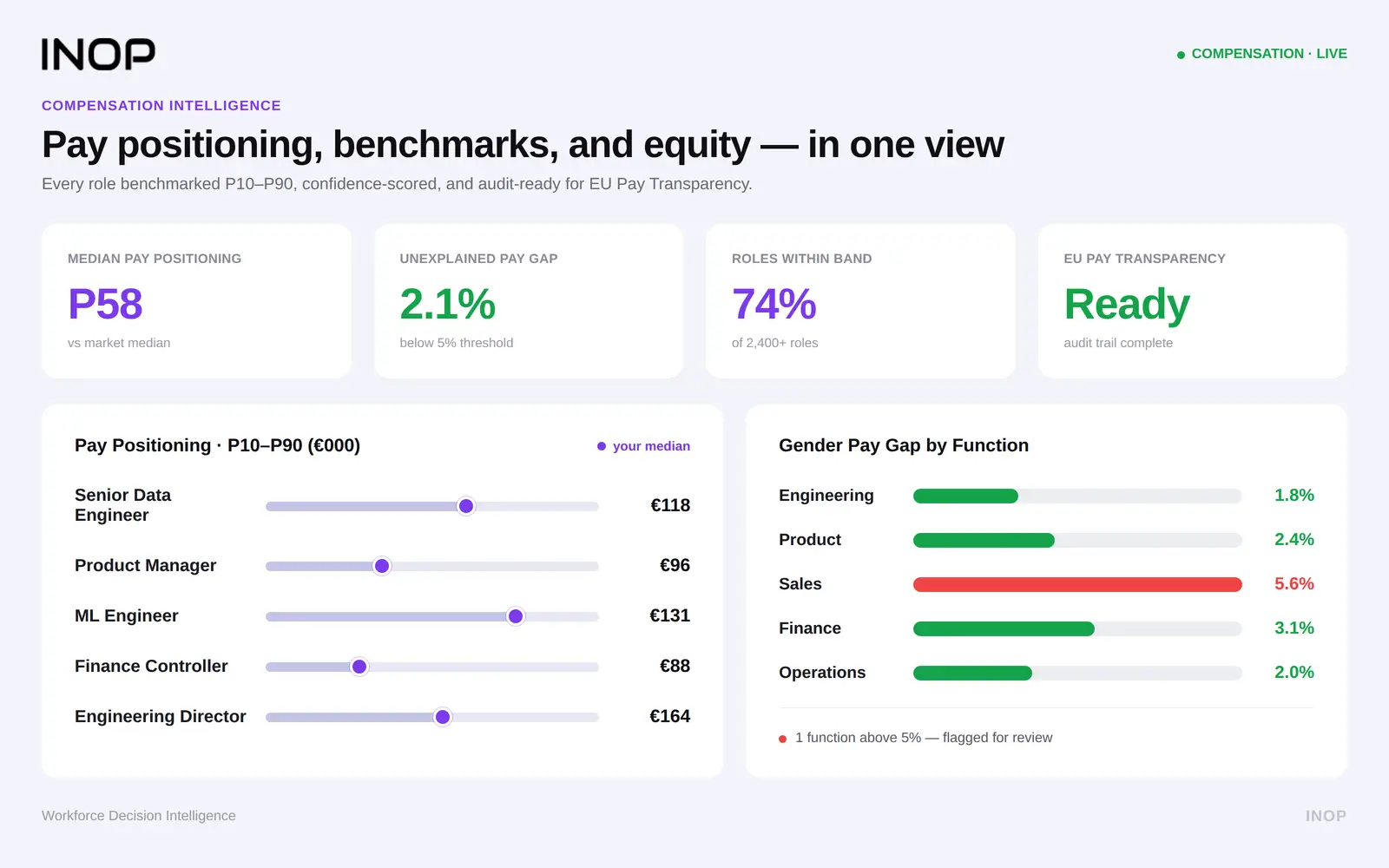
- Pay Transparency & Equity: Failing to comply with new regulations (such as the EU Pay Transparency Directive or US state laws) can lead to massive class-action lawsuits and severe brand damage.
- ESG Mandates: Investors now demand strict reporting on Diversity, Equity, and Inclusion (DEI) metrics. Failing to meet these social governance standards can result in a loss of institutional funding.
- Data Privacy: Mishandling sensitive employee data or using non-compliant AI hiring tools can violate strict global privacy laws like GDPR.
SEC Human Capital Disclosure Requirements (Regulation S-K Item 101)
Beyond operational compliance, human capital risk now carries a direct investor relations dimension that most organizations are underprepared for.
SEC Human Capital Disclosure Requirements (Rule S-K Item 101)
Since 2020, US public companies have been required to include human capital disclosures in their annual 10-K filings. The SEC’s requirement, while principles-based rather than prescriptive, mandates disclosure of “human capital resources, including any human capital measures or objectives that management focuses on in managing the business.” In practice, this means boards and CFOs are expected to describe their approach to talent acquisition, development, retention, and risk management in terms investors can evaluate.
The enforcement evolution matters: while initial requirements were broad, SEC staff guidance has progressively made clear that disclosures should be specific, material, and comparable across periods rather than generic boilerplate. Organizations that disclose meaningful human capital risk management programmes, with specific metrics, governance structures, and risk mitigation strategies, are increasingly differentiated from those that produce formulaic descriptions. For public companies, the quality of human capital disclosure is now a signal investors use to assess management quality.
EU Corporate Sustainability Reporting Directive (CSRD)
For EU-listed companies and large EU-operating multinationals, the CSRD requires detailed workforce reporting under the European Sustainability Reporting Standards (ESRS). ESRS S1 (Own Workforce) requires disclosure across working conditions, equal treatment, collective bargaining coverage, health and safety, and skills development investment. Unlike ISO 30414, which organizations adopt voluntarily, CSRD compliance is mandatory with assurance requirements, third-party verification of the reported data.
The practical implication for human capital risk management: the data infrastructure required to satisfy CSRD and SEC disclosure requirements is identical to the infrastructure required for proactive human capital risk management. Organizations that build workforce intelligence systems to manage risk as an operational discipline are, by definition, building the reporting capability that investors and regulators now require. Organizations that treat disclosure as a separate compliance exercise rather than an output of their ongoing risk management will spend significantly more producing less reliable reports.
What is Human Capital Risk Management (HCRM)?
Human capital risk management (HCRM) is the systematic discipline of forecasting, evaluating, and mitigating workforce-related threats before they impact the bottom line. It shifts HR from a reactive administrative function into a proactive, strategic powerhouse that directly protects business performance.
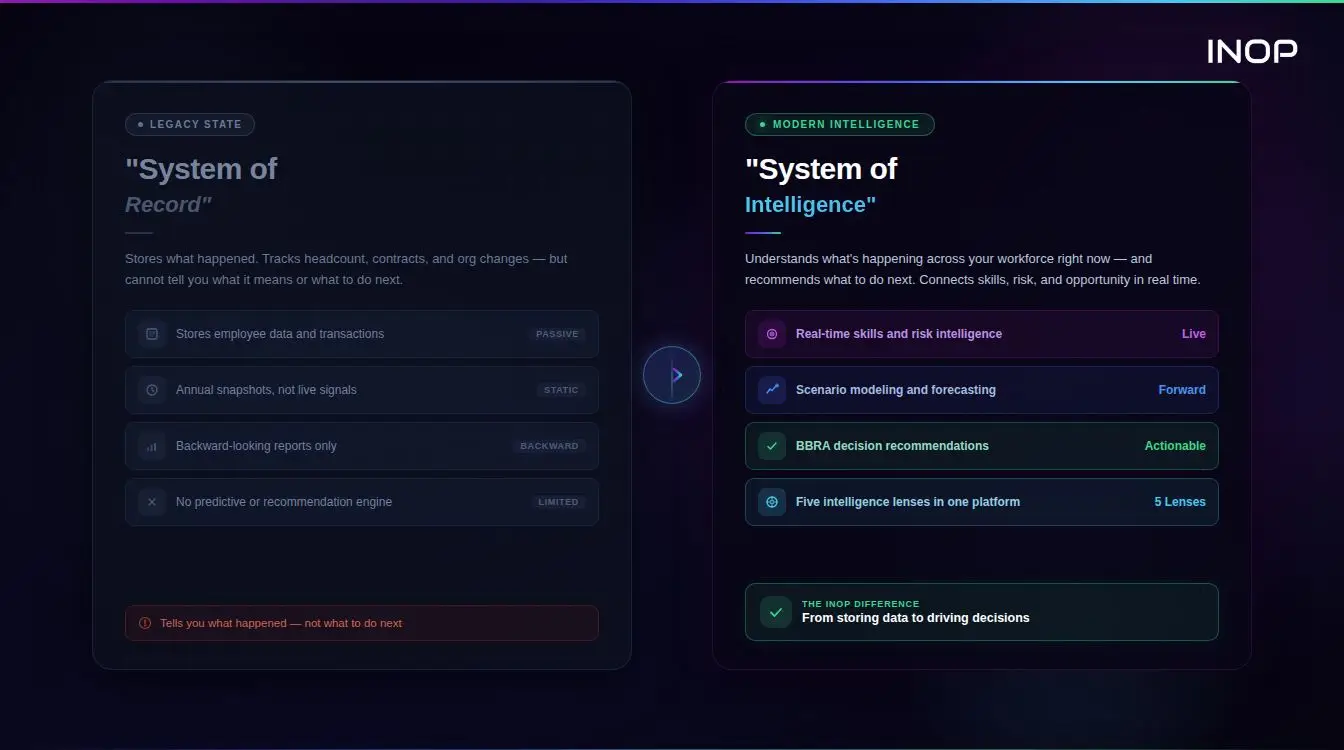
Unlike traditional HR, which responds to problems after they occur, HCRM builds the organizational infrastructure to anticipate disruptions months or even years in advance. When executed correctly, it transforms your workforce data into a continuous early-warning system.
The Three-Phase Human Capital Risk Management Framework
Effective human capital risk management follows a continuous, three-phase loop:
Phase 1: Forecast Before you can manage risk, you need to see it coming. This means analyzing workforce data, turnover trends, engagement scores, skills gap reports, market salary benchmarks, to build a predictive picture of where vulnerabilities are likely to emerge. At this stage, HR leaders ask: Which roles are most exposed? Which skills are becoming obsolete? Which teams are at flight risk?
Phase 2: Assess Once risks are identified, they must be ranked by both likelihood and financial impact. A risk that has a 90% probability but minimal financial consequence is far less urgent than a moderate-probability risk that could cost the business millions. Plotting risks on an impact-probability matrix ensures leadership focuses its resources on the threats that matter most.
Phase 3: Respond The final phase is where strategy meets action. Responses fall into four categories: Build (upskill internal talent), Buy (hire externally), Automate (replace the function with technology), or Sunset (phase out the role entirely). The response chosen depends on the urgency, budget, and strategic importance of the affected capability.
This is not a once-a-year audit. The most resilient organizations run this loop continuously, updating their risk posture as market conditions, workforce data, and business strategy evolve.
Reactive HR vs. Proactive Human Capital Risk Management
| Traditional HR | Human Capital Risk Management | |
|---|---|---|
| Approach | Reactive — responds after problems occur | Proactive — anticipates problems before they materialize |
| Data usage | Historical headcount and payroll data | Predictive analytics, skills intelligence, market benchmarks |
| Scope | Internal HR team only | Cross-functional: HR, Finance, Executive Leadership |
| Planning horizon | Current quarter | 12–36 month workforce scenarios |
| Primary output | Hiring and admin transactions | Risk registers, succession plans, skills roadmaps |
| Business impact | Cost center | Strategic value driver |
WHAT ENTERPRISE CLIENTS SAY
“INOP goes beyond what we’ve seen on the market. It links teams, risk, strategy, and sector dynamics. Most vendors just give us skills or headcount modeling. INOP shows us how business and workforce actually move together.”, CHRO, Fortune Global 500 “INOP is currently being used by leadership teams across a variety of sectors, helping them answer the questions traditional HR data cannot. Which roles are critical and carry the highest execution risk against our transformation plan? Where is our leadership pipeline genuinely thin versus where does it look thin on paper? What would it cost if these functions could not deliver in the next 18 months? These are not hypothetical questions.”
Technology as the Engine of Modern HCRM
Manual spreadsheets and annual engagement surveys are no longer sufficient to manage the complexity of modern workforce risk. AI-powered platforms like INOP enable organizations to monitor workforce health in real time, automatically flagging emerging flight risks, tracking skill obsolescence as market demand shifts, and ensuring compensation structures remain compliant with regional regulations. The result is a risk management posture that is always current, always data-backed, and never caught off guard.
Why Human Capital Risk Matters for Every Organization
Ignoring workforce-related risks is like driving without a seatbelt, everything seems fine until something goes wrong. Studies show that companies with poor workforce risk management face 20–30% higher operational disruptions compared to peers with strong human capital strategies.
A few reasons why human capital risk management is so critical:
- Direct Impact on Business Performance: Employee productivity and engagement directly influence revenue and customer satisfaction.
- Cost Control: Replacing an employee can cost up to 150% of their annual salary. Proactively managing turnover can save significant recruitment and training expenses.
- Regulatory Compliance: With pay transparency and workplace equality laws tightening globally, compliance-related risks are growing.
- Reputation Protection: How an organization treats its people is now a major factor in employer brand and customer trust.
Reputational Damage and Employer Brand
In an era of hyper-transparency, human capital mismanagement rarely stays hidden. Executive misconduct, toxic workplace cultures, or failing to meet public ESG (Environmental, Social, and Governance) diversity mandates can instantly result in severe reputational damage.
When internal dysfunction goes viral on platforms like Glassdoor, LinkedIn, or in the press, the fallout is immediate and financial. Severe reputational damage not only alienates current clients and investors but directly inflates the cost of future talent acquisition. Top-tier candidates will either refuse to apply or demand a significant “reputation premium” in their compensation to join an organization with a compromised employer brand.
Workforce Risk: The Broader Threat Landscape
While human capital risk focuses on the direct people-related vulnerabilities within your organization, workforce risk is the broader umbrella term that encompasses all threats stemming from your organization’s people, structure, talent pipeline, and external labor market conditions. Think of it this way: human capital risk is what can go wrong with your people; workforce risk is everything that can go wrong with your ability to have the right people, in the right roles, at the right time.
For CHROs and executive leaders, workforce risk is now a board-level concern. McKinsey estimates that talent-related disruptions are responsible for a significant share of major strategy failures, not because the strategy was wrong, but because the workforce wasn’t positioned to execute it.
The 4 Categories of Workforce Risk
1. Availability Risk The risk that you simply cannot find or attract the talent you need. This is driven by demographic shifts (aging workforces, falling birth rates in key markets), hyper-competitive talent markets, or geographic mismatches between where your roles exist and where qualified candidates live. Availability risk is particularly acute in specialized fields such as AI engineering, cybersecurity, and advanced data science, where global demand dramatically outpaces supply.
2. Capability Risk You have the headcount, but not the skills. Capability risk emerges when the business evolves, through digital transformation, market expansion, or product pivots, faster than the workforce can adapt. This gap between the skills your strategy demands and the skills your people currently possess is one of the most common and costly forms of workforce risk. It is also one of the most preventable, provided it is identified early through structured skills intelligence.
3. Engagement Risk A workforce that is physically present but mentally disengaged is a hidden but significant source of risk. Low engagement correlates directly with increased absenteeism, lower productivity, higher turnover, and a greater likelihood of compliance failures. Gallup’s research consistently shows that disengaged employees cost organizations a meaningful percentage of their annual salary in lost productivity, multiplied across hundreds or thousands of employees, the financial impact is substantial.
4. Compliance Risk The legal and regulatory landscape governing your workforce is becoming increasingly complex. Pay transparency laws, DEI reporting mandates, data privacy regulations, and AI governance requirements are all expanding simultaneously. Compliance risk is the exposure your organization carries when its people practices, intentionally or not, fall outside of these regulatory boundaries. The consequences range from financial penalties to class-action litigation to severe reputational damage.
Connecting Workforce Risk to Strategic Workforce Planning
The most effective tool for managing workforce risk at the organizational level is Strategic Workforce Planning (SWP). By modeling future workforce scenarios against anticipated business needs, SWP allows leaders to identify availability and capability risks years before they become crises, and to make proactive build, buy, or automate decisions while there is still time to act. For a deeper look at the specific categories of exposure your organization may face, explore our full guide to the types of human capital risk.
The proactive alternative to managing human capital risk reactively is building the organizational capability for continuous workforce transformation: a deliberate, ongoing redesign of people, roles, skills, and culture that keeps the workforce aligned with where the business is going rather than where it has been. Organizations that treat transformation as a finished project rather than an operating discipline accumulate the same category of risk that strategic workforce planning is designed to prevent.
Extended Workforce Risk: Contractors, Gig Workers, and Third Parties
Most human capital risk frameworks are built around the employed workforce. The extended workforce, comprising contractors, consultants, gig workers, managed service providers, and outsourced functions, carries a distinct and frequently underestimated risk profile.
Misclassification risk is the most financially significant. As the workforce example in this article illustrates, classifying workers who meet the legal definition of employees as independent contractors creates regulatory exposure that can include retroactive tax liability, unpaid benefits, and class-action litigation. With labor regulators in the US, UK, and EU all tightening misclassification enforcement in 2025 and 2026, organizations with significant contractor workforces need formal classification governance that goes beyond cost-driven default assumptions.
Capability concentration in third parties. When critical capabilities are outsourced, the organization’s risk does not disappear, it transfers to the vendor’s ability to staff and retain the relevant expertise. A managed IT services contract that delivers adequately when the vendor retains its senior engineers becomes a delivery risk when the vendor experiences attrition in the team assigned to your account. Organizations that treat outsourcing as a risk elimination strategy rather than a risk transfer strategy discover this distinction expensively.
Institutional knowledge leakage. Long-tenure contractors who manage critical processes or client relationships accumulate institutional knowledge that technically belongs to the organization but practically lives with the individual. When a decade-long consultant relationship ends, the knowledge transfer gap is frequently larger than anyone anticipated, because nobody maintained documentation of what they knew.
Governance of extended workforce data. Skills data, performance data, and engagement data for the extended workforce are rarely included in the same intelligence systems used for employees. This creates a blind spot in human capital risk assessments: the workforce risk register reflects the employed population but not the full operational workforce, potentially obscuring where the most significant capability dependencies actually reside.
The mitigation framework is straightforward: map all significant third-party workforce relationships against the same capability dependency and risk criteria applied to employees, include contingent workforce data in skills inventories and succession plans where those workers hold critical capabilities, and build contract terms that address knowledge transfer requirements before engagement end rather than after.
From Categories to Priorities: The Specific Risks Demanding CHRO Attention Now
Understanding the four structural categories of workforce risk gives HR leaders a framework for classifying exposure. What that framework does not provide is a sense of relative urgency: which risks within those categories are actually materializing for CHROs in 2026, and which are emerging fast enough to require immediate prioritization?
The answer is not uniform across industries. A financial services firm managing a large cohort of junior analysts at automation risk faces a different risk profile than a healthcare organization navigating chronic burnout in clinical staff, or a technology scale-up with a trust and culture erosion problem building silently beneath headline engagement scores. But the underlying risk categories manifest with enough consistency across sectors that identifying the highest-priority themes is possible.
A detailed breakdown of the top human capital risks facing CHROs in 2026 covers the five that appear most frequently across industries and organizational sizes: the widening skills gap driven by AI-accelerated role transformation, the mismanagement of human and machine collaboration during AI integration, the mental health and burnout epidemic now affecting more than half of the global workforce, the expanding web of regulatory complexity across pay transparency, data privacy, and worker classification, and the gradual erosion of organizational trust that is silently degrading engagement and retention in ways that lag indicators do not capture until the damage is substantial. Each of these maps directly into the four structural categories above, but with the specificity needed to build a prioritization case for leadership and translate the risk into language the board and CFO can act on.
Understanding Human Capital Execution Risk
While human capital risk encompasses everything from compliance to workplace safety, the most immediate threat to your bottom line is Execution Risk.
Human capital execution risk is the probability that an organization will fail to achieve its strategic business objectives due to workforce-related shortcomings. A company can have a brilliant go-to-market strategy, but if the workforce lacks the capabilities, alignment, or bandwidth to deliver it, the strategy will fail.
For CHROs and business leaders, execution risk typically manifests in three critical areas:
The Strategic Skill Gap
The most common driver of execution risk occurs when the business pivots, but the workforce’s skills remain static. If your company’s growth relies on adopting artificial intelligence, but your team lacks AI orchestration and data literacy skills, your execution timeline will stall. Identifying these blind spots before a product launch or digital transformation is critical.
Workforce Misalignment
Sometimes the talent is there, but it is deployed incorrectly. Execution risk spikes when top performers are bogged down by low-value tasks or when departmental silos prevent cross-functional collaboration. Misalignment means your payroll dollars are not directly driving your core business objectives.
Change Fatigue and Burnout
Ambitious corporate strategies often require intense change management. If your workforce is already experiencing high levels of burnout or turnover, their capacity to absorb and execute new initiatives drops to zero. High attrition in critical, revenue-generating roles is the ultimate execution killer.
How CHROs Can Mitigate Execution Risk
To close the gap between strategy and execution, HR leaders must move from reactive hiring to predictive talent mapping. By leveraging Strategic Workforce Planning tools, CHROs can audit current workforce capabilities against future business goals, ensuring the right talent is always in place to execute the company’s vision.
Identifying vulnerabilities within your workforce requires moving far beyond traditional annual audits. To truly quantify execution risk and flight risk, HR leaders must continuously monitor talent intelligence data. By deeply analyzing this specialized layer of workforce analytics—which encompasses everything from competitor hiring patterns and compensation shifts to internal skill decay—executives can proactively mitigate people-related risks before they escalate into costly operational bottlenecks.
The framework above only works if the data behind it is current, complete, and financially grounded.
In practice, INOP builds execution materiality models for organisations where the financial exposure from workforce risk runs into the tens of millions, mapping capability gaps against strategic delivery milestones, modelling the cost of closing those gaps through build, buy, redeploy, or automate decisions, and quantifying what inaction costs if key functions cannot execute on schedule. For a renewable energy company scaling its workforce against an operational target model, this means knowing exactly which capability gaps exist today, which can be closed internally, which require external hiring, and what each path costs over a 12, 24, and 36-month horizon. For a global reinsurer restructuring, it means knowing where leadership pipeline depth is genuinely thin and where succession coverage is adequate. Manual risk registers and annual HR audits do not move fast enough for these environments.
Book a 20-minute demo and see what INOP surfaces for your organisation
How to Conduct a Human Capital Risk Assessment: A Four-Step Framework
A human capital risk assessment is a structured, repeatable process for identifying, prioritizing, and planning around your organization’s workforce vulnerabilities — before they escalate into operational or financial crises. Many organizations mistake this for a one-time HR exercise. In reality, a robust assessment is a living process that should be revisited at minimum annually, and ideally on a rolling quarterly basis as workforce conditions shift.
You cannot mitigate what you haven’t measured. Here is the four-step framework that leading organizations use to build a defensible, data-driven view of their human capital risk profile:
Step 1 — Identify: Build Your Workforce Risk Register Begin by auditing all available workforce data to construct a comprehensive Risk Register, a structured inventory of every significant people-related vulnerability in the organization. Categorize risks into four primary buckets: Strategic (critical skills gaps, succession coverage failures), Operational (key person dependency, workforce misalignment), Compliance (pay equity exposure, regulatory non-compliance), and Reputational (employer brand health, ESG reporting gaps). Cast the net wide at this stage — the goal is visibility, not prioritization.
Step 2 — Evaluate: Plot Your Risk Matrix Once risks are inventoried, plot each one on a two-axis matrix mapping likelihood of occurrence against potential financial impact. A specialized AI engineer with no succession coverage and a competing offer in market sits in the high-probability, high-impact quadrant — it demands immediate attention. A compliance exposure in a low-risk jurisdiction with minimal financial consequence can be monitored rather than urgently addressed. This matrix gives leadership a clear, defensible basis for resource allocation.
Step 3 — Mitigate: Build, Buy, Redeploy, Automate Framework For each high-priority risk, select the appropriate response strategy. Build means investing in upskilling and reskilling your existing workforce. Buy means hiring externally to close the gap. Automate means replacing the function with technology, a path increasingly viable as AI capabilities expand. Sunset means deliberately phasing out a role or capability that no longer serves the business strategy. Each path carries different cost, speed, and risk tradeoffs — the right choice depends on urgency and strategic importance.
Step 4 — Monitor: Track Leading Indicators Continuously Risk management that ends at the mitigation plan is risk management that will fail. After actions are implemented, establish a dashboard of leading indicators — early signals that a risk is re-emerging before it fully materializes. These include sudden drops in employee engagement scores, compensation benchmarking drift (when your pay falls below market), increased voluntary turnover in critical roles, and widening skills gap ratios in strategic departments. Monitor these consistently and set thresholds that trigger automatic review.
What to Include in Your Workforce Risk Register
A well-constructed Risk Register goes beyond a simple list of concerns. For each risk item, capture the following data points:
- Role criticality score — how operationally dependent is the business on this role?
- Succession coverage ratio — how many qualified internal successors exist, and how ready are they?
- Flight risk indicator — compensation gap vs. market, tenure, engagement score, internal mobility trends
- Compliance exposure level — is this role or department subject to pending regulatory changes?
- Skills obsolescence index — is external market demand for these skills growing or declining?
- Financial impact estimate — what would it cost the business if this risk materialized tomorrow?
This structured approach transforms anecdotal HR concerns into a prioritized, board-ready risk document that finance and executive leadership can act on. INOP’s Talent Intelligence Platform automates the construction and continuous updating of this risk register, surfacing the most critical vulnerabilities in real time so your team can focus on intervention rather than data gathering.
Explore more: How to build a Human Capital Risk Dashboard
Measuring Human Capital Risk
Once risks are identified, the next step is to measure their potential impact.
Key Metrics to Monitor
- Turnover Rate: High turnover signals retention challenges.
- Time-to-Fill: Longer hiring cycles may indicate talent shortages.
- Employee Engagement Scores: Low engagement is often a leading indicator of attrition.
- Training and Development Investment: Measures whether you are closing skills gaps proactively.
- Diversity and Inclusion Metrics: Lack of representation can indicate systemic risk areas.
A Worked Example: Calculating the Financial Exposure of Key Person Risk
Abstract guidance on quantification is less useful than a demonstration. Here is a complete worked calculation for one of the most common human capital risk scenarios: key person concentration.
The scenario: A $200M revenue professional services firm has three senior client partners who each manage relationships representing 15-18% of firm revenue. The partners are paid $280,000 to $320,000 annually and have average tenures of 11 years. No formal succession plan exists for any of the three relationships.
- Quantify the revenue exposure. Each partner’s portfolio represents $30-36M in annual revenue. If one departs and takes even 40% of their relationships to a competitor (a conservative estimate given their tenure and relationship depth), the revenue exposure is $12-14M in year one, with potential tail risk through year two as remaining clients reassess their relationships.
- Quantify the replacement cost. External recruitment for a partner-equivalent role in this market runs 25-30% of first-year compensation, or $70,000 to $96,000 in search fees. Onboarding and ramp time to equivalent revenue generation: 18-24 months based on industry norms. Productivity cost during ramp: assume 50% productivity for 18 months on a $300,000 base = $225,000 in productive output cost.
- Quantify the retention risk. Compensation benchmarking shows these three partners are paid at the 55th-60th percentile of their peer market. Competitors are actively recruiting at the 75th-80th percentile. The compensation gap of $40,000-$60,000 per partner creates annual attrition risk that, based on compensation gap to attrition probability research, sits at approximately 25-35% per partner per year.
- Produce the expected value of the risk. Expected annual loss = (probability of departure per partner per year) x (revenue at risk) x (probability of client retention below 60%) + replacement cost.
- Conservative scenario: 25% departure probability x $12M at-risk revenue + $300,000 replacement cost = $3.3M expected annual exposure per partner, or roughly $9.9M across the three-partner concentration.
- Present the mitigation ROI. The cost of closing the compensation gap for all three partners: $150,000 in additional compensation annually. A formal succession planning investment: $80,000 in HR programme costs. Total prevention investment: $230,000 per year. Expected value reduction from prevention: $6-8M in reduced exposure. The ROI of mitigation is not approximate, it is highly favorable, and this calculation is what converts human capital risk from an HR concern into a finance decision.
This quantification approach can be applied to any human capital risk category with sufficient data: attrition risk in critical roles, compliance exposure from pay equity gaps, operational risk from succession coverage failures. The discipline is not the formula, it is the habit of converting workforce risk signals into expected value calculations that finance and boards can evaluate against mitigation investment options.
ISO 30414: The Gold Standard for Human Capital Reporting
For enterprise organizations, measuring risk isn’t just an internal HR exercise—it is increasingly a regulatory requirement. To standardize how businesses measure workforce value and risk, the International Organization for Standardization introduced ISO 30414, the first global standard for human capital reporting.
Following the ISO 30414 core tenets, CHROs are required to transparently report on key metrics that indicate workforce health to external investors and the Board of Directors. These core tenets include reporting on:
- Compliance and ethics (grievances and legal disputes)
- Costs of the workforce (total workforce cost, turnover cost, and ROI of hires)
- Diversity, equity, and leadership trust
- Organizational health, safety, and well-being
- Skills and capabilities (training ROI and workforce readiness)
By aligning your measurement strategy with the key metrics of ISO 30414, HR leaders can provide a standardized, audit-ready view of the company’s human capital risk profile.
Quantifying the Financial Impact
Assign a dollar value to risks where possible. For example, calculate the cost of turnover for a critical role by including recruitment costs, lost productivity, and onboarding time. This helps prioritize which risks to address first.
Monitoring scores against a static snapshot is only half the picture. predictive workforce analytics projects how those risk scores will change over time, modeling attrition trajectories, retirement curves, and skill decay against future business requirements, so that the organization sees where risk is heading rather than only where it currently stands.
How INOP Scores Human Capital Risk
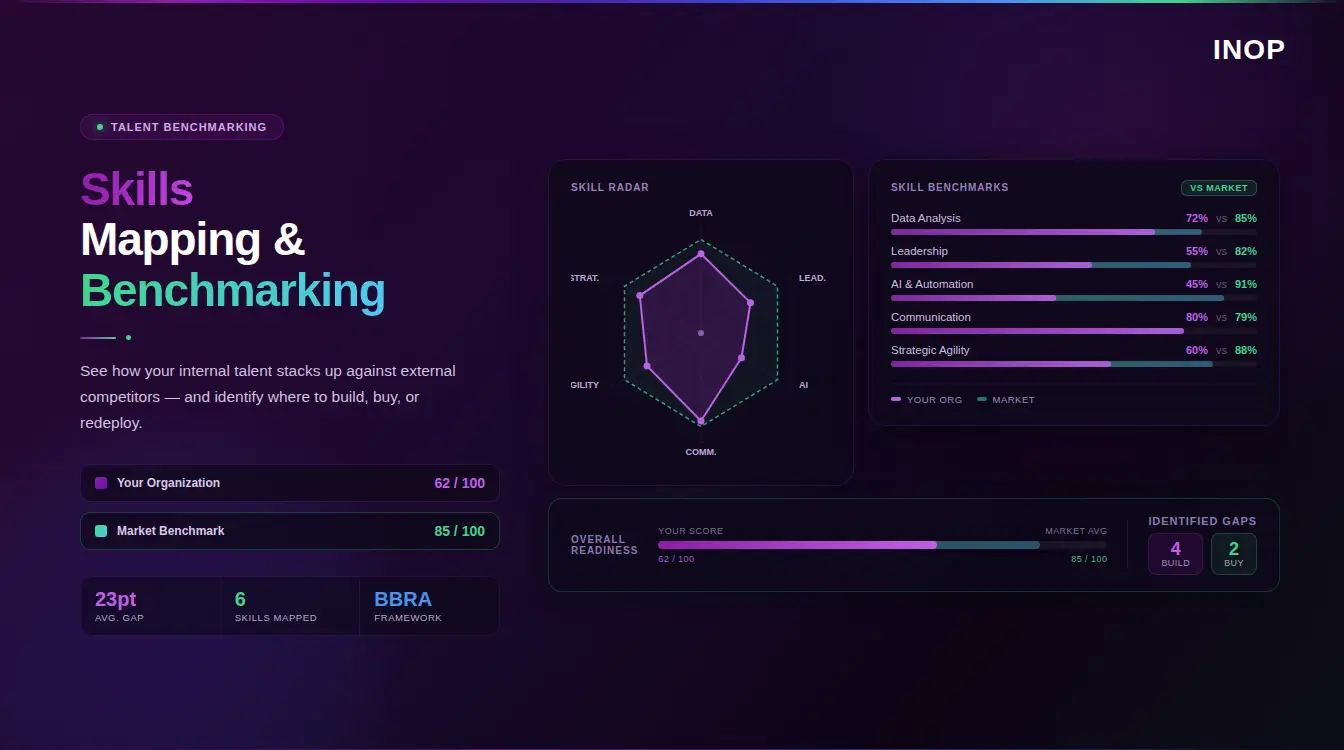
INOP measures human capital risk in three layers. Layer 1 is a weighted composite of five domains: Capability, Leadership, Role-Value, Mobility & Agility, and Cultural. Layer 2, Strategic Execution Risk, is derived across those five domains and the workforce plan, showing how likely workforce issues are to delay or derail the strategy. Layer 3, Execution Materiality, converts that risk into financial terms: delay probability, cost of delay, strategic exposure, and remediation cost.
Every score is read through five intelligence lenses: Strategy, Finance, People, Market, and AI and Automation. INOP never assesses AI risk in isolation; automation exposure is always weighed against strategy, finance, people, and market signals. Analysis runs at organization, business unit, department, country, and individual level, and INOP also works with role and task-level data, so employee-level records are not a prerequisite.
Each identified risk then gets a response through INOP’s proprietary BBRA decision architecture (Build, Buy, Redeploy, Automate), with financial trade-offs modeled across 30-day, 180-day, one-year, and three-year horizons. INOP’s strategic workforce planning platform turns the risk register into a priced, sequenced plan.
Mitigating Human Capital Risks
Once vulnerabilities are identified and measured, leadership must take proactive steps to mitigate human capital risk. Effective mitigation is not just about reacting to employees leaving; it requires building a resilient infrastructure that minimizes the likelihood and financial impact of workforce disruptions. Here are the core strategies to safeguard your organization:
Build a Risk-Aware Culture
Promote open communication where employees feel safe to raise concerns about workloads, ethics, or compliance.
Invest in Skills Development
Upskilling and reskilling programs help address future skills gaps before they become a barrier to growth.
Strengthen Succession Planning
Identify critical roles and ensure there is a pipeline of ready talent to step in when needed.
Leverage Strategic Workforce Planning
Strategic Workforce Planning can help organizations anticipate future talent needs, model workforce scenarios, and proactively address vulnerabilities — making it a key tool for closing skills gaps and building long-term workforce resilience.
Adopt Technology-Enabled Solutions
Implement HR software that supports workforce risk management, such as employee engagement platforms, AI-driven recruitment tools, and compliance monitoring systems.
Risk Transfer: The Fifth Mitigation Strategy Most Organizations Overlook
Your Build, Buy, Automate, and Sunset responses address how to close capability gaps. But a fifth mitigation response belongs in every mature human capital risk framework: risk transfer, the deliberate shifting of human capital risk exposure to a third party through contractual, insurance, or structural mechanisms.
Key person insurance is the most direct form of human capital risk transfer. Organizations that are operationally or financially dependent on specific individuals can insure against the financial impact of their sudden incapacity or departure. The policy pays out to the organization, not to the individual, providing capital to fund the recruitment, transition, and productivity gap costs that key person loss creates. For PE portfolio companies where a single executive relationship drives significant revenue, key person coverage is a standard element of operational risk management.
Directors and Officers (D&O) insurance transfers compliance and governance-related human capital risk. When executive misconduct or management failures create regulatory exposure, D&O coverage absorbs the financial liability that would otherwise fall on the organization and its board.
Employment Practices Liability Insurance (EPLI) covers the organization against claims from employees including wrongful termination, discrimination, harassment, and wage violations. As pay transparency legislation creates new grounds for pay equity claims, EPLI has become a more significant human capital risk transfer tool for organizations operating across multiple jurisdictions.
Outsourcing and staff augmentation contracts transfer operational human capital risk by converting a fixed workforce cost and capability dependency into a variable contractual arrangement. When a critical capability is sourced through a managed service provider, the provider assumes the availability and capability risk for that function rather than the organization carrying it internally.
Indemnification clauses in executive employment contracts transfer departure risk costs. Non-solicitation and non-compete provisions, when legally enforceable, reduce the risk that a departing executive takes critical client relationships or proprietary knowledge to a competitor. Garden leave arrangements serve the same function by creating a transition period where the departing employee remains in a paid relationship with the organization rather than immediately joining a competitor.
Risk transfer is not a substitute for the Build, Buy, Automate, or Sunset responses to capability gaps. It is the structural backstop that limits the financial damage when those responses are unavailable or too slow.
Workforce Risk Management vs. Traditional HR
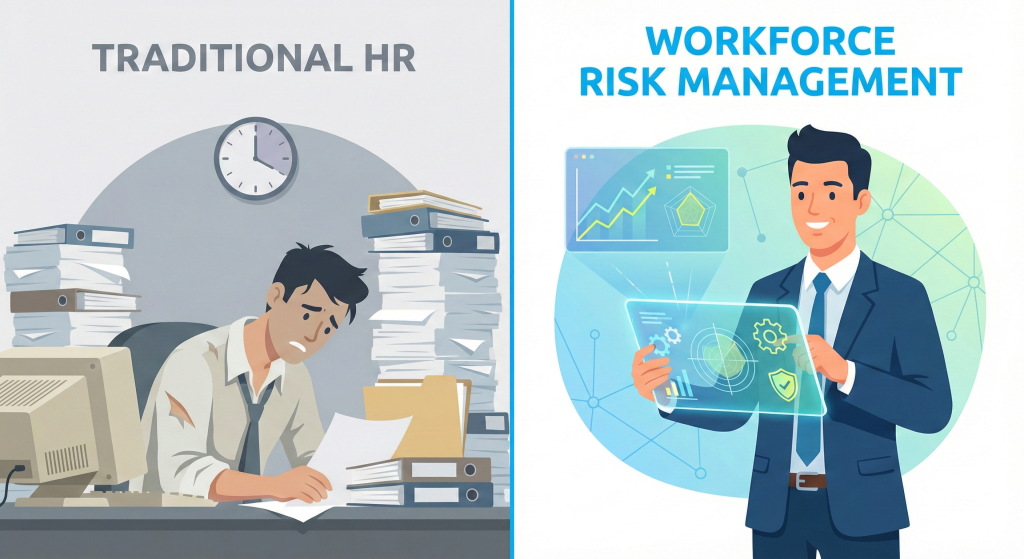
While HR traditionally focuses on hiring and employee administration, workforce risk management takes a forward-looking approach.
| Traditional HR | Workforce Risk Management |
|---|---|
| Primarily reactive | Proactive, predictive, and data-driven |
| Focused on transactions | Focused on preventing future disruptions |
| Limited to HR team | Involves leadership and cross-functional input |
| Looks at current workforce only | Plans for future workforce scenarios |
This proactive approach allows businesses to minimize risk before it becomes a problem.
AI Human Capital Risk Management
As workforce dynamics become increasingly complex, manual spreadsheets are no longer sufficient to track people-related threats. The future of organizational resilience relies on AI human capital risk management.
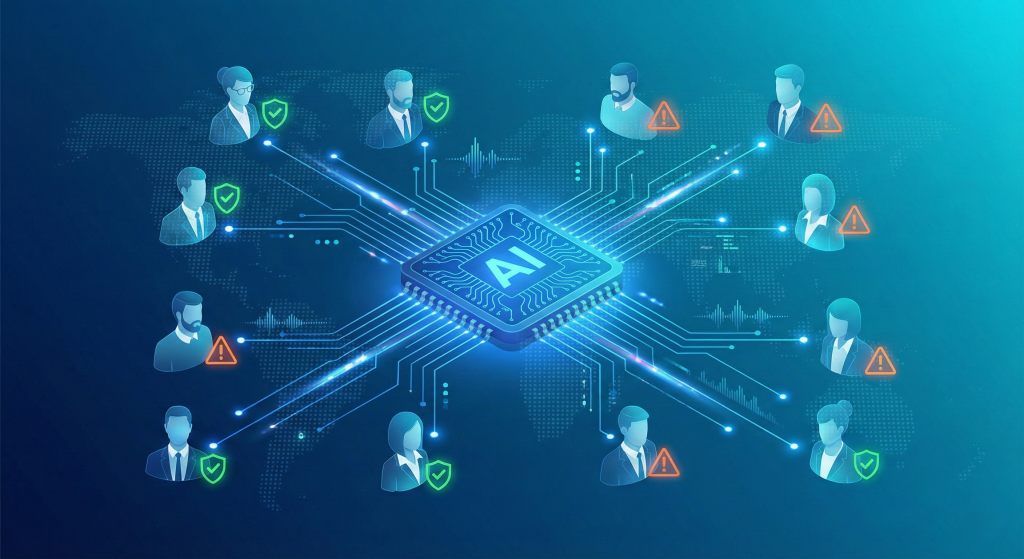
By utilizing an AI-driven Talent Intelligence Platform like INOP, companies can continuously monitor their workforce in real-time. Artificial intelligence automates the detection of skill gaps, monitors internal mobility trends to prevent flight risks, and ensures your compensation structures remain compliant with local regulations. Implementing AI human capital risk management allows organizations to shift from a reactive HR posture to a predictive, strategic workforce planning model—stopping risks long before they affect business performance.
Common Challenges in Managing Human Capital Risk
Even with the right strategy, organizations often face hurdles:
- Data Silos: HR, finance, and operations may not share data, leading to incomplete risk insights.
- Lack of Leadership Buy-In: Executives may underestimate workforce risks until they affect performance.
- Rapid Market Changes: Skills that are relevant today may not be tomorrow, making risk management a continuous process.
Overcoming these challenges requires alignment, leadership support, and continuous improvement.
Conclusion
Human capital risk is no longer just an HR issue, it’s a core business concern that affects profitability, compliance, and long-term growth. By identifying, measuring, and mitigating workforce risks, organizations can build resilience, protect their talent pipeline, and stay competitive in an uncertain market.
The time to act is now. Audit your workforce data, prioritize risk areas, and develop a plan to address them. By doing so, you’re not just reducing risk, you’re unlocking new opportunities for growth and innovation.
Human capital risk is not an HR issue. It is a strategy execution issue, one that shows up in delayed transformation programmes, leadership vacuums at critical moments, and capability gaps that only become visible when a strategic initiative stalls. The organisations INOP works with, share one thing: they are operating in environments where the cost of getting workforce decisions wrong is measured in strategic setback and financial exposure, not just recruitment spend. If your board is asking whether your workforce can execute the plan, that question deserves a better answer than a headcount report.
INOP provides that answer. → Book a 20-minute demo
Frequently Asked Questions
What is human capital risk in simple terms?
Human capital risk is the possibility that workforce-related issuesو like skill shortages, high turnover, or compliance failuresو will harm business performance.
How do you measure human capital risk?
Measurement involves tracking key metrics such as turnover rate, time-to-fill, engagement scores, and skills gaps, and then calculating the financial impact of these risks.
What is workforce risk management?
Workforce risk management is the process of identifying, assessing, and mitigating risks related to an organization’s employees, contractors, and talent pipeline.
Why is human capital risk increasing in 2025?
The rise of AI, remote work, and new compliance regulations are accelerating workforce disruptions, making risk management a top priority for organizations.
How can technology help manage human capital risk?
Technology enables predictive analytics, automates compliance monitoring, and provides real-time insights into workforce trendsو helping leaders take proactive action.