Did you know that 87% of companies worldwide admit they either already have a skill gap or expect to face one within the next five years? This issue directly affects productivity, innovation, and employee retention. That’s where skill gap analysis becomes a powerful tool.
A skill gap analysis helps organizations identify the difference between the skills employees currently possess and the skills they need to meet business goals. For HR leaders, managers, and executives, mastering this process is critical to future-proofing the workforce and staying competitive.
In this guide, we’ll walk through a step-by-step skill gap analysis process, explain why it matters, and show you how to close skill gaps effectively.
What Is a Skill Gap Analysis?
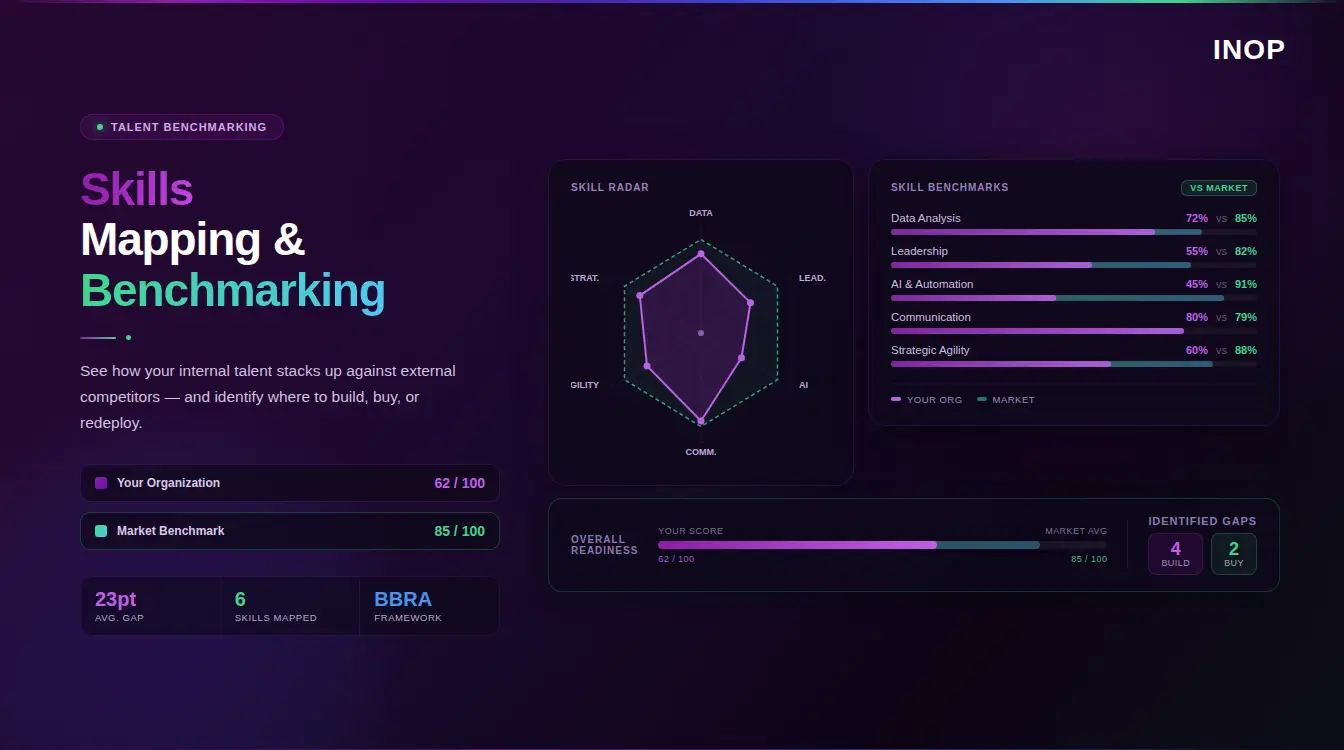
A skill gap analysis is a structured process used to evaluate employees’ existing skills compared to the skills required for current and future roles. It helps organizations spot weaknesses, plan targeted training, and align talent development with business strategy.
For example, if your marketing team lacks data analytics skills, you can either train current employees or hire new talent with the right expertise. By doing so, you avoid delays in growth and reduce unnecessary recruitment costs.
Think of it as a skill audit, a systematic way to measure capability and identify areas that need improvement.
Why Conduct a Skill Gap Analysis
Organizations that invest in skill gap analysis experience measurable benefits, including:
- Increased efficiency: Employees work smarter with the right training.
- Cost savings: Targeted training reduces wasted L&D spend.
- Better retention: Employees who receive growth opportunities are 94% more likely to stay longer.
- Future-readiness: Leaders can adapt to new technologies and industry shifts with confidence.
Most importantly, it ensures that your workforce strategy aligns with business objectives. Without it, companies risk falling behind competitors who prioritize upskilling.
👉 A skill gap analysis is often the first step toward using a skill-based workforce planning, which ensures you can connect employee skills to organizational needs in real time.
Step-by-Step Skill Gap Analysis Process
Conducting a skill gap analysis doesn’t have to be overwhelming. Follow these key stages:
Define Business Goals and Future Needs
Start by identifying company priorities. Are you expanding into a new market, adopting AI tools, or enhancing customer experience? Your workforce skills should match those ambitions.
Map Required Skills for Each Role
List the core competencies and technical expertise required for success in each role. For instance, a project manager may need leadership, budgeting, and agile methodology knowledge.
Evaluate Current Workforce Skills
Use a skill audit to assess employee capabilities. Methods include:
- Surveys and self-assessments
- Performance reviews
- Manager evaluations
- AI-driven assessment platforms
This step gives you a baseline of what skills exist in your organization today.
Identify Gaps
Compare current skills with required skills. The difference is your skill gap. For example, if your IT team understands cloud migration but lacks cybersecurity knowledge, that’s a clear area to address.
Develop Action Plans
Address gaps by:
- Offering training and development programs
- Hiring new talent
- Redesigning roles to optimize existing strengths
- Partnering with external consultants or vendors
A structured plan ensures no gap goes unaddressed.
Tools and Methods for Effective Skill Gap Analysis
Technology can significantly enhance the accuracy of a skill gap analysis. HR leaders often rely on:
- Learning Management Systems (LMS) to track employee progress.
- AI-driven platforms to recommend personalized training.
- Competency frameworks to benchmark skill requirements.
Some companies also integrate skills-based workforce planning to connect training investments directly with business performance, ensuring that closing gaps leads to measurable results.
Common Mistakes to Avoid
While conducting a skill gap analysis, organizations often stumble by:
- Relying solely on self-assessments (bias can distort results).
- Overemphasizing technical skills while neglecting soft skills like communication or problem-solving.
- Treating the analysis as a one-time activity instead of an ongoing strategy.
Avoiding these pitfalls will make your analysis more reliable and impactful.
Benefits of Closing Skill Gaps
Closing skill gaps has wide-ranging advantages for both employees and employers:
- For organizations: Reduced turnover, higher productivity, better innovation.
- For employees: Career growth, job satisfaction, and a stronger sense of purpose.
When done consistently, skill development becomes part of company culture—something today’s workforce actively seeks in potential employers.
👉 Linking this process with workforce skill shortage solutions ensures your organization isn’t left behind in the race for top talent.
Conclusion
A skill gap analysis isn’t just an HR exercise—it’s a business strategy. By identifying current capabilities, mapping them against future needs, and implementing targeted action plans, organizations can stay competitive, retain top talent, and fuel innovation.
The key takeaway? Don’t treat it as a one-time checklist. Instead, build it into your long-term workforce planning strategy.
If you’re ready to take the next step, consider integrating a modern analysis framework into your HR toolkit. You’ll not only uncover gaps but also transform them into opportunities for growth.
What skill gaps do you think your team is currently facing? Share your thoughts in the comments—we’d love to hear from you.
Frequently Asked Questions
What is the main purpose of skill gap analysis?
The purpose is to identify the difference between employees’ existing skills and the skills required to achieve business goals.
How often should companies conduct a skill gap analysis?
Ideally, once a year, but rapidly changing industries may benefit from semi-annual reviews.
What methods are best for evaluating employee skills?
A combination of surveys, performance reviews, manager feedback, and AI-driven assessments works best.
Is skill gap analysis only for large companies?
Not at all. Small and mid-sized businesses can benefit just as much, especially when preparing for growth or adopting new technologies.
What’s the difference between a skill gap analysis and a skill audit?
A skill audit collects data on current skills, while a skill gap analysis compares that data against the skills required for success.