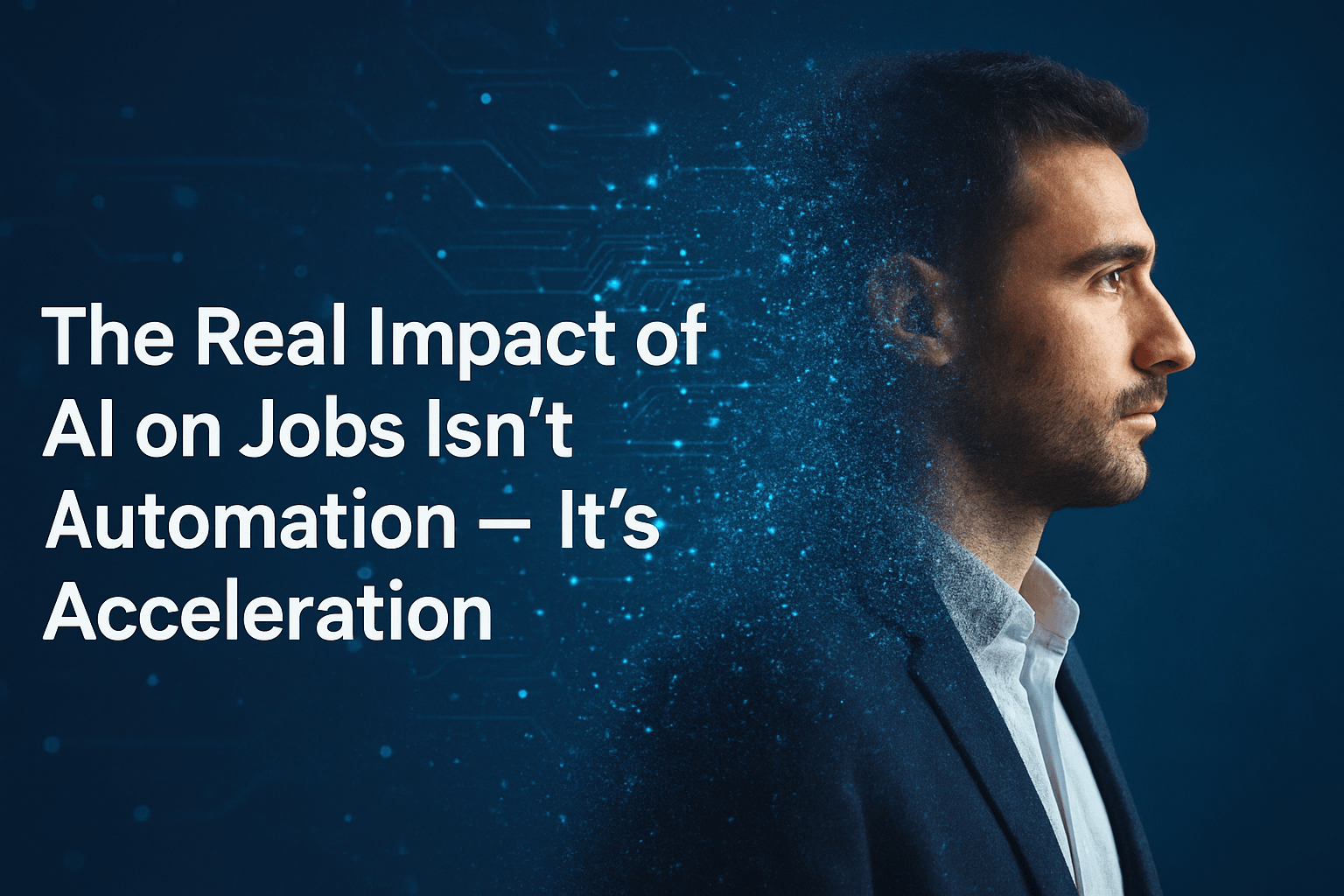
When Palantir’s CEO declared the “astonishing impact” of AI after reporting a billion-dollar quarter, he wasn’t just describing a technological leap. He was acknowledging a shift in how value is being created — and who, increasingly, is doing the work.
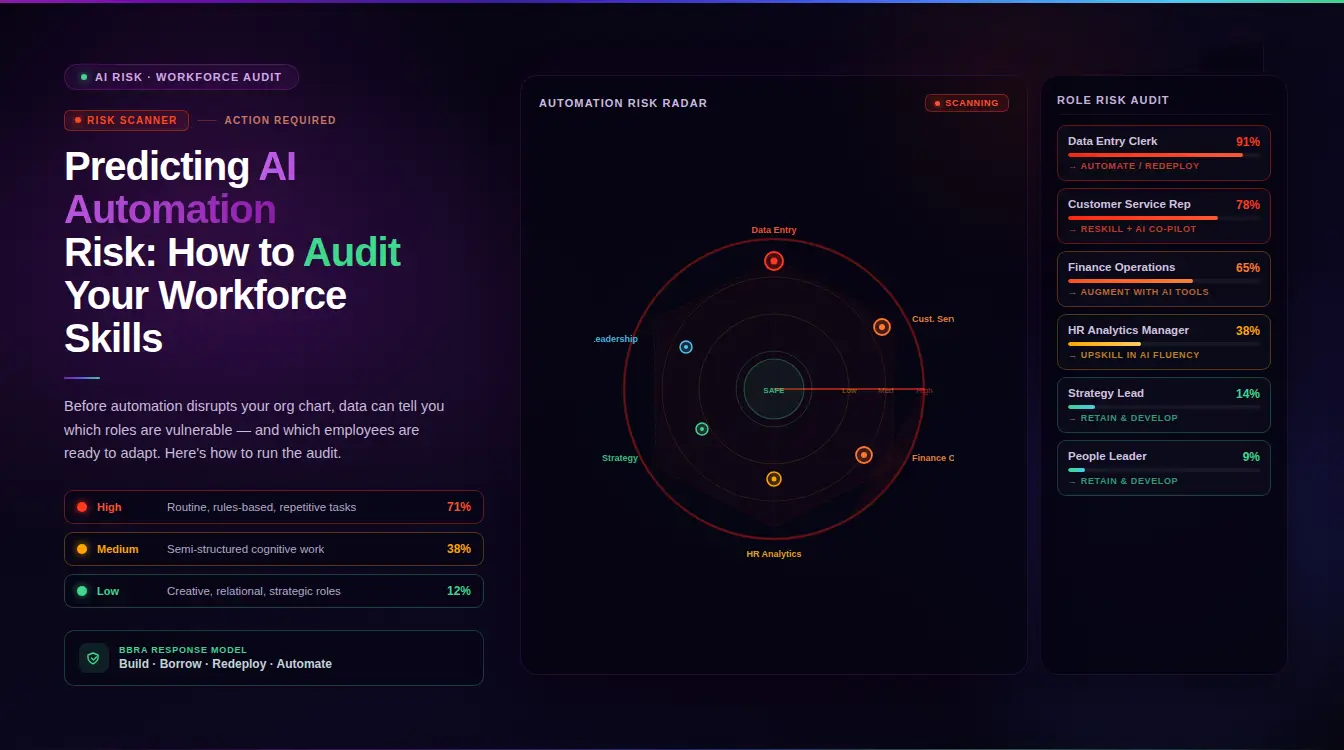
Across industries, companies are becoming leaner — and not just out of economic caution. Efficiency, once the goal of AI adoption, is now table stakes. Productivity per employee is the new holy grail. From Klarna replacing customer service agents with bots (only to later reverse course), to Microsoft cutting thousands of roles while boasting 30% of its code is now AI-generated, a clear pattern has emerged: the task is being unbundled from the job, and jobs from the worker.
But automation is only part of the story. The deeper change lies in how organizations plan, adapt, and invest in their workforce in an environment where certainty has vanished — and where investors are starting to take notice.
From Workforce to Work Design
What’s unfolding isn’t just technological disruption. It’s the collapse of predictability in work.
Job architectures that once held firm are being disassembled. Tasks are being redistributed — to algorithms, to freelancers, to adjacent roles. What’s left behind are hollowed-out job descriptions and leadership teams grappling with what the workforce is even supposed to look like in 18 months.
This is not just an HR issue. It has become a boardroom concern.
In recent quarters, major institutional investors — including BlackRock and CalPERS — have signalled that they are now evaluating companies not just on financial returns, but on their preparedness for workforce transformation. That includes how they’re managing the risks and opportunities of AI and automation, and whether they have a credible, forward-looking plan for upskilling, internal mobility, and talent renewal.
In other words, the question is no longer just “How efficiently are you operating?” but “How responsibly and strategically are you evolving your workforce?”
Why Efficiency Alone Isn’t Enough
The appeal of a leaner workforce is obvious: more output with fewer people. Many tech firms have embraced it, with some even touting “tiny teams” achieving massive scale — the mythical one-person billion-dollar company.
But efficiency without adaptability is a brittle strategy. And efficiency without human capability renewal risks eroding the very foundation of long-term value creation.
There are already signs of tension. A recent FT report noted how some AI-driven layoffs are being rethought as customer satisfaction and employee morale take a hit. Klarna, after automating large portions of its customer service operation, is now hiring back humans. Companies are realizing that AI can optimize processes, but not culture.
And culture matters to investors too.
The Talent Gap Is No Longer Just a Skills Gap — It’s a Governance Gap
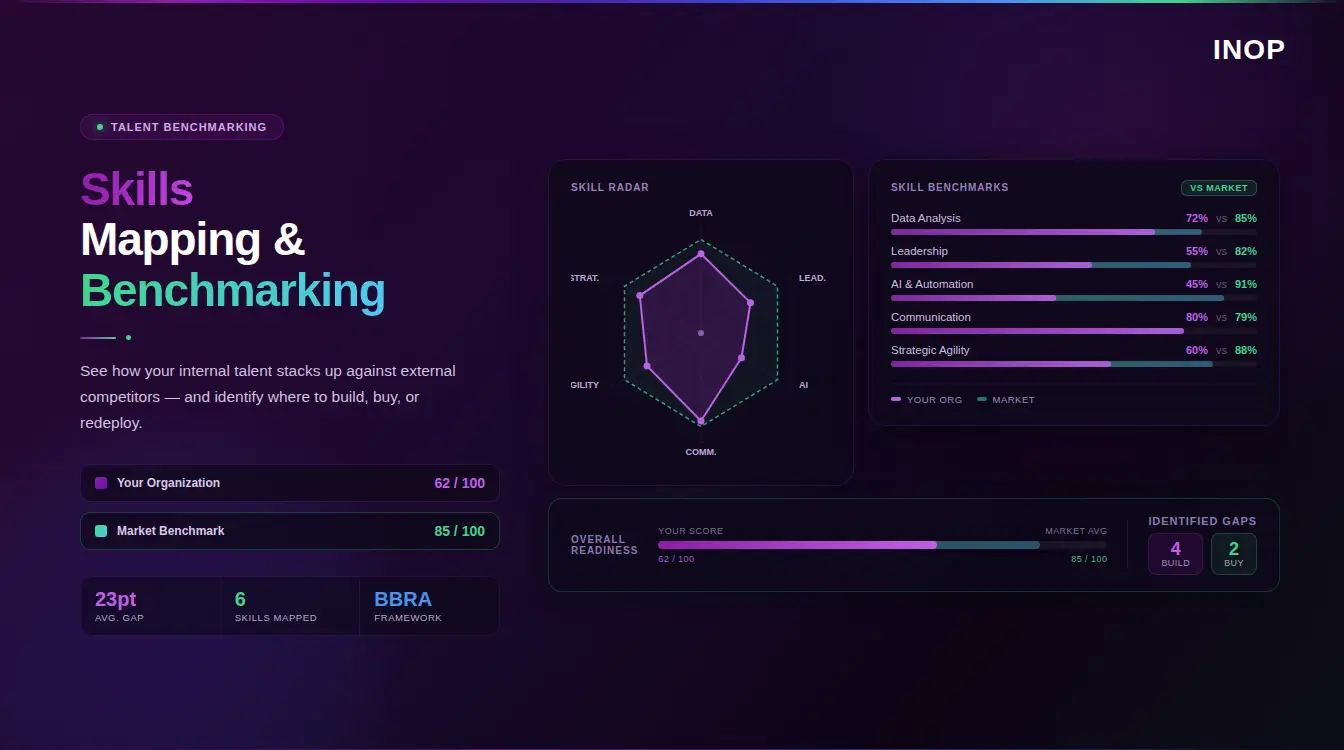
LinkedIn data shows AI-related skills are being demanded in nearly one in four new tech job postings. Yet most organizations remain behind the curve in understanding where their actual skill gaps lie.
The issue isn’t just that some workers don’t have the right capabilities. It’s that many companies don’t have the visibility to know who can grow into new roles, who can be reskilled, and where new capabilities must be brought in.
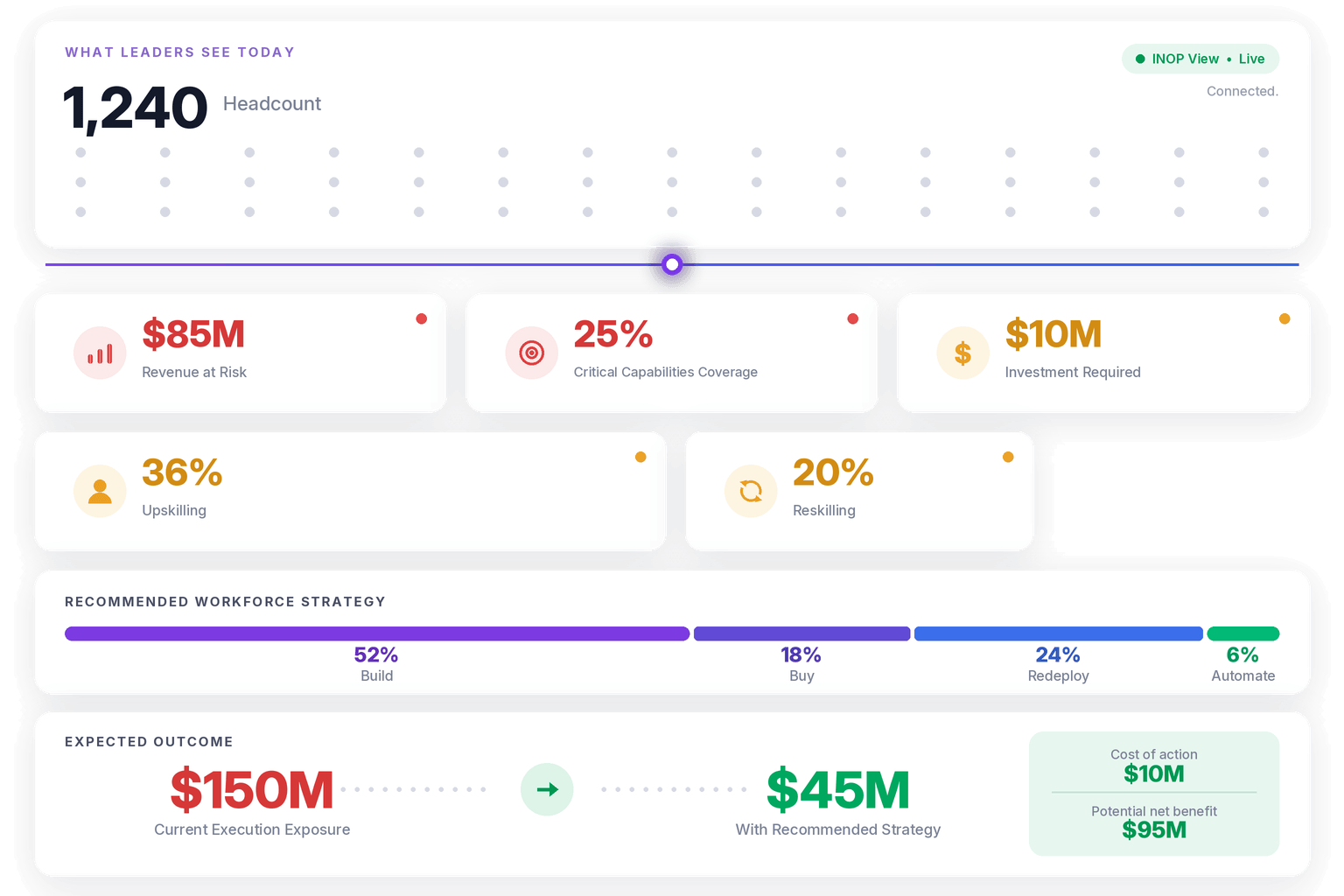
That’s why investors and boards are beginning to treat workforce strategy as a form of risk management. If a company can’t articulate how it’s redeploying talent in light of automation, how it’s equipping teams for AI augmentation, or how it’s rebuilding career pathways after eliminating entry-level roles — it increasingly looks like a governance failure.
In this context, strategic workforce planning is no longer a back-office function. It’s a core business imperative.
Foresight as a Competitive Advantage
The companies most likely to thrive in the next decade will not be those with the fastest AI adoption curve. They will be those with the deepest foresight — the ones able to model the evolution of skills across teams, test multiple workforce futures, and build internal capability faster than competitors can hire it.
In this model, the question isn’t “How many people do we need?” but “What kinds of work will we need done, and who can learn to do it?”
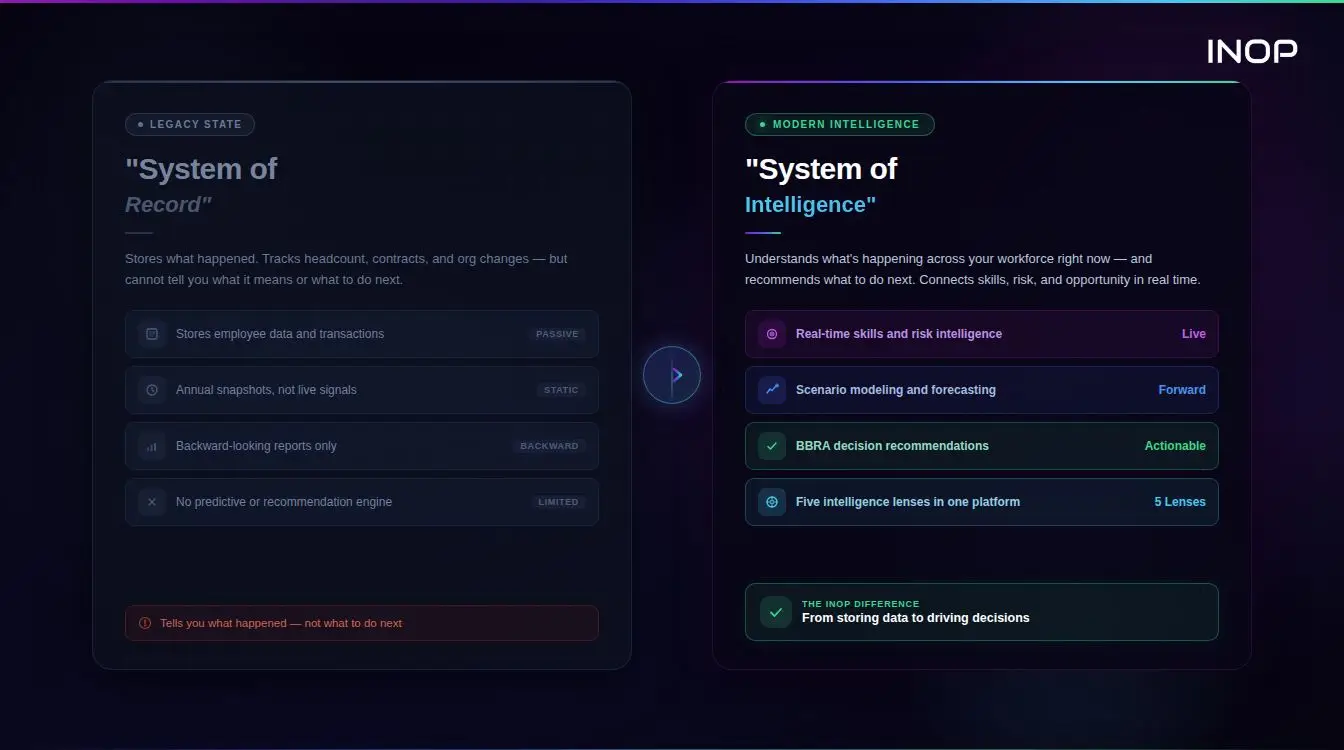
This shifts talent strategy from a static exercise to a living, dynamic capability. And it requires the ability to see around corners — to detect early signals in skills markets, to rethink job architecture, to replace long-cycle training with just-in-time capability building.
The Human Premium Still Matters
Despite the noise, this isn’t a story about machines replacing people. It’s a story about how value is shifting — and how organizations respond.
AI can optimize processes, reduce costs, and even write code. But it still struggles with ambiguity, empathy, and trust — the very things organizations need when navigating complexity and change. As many leaders are now discovering, cutting headcount too aggressively may help this quarter’s margins but hurt next year’s resilience.
That’s why companies investing in human adaptability — through upskilling, workforce intelligence, and culture transformation — are starting to be viewed not just as good employers, but as better long-term bets.
Conclusion: Leading in the Age of Intelligent Work
We’re entering a new chapter — not of job loss, but of work reinvention. The firms that succeed won’t be the ones who automate fastest or cut deepest. They’ll be the ones who can plan intelligently, respond dynamically, and invest in human potential — even when the path ahead is murky.
In the end, AI may reshape the nature of work. But how we lead through that change will define the nature of business itself.