Pay Decisions Are Now Scrutinized—and Strategic
In today’s transparent, talent-scarce environment, compensation decisions are no longer made behind closed doors. Employees expect clarity. Investors demand fairness. Regulators require accountability.
For CHROs and compensation leaders, the ability to defend and explain every pay decision is no longer optional—it’s essential.
From Opinionc to Evidence: The Shift to Data-Driven Pay
Traditional compensation conversations often relied on manager opinion, or legacy ranges, surveys. But the speed of labor market change has rendered these methods insufficient. Today’s pay decisions must be:
- Transparent
- Defensible
- Contextualized to skills, geography, and performance
According to Gartner, 92% of HR leaders say they lack the data needed to make confident pay decisions.
When leaders don’t have the right data to back up decisions, trust is eroded—both internally and externally. Data-driven pay isn’t a trend. It’s a requirement for strategic alignment and long-term credibility.
The Strategic Role of Compensation Benchmarks
Modern compensation benchmarks do more than compare salaries. They:
- Provide a market-informed baseline for fair pay
- Highlight emerging trends and skills premiums
- Anchor internal equity reviews and risk assessments
- Support business case development for workforce investment
When integrated properly, benchmarks become a foundation for:
- Talent attraction and retention strategies
- Compensation philosophy and pay band design
- Compliance and DEI accountability
Benchmarks enable HR leaders to build compensation structures that not only reflect market realities but also drive behavioral outcomes—loyalty, motivation, and retention.
What Great Benchmarks Look Like
Not all benchmarks are created equal. Effective compensation benchmarks should offer:
- Real-time updates to reflect volatile markets
- Skill-specific granularity beyond generic job titles
- Location-sensitive insights for hybrid and global teams
- Peer group alignment relevant to your industry, size, and growth stage
- Integration capabilities to sync with planning, DEI, and HRIS tools
High-quality benchmarks serve not just compensation managers, but the entire C-suite—providing visibility into how talent investment aligns with business strategy.
Pain Point: The Cost of Poor Benchmarking
A global tech scale-up used broad benchmarks to define pay bands during rapid hiring. Within six months, it experienced:
- A 15% discrepancy between new hire and internal team pay
- Two critical resignations due to perceived inequity
- A stalled funding round due to investor concerns about pay transparency
The damage wasn’t just financial. It slowed momentum, hurt morale, and raised questions about governance. Compensation credibility is now tied to organizational performance.
How INOP Enhances Benchmarking for the Modern CHRO
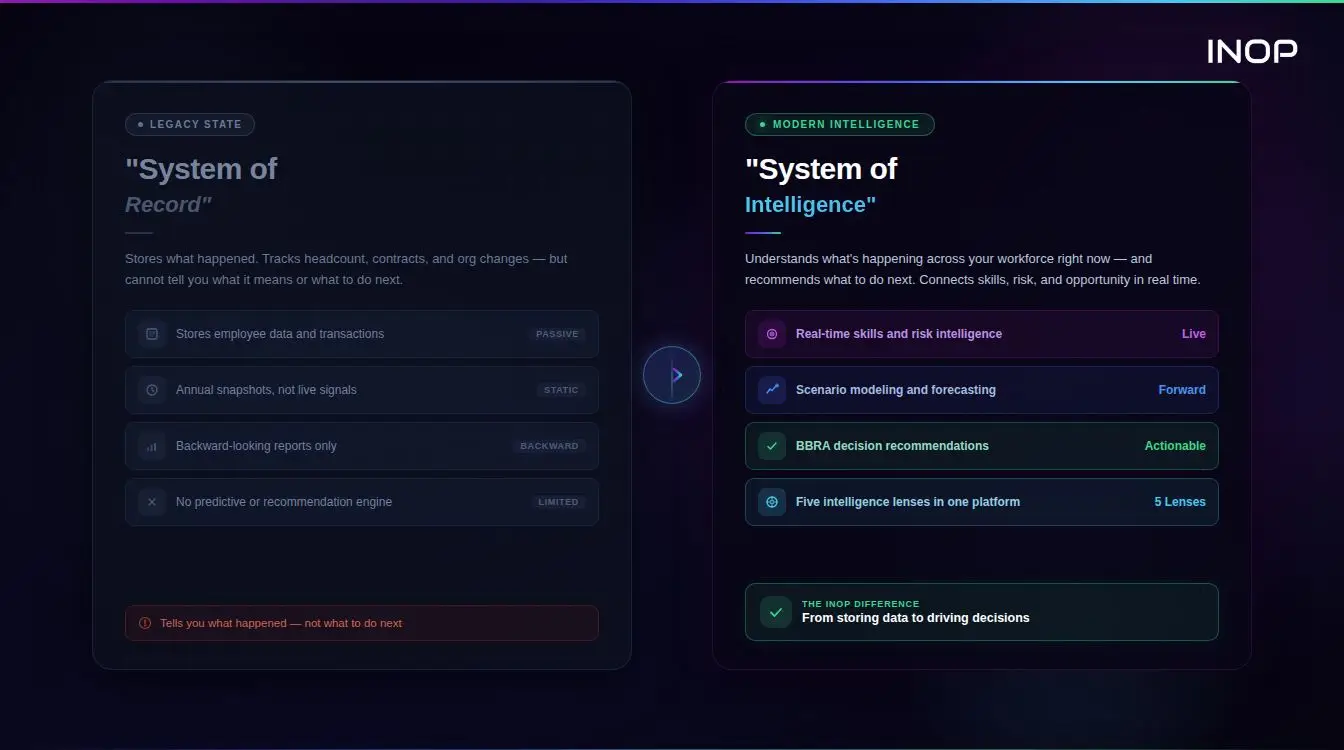
INOP’s platform transforms benchmarks from static data points to actionable insight. It enables:
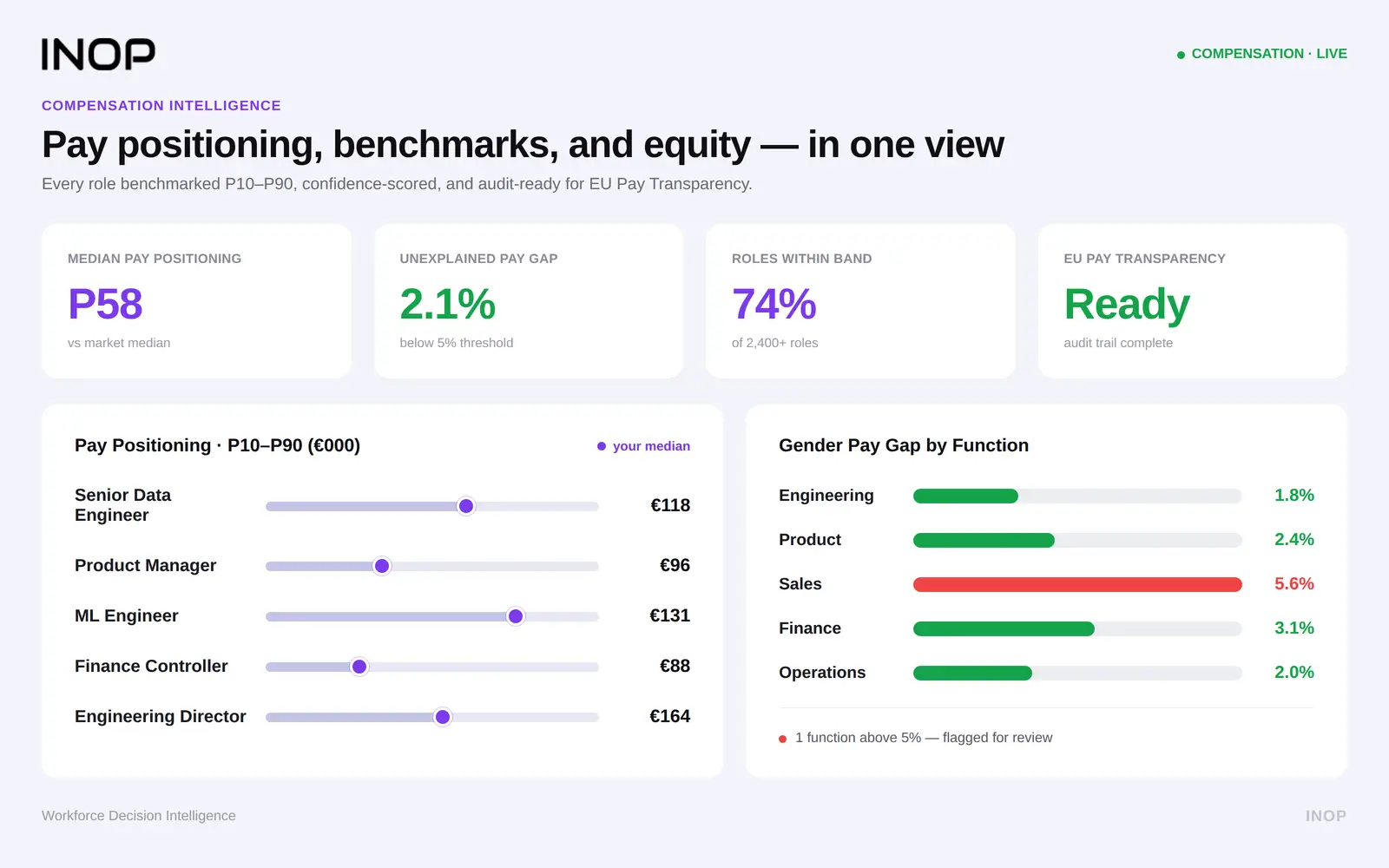
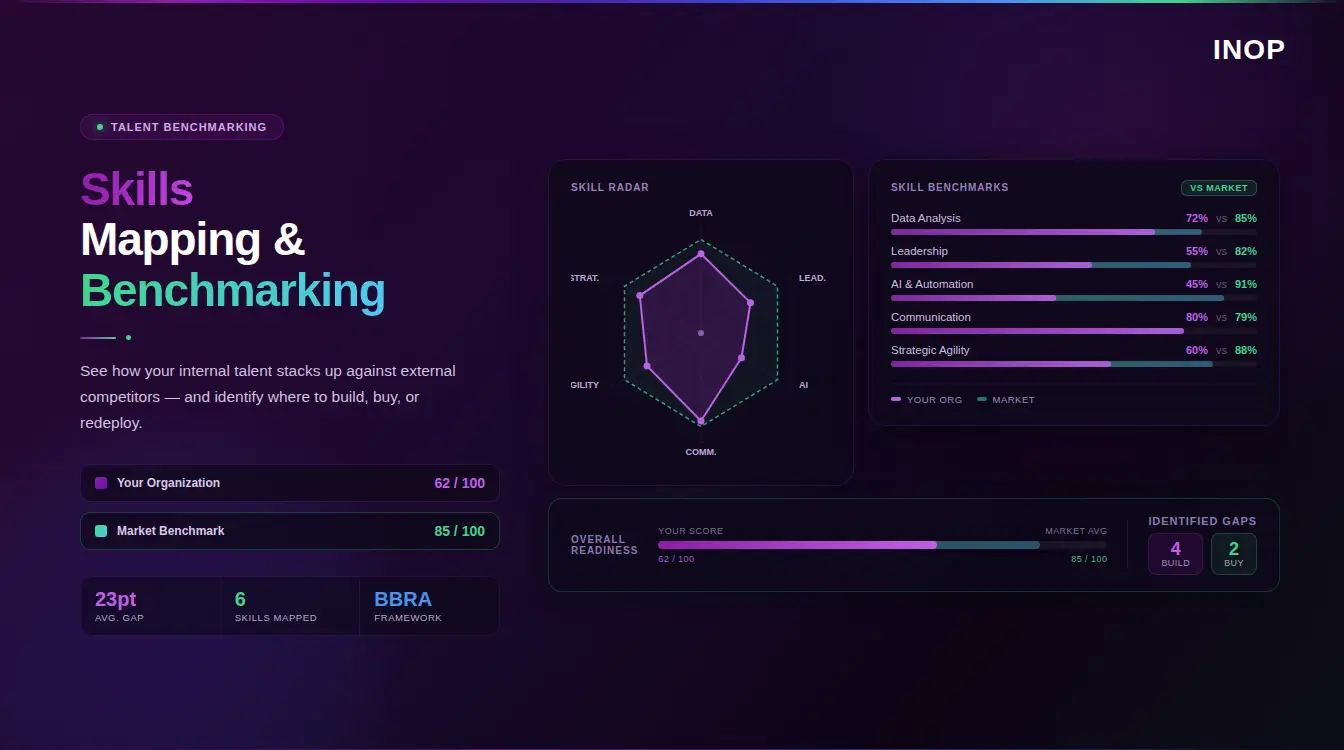
- Live salary comparisons by skill, region, and function
- Interactive equity maps to assess compression and pay fairness
- Transparent audit trails to explain compensation logic to leadership and boards
- Historical trend data to anticipate future compensation pressures
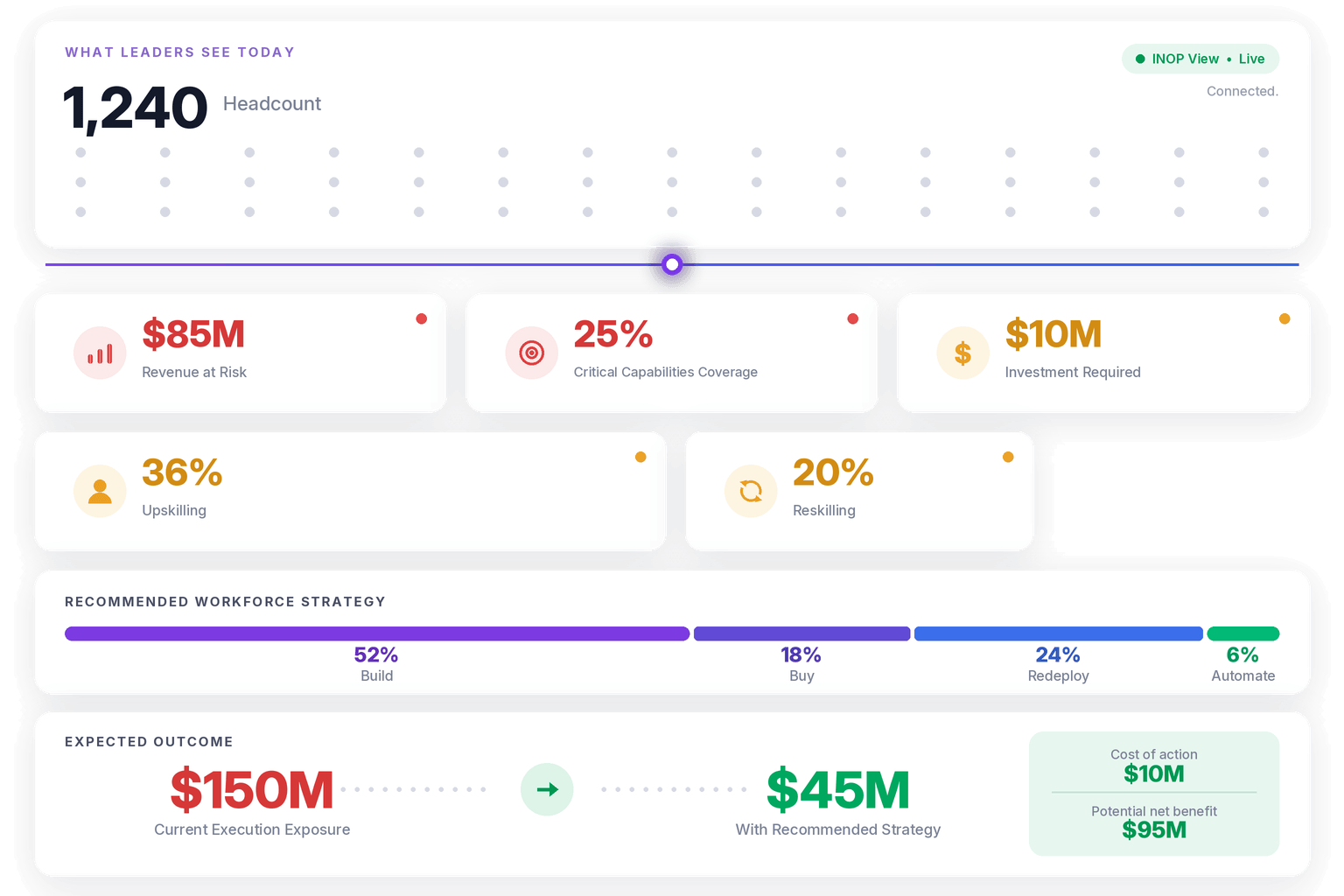
- Strategic workforce cost modeling to show the cost to hire critical and missing roles—adding business context to compensation decisions
With INOP, benchmarking becomes continuous—not a one-off event.
Linking Benchmarks to Business Outcomes
When benchmarks are integrated into compensation workflows, HR teams can:
- Model cost implications of strategic hires
- Anticipate talent flight risk due to pay gaps
- Align compensation with transformation, DEI, and retention goals
- Enable data-backed storytelling to investors, boards, and employees
According to WTW, companies with mature pay benchmarking processes are 2.4x more likely to report improved talent retention.
Benchmarks in Action: From Policy to Practice
An international energy firm undergoing digital transformation used INOP to transition from static benchmarks to a skill-based model. Within one planning cycle, they:
- Rebalanced salary bands across 11 roles to reflect emerging tech capabilities
- Reduced pay compression by 21% among high-performing women in STEM
- Strengthened investor confidence with quarterly compensation equity reports
This is the real-world impact of intelligent benchmarking. It fuels strategy, improves outcomes, and builds trust.
Final Thought: Benchmarks Are a Leadership Tool, Not Just an HR Asset
For today’s CHROs, compensation benchmarking is no longer a back-office task. It’s a strategic capability that impacts brand, talent, and growth.
INOP equips HR leaders with the real-time insights, transparency, and context they need to lead with confidence.
Discover how INOP makes compensation analytics a business advantage