In today’s fast-paced job market, hard skills alone aren’t enough to land you that dream job. Employers are increasingly looking for candidates with strong top trending soft skills—the personal attributes that enable you to interact effectively and harmoniously with others. Whether you’re just starting your career or looking to level up, honing these top trending soft skills can make you a standout candidate.
INOP has identified the top trending soft skills that are most in demand among employers today, based on a comprehensive analysis of over 2 million job posts from around the globe. Leveraging its extensive skills taxonomy—which can be deployed by companies to identify and assess their workforce’s skills inventory, highlighting strengths and gaps—INOP has pinpointed the skills that are crucial for success in today’s job market. Let’s dive into these trending skills and explore how you can develop and showcase them to improve your employability.
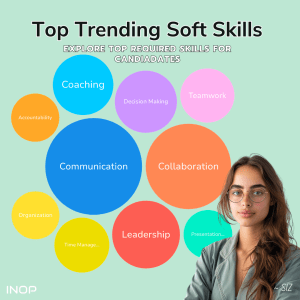
1. Communication: The Cornerstone of Success
According to INOP’s data, clear and effective communication is the number one of top trending soft skills that employers seek, as it underpins teamwork, problem-solving, and leadership abilities. Whether you’re drafting an email or leading a meeting, the ability to articulate thoughts, listen actively, and engage in meaningful dialogue is crucial.
- Improve: Practice active listening, join public speaking groups like Toastmasters, and refine your writing skills.
- Showcase: Highlight roles where communication was key, such as leading a project or resolving conflicts.
For more insights, you can explore Harvard’s comprehensive discussion on key soft skills here (Mignone Career Success).
2. Collaboration: Thriving in Team Environments
INOP also found that collaboration is highly valued. Working well with others and contributing to a common goal is invaluable in any workplace. Collaboration involves respecting diverse opinions and being a team player.
- Improve: Participate in team activities, be open to feedback, and develop conflict resolution skills.
- Showcase: Share examples of successful teamwork and how your contributions led to positive outcomes.
3. Leadership: Guiding Others to Success
Leadership, as highlighted by INOP, is not just about managing others but about influencing, motivating, and taking initiative. Leadership involves being proactive and serving as a role model for others.
- Improve: Take on leadership roles in projects or volunteer work, and develop decision-making skills.
- Showcase: Mention times when you led a project or initiative and the impact it had.
retated article: deloitte insights gen z
4. Time Management: Maximizing Productivity
Effective time management is another key skill emphasized by INOP. Employers value those who can prioritize, meet deadlines, and manage tasks efficiently without compromising quality.
- Improve: Use tools like calendars and to-do lists, set SMART goals, and delegate when needed.
- Showcase: Highlight instances where you managed multiple tasks successfully and met tight deadlines.
5. Accountability: Taking Ownership
Accountability, according to INOP’s research, is about being responsible for your actions and learning from mistakes. This builds trust and shows integrity, which are qualities highly sought after by employers.
- Improve: Practice self-reflection, set personal standards, and seek feedback.
- Showcase: Provide examples where you took ownership of a task or project and delivered results.
6. Decision Making: Making Informed Choices
Good decision-making is another skill highlighted by INOP. It involves analyzing information and choosing the best course of action. This skill is crucial in any role.
- Improve: Practice decision-making in low-risk situations, gather information quickly, and reflect on past decisions.
- Showcase: Discuss decisions you’ve made that had a positive impact on your work.
7. Coaching: Empowering Others
INOP’s data shows that coaching is about guiding and supporting others to help them grow. It’s a valuable skill not just for managers but for anyone in a mentoring role.
- Improve: Practice active listening, offer constructive feedback, and learn coaching techniques.
- Showcase: Mention any mentoring or coaching roles and the successes achieved through your guidance.
8. Organization: Keeping Everything in Order
Being organized, as emphasized by INOP, involves planning your time and managing resources effectively. It ensures projects are completed on time and to a high standard.
- Improve: Develop systems for task management, prioritize effectively, and maintain a schedule.
- Showcase: Provide examples of how your organizational skills improved efficiency or managed complex projects.
9. Presentation Skills: Making an Impact
Presentation skills are crucial for sharing ideas and influencing others, as highlighted by INOP. Whether in a small meeting or a large audience, the ability to communicate your ideas clearly is key.
- Improve: Practice presentations, focus on body language and tone, and use visual aids.
- Showcase: Highlight impactful presentations, such as securing a client or leading a successful pitch.
Find Top Treding Soft Skills with INOP 🚀
Ready to put these soft skills into action? INOP makes it easy to explore job opportunities that match your skill set and connect with companies looking for talented professionals like yourself. With INOP’s insights into the most in-demand skills, you’ll be better prepared to navigate the job market and seize the opportunities that come your way.
Don’t wait—your dream job is just a click away!