Fair Pay Is Now a Strategic Risk—And a Differentiator
Fair compensation has moved from DEI talking point to enterprise imperative. In a world shaped by stakeholder capitalism, investor scrutiny, and global workforce expectations, fair pay is no longer a values-based initiative—it’s a material risk and a competitive differentiator.
Employees, regulators, and boards are all asking the same questions: Can your organization prove its pay practices are fair, explainable, and consistent? And are you prepared to answer that at any time—not just during audits?
The Cost of Legacy Compensation Models
Traditional compensation systems were built for a different era. They often rely on outdated titles, subjective manager decisions, and closed-door pay bands. These systems:
- Mask internal disparities
- Fail to explain pay decisions
- Expose the business to legal, reputational, and retention risk
Smaller organizations, in particular, face an even greater challenge. Many still rely on manual research or costly consultants to gather pay data—approaches that are slow, inconsistent, and difficult to scale. Without robust infrastructure, fair pay becomes aspirational instead of achievable.
What Fair Pay Actually Means in 2025
The definition of fair compensation has evolved beyond “equal pay for equal work.” Today, it includes:
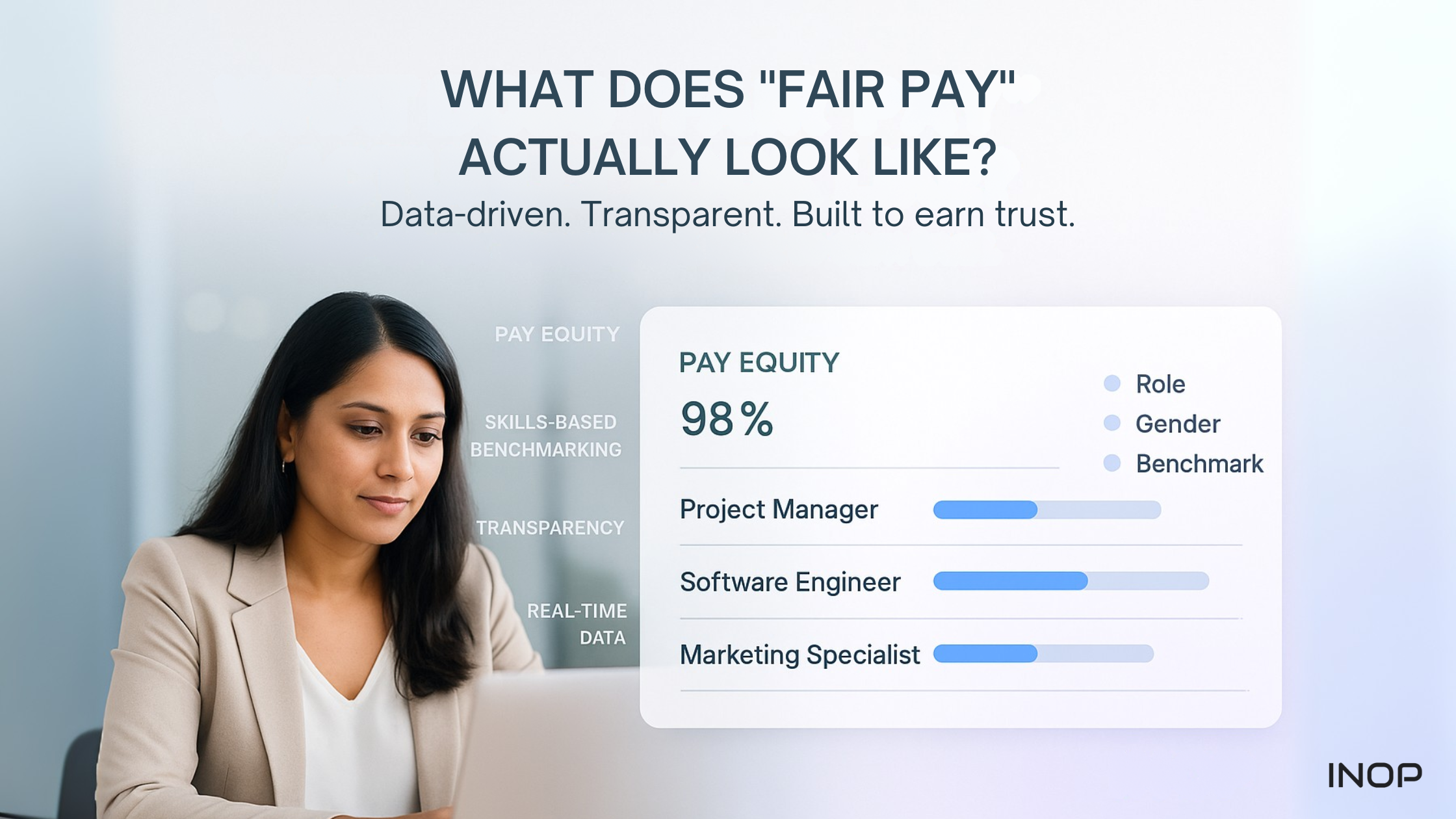
- Pay equity across gender, race, and other demographics for equivalent contributions
- Pay transparency in how decisions are made and communicated
- Performance alignment, where compensation reflects measurable impact
Fairness must now be built-in, not bolted on. It needs to be explainable, visible, and consistent across teams, levels, and locations.
Why Compensation Intelligence Is Now Core Infrastructure
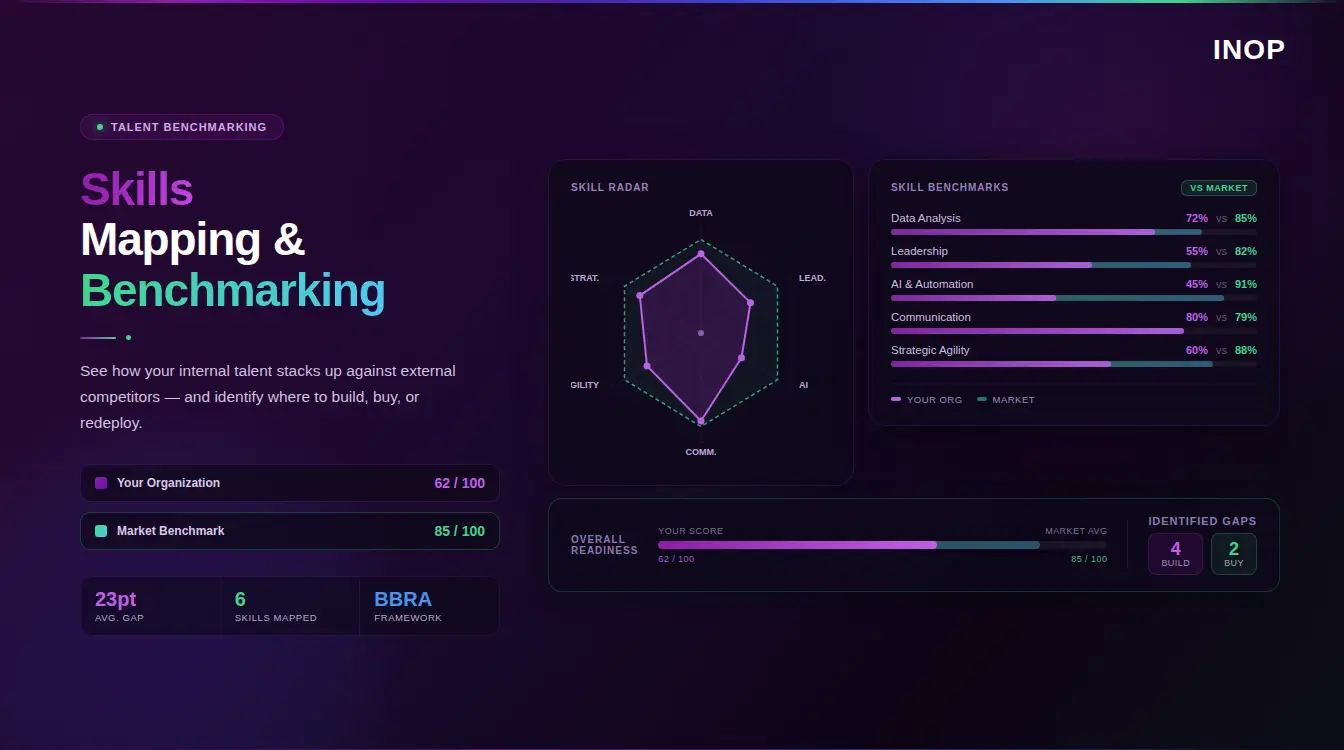
CHROs and DEI leaders can no longer rely on spreadsheets and static benchmarks. Real-time compensation intelligence is foundational to:
- Benchmarking compensation across markets and roles
- Identifying systemic pay disparities early
- Supporting equitable progression and retention strategies
Without structured data, fairness becomes anecdotal—and untrustworthy.
Inclusion Starts with Transparent Pay Logic
Fair pay isn’t just a policy. It’s a signal—one that communicates whether a company truly lives its values.
Transparent, data-informed pay structures:
- Build psychological safety
- Encourage open dialogue around development
- Improve employee trust in leadership
For DEI leaders, compensation is no longer a metric. It’s a foundation of cultural credibility.
Why CHROs Must Lead the Fair Compensation Mandate
Fair pay has become a board-level priority and an executive responsibility. CHROs must:
- Embed fairness into strategy—not just reporting
- Scale equity across locations and growth plans
- Align pay governance with risk, retention, and brand reputation
Boards and investors are watching. Talent is choosing employers based on trust. Fairness isn’t optional—it’s operational.
From Retroactive Audits to Proactive Pay Governance
Annual audits are no longer enough. They’re backward-looking, incomplete, and too late.
INOP enables always-on visibility, with:
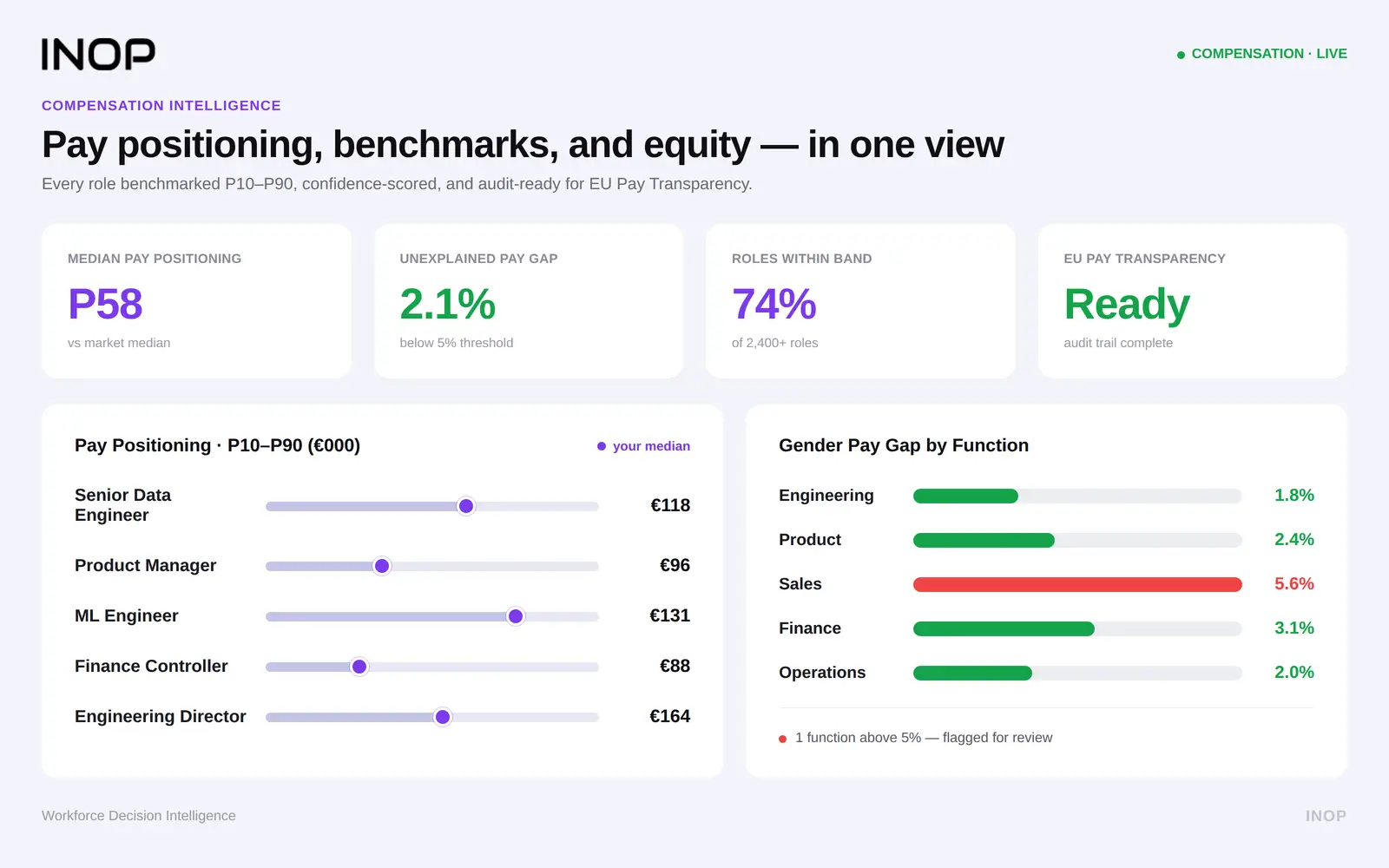
- Live benchmarking by role, skill, region, and identity
- Alerts for emerging gaps
- Dashboards for DEI, compliance, and stakeholder transparency
Proactive pay governance ensures issues are caught early—before they become liabilities.
INOP: Transparent, AI-Driven Compensation Intelligence
INOP turns compensation equity into a business advantage through:
- Live insights on market and internal compensation trends
- Equity diagnostics by role, function, and demographic group
- Explainable AI models to justify decisions with auditable logic
Unlike traditional consultants or static surveys, INOP delivers instant, trustworthy insights—saving time, reducing cost, and eliminating guesswork.
| Manual/Consultant-Based | INOP | |
| Data Freshness | Quarterly or Annual | Real-Time |
| Coverage | Limited Titles & Markets | Global, Cross-Industry |
| Cost | High (Consulting Fees) | Scalable Platform Pricing |
| Scalability | Low | High |
| Time to Insight | Weeks | Instant |
Operationalizing Fairness Through Systems and Signals
To make fairness real, organizations need infrastructure—not just intent.
An effective framework includes:
- Transparent pay bands and career logic
- Embedded monitoring in HRIS, DEI, and compliance systems
- Communication tools that engage employees in the equity journey
This is no longer a DEI initiative. It’s essential business architecture for modern workforces.
Fairness as a Catalyst for Trust, Retention, and Reputation
Organizations that lead on fair pay don’t just reduce risk—they build brand.
- Employees become advocates, not flight risks
- Leaders gain trust with boards and investors
- Culture becomes a magnet for high-performing talent
In a competitive labor market, fairness isn’t a tradeoff. It’s a differentiator.
Making the Business Case for Fair Compensation
Fair pay isn’t just good ethics—it’s smart economics. Mercer reports companies with strong pay equity strategies see:
- 13% higher engagement
- 9% lower turnover
- Better performance across diverse teams
With INOP, HR leaders can connect equitable pay to measurable ROI.
Final Thought: Fairness Is a Leadership KPI
Fair pay is now measurable. Auditable. Explainable. But only with the right systems.
With INOP, CHROs and founders can:
- Build equity into compensation decisions
- Prove fairness to stakeholders
- Align talent, culture, and performance
This isn’t about compliance. It’s about leadership.
Bring Transparency and Equity to Compensation
Discover how INOP helps organizations build fair, data-driven compensation systems that scale trust, inclusion, and performance.
https://inop.ai/compensation-analytics/