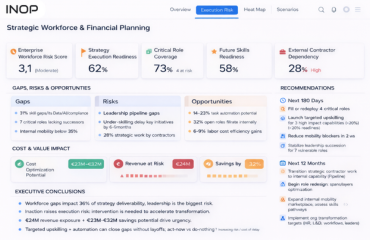
Most companies insure their servers, their buildings, and their supply chains, but leave their most volatile asset entirely unhedged: their people. While businesses meticulously protect physical infrastructure and financial portfolios, they often operate with a dangerous blind spot when it comes to their workforce. This oversight can prove catastrophic. According to research by Gallup, replacing a single employee can cost between 50% to 200% of their annual salary, and that’s before accounting for lost productivity, client relationships, and institutional knowledge. Workforce Risk Management represents a fundamental shift in how organizations approach talent strategy, moving from reactive crisis response to proactive, predictive talent modeling.
The traditional approach to managing people has been inherently reactive. Companies conduct exit interviews after employees leave, scramble to backfill critical positions, and only realize skill gaps when projects stall. This backward-looking model is no longer sustainable in a business environment where talent mobility has accelerated, skill requirements evolve quarterly rather than annually, and the cost of being unprepared has never been higher. Workforce Risk Management addresses this challenge by treating talent the same way financial institutions treat market exposure: as a quantifiable risk that can be measured, monitored, and mitigated.
The thesis is straightforward yet revolutionary: talent failure, whether through sudden departure, skill obsolescence, or burnout, is largely preventable if you know which leading indicators to track and how to respond before the crisis materializes. This article will explore the frameworks, metrics, and cultural shifts required to transform your organization from a reactive talent consumer to a proactive workforce strategist.
The Three Pillars of Workforce Risk
Understanding Workforce Risk Management begins with breaking down the abstract concept of “risk” into measurable, actionable categories. Every organization faces three fundamental types of talent exposure, each with distinct characteristics, warning signs, and mitigation strategies.
Flight Risk: The Turnover Threat
Flight risk represents the probability that a valuable employee will leave your organization. While all turnover carries cost, the departure of high-performers creates cascading consequences that extend far beyond replacement expenses. When a top salesperson leaves, they don’t just take their quota production, they take client relationships built over years, deep product knowledge, and often a playbook that exists nowhere in your documentation. When a senior engineer departs, they walk out with architectural decisions, technical debt context, and problem-solving approaches that took years to develop.
The true cost of high-performer turnover includes several often-overlooked components:
Immediate financial impact: Recruitment costs, onboarding expenses, and temporary productivity loss during the hiring process consume resources across multiple departments. A typical enterprise hire requires involvement from HR, hiring managers, team members conducting interviews, and leadership approving compensation, all while the vacant role’s responsibilities get distributed among already-stretched colleagues.
Momentum loss: Projects slow down or stall entirely. Deadlines get pushed. Client deliverables suffer. The ripple effects of a single departure can delay quarterly objectives and strain relationships with external stakeholders who don’t care about your internal personnel challenges.
Knowledge evaporation: Despite your best documentation practices, significant institutional knowledge lives exclusively in people’s heads. The shortcuts, the workarounds, the “why we do it this way” context, this tacit knowledge vanishes the moment someone walks out the door.
Team morale deterioration: High-performer departures send signals. Remaining team members begin questioning whether they should also explore opportunities elsewhere, creating a potential cascade effect where one departure triggers several more.
Research from the Work Institute indicates that 77% of employee turnover is preventable, but only if organizations implement the right monitoring and intervention systems before resignation letters land on desks.
Obsolescence Risk: The Skills Decay Threat
Obsolescence risk occurs when you have the right people, but they possess the wrong skills for tomorrow’s market demands. This form of workforce risk has accelerated dramatically in recent years. The World Economic Forum estimates that by 2027, 44% of workers’ skills will be disrupted, requiring significant reskilling investments.
Unlike flight risk, where the threat is losing people, obsolescence risk means your workforce becomes progressively less capable of executing your strategic vision. Consider these scenarios:
A marketing team skilled in traditional advertising finds itself unprepared as the company pivots to digital-first strategies. An IT department built around on-premise infrastructure struggles when leadership decides to migrate to cloud-native architecture. A sales organization accustomed to relationship-driven, in-person deals faces paralysis when forced to master virtual selling and digital engagement tools.
The insidious nature of obsolescence risk is its gradual accumulation. Unlike a resignation, which creates an immediate crisis, skills decay happens slowly—until suddenly it doesn’t. One day you realize your entire engineering team lacks the capabilities required to compete for the next generation of projects, or your leadership bench has no experience managing distributed teams in the hybrid work era.
The gap between current capabilities and future requirements represents a quantifiable risk exposure. Organizations that fail to continuously map employee skills against evolving market demands essentially guarantee they’ll face a sudden, expensive scrambling period when the obsolescence comes due.
Suggested Article: Best Skill Assessment Tools
Key Person Dependency: The Bus Factor
The “bus factor” refers to the minimum number of team members who would need to be hit by a bus (theoretically speaking) before a project or business function collapses. When that number is one, you have a critical single point of failure.
Key person dependency risk manifests in various forms:
The Founder Genius: The CEO who personally makes every strategic decision, understands every client relationship, and remains the sole connection between vision and execution. Their sudden absence, whether through illness, departure, or tragedy, leaves the organization rudderless.
The Legacy System Guru: The one developer who understands the ancient codebase that still runs critical business processes. Everyone jokes that they can never leave, but the joke masks a terrifying reality: when they eventually do leave, the knowledge walks out with them.
The Client Whisperer: The account manager who maintains relationships with your top three revenue-generating clients, with minimal documentation or team involvement. Their departure doesn’t just represent lost capability, it puts millions in annual recurring revenue at immediate risk.
Key person dependency often gets rationalized as “we have exceptional talent.” Organizations celebrate their rock stars without recognizing they’ve created structural vulnerability. The risk isn’t theoretical, unexpected departures, health emergencies, and competitive poaching happen constantly. Companies that fail to systematically distribute critical knowledge and cross-train redundancy are gambling their continuity on luck.
From Lagging to Leading Indicators
Traditional HR practices operate almost entirely on lagging indicators, metrics that tell you what already happened. Turnover rate, time-to-fill positions, and exit interview insights all provide historical data that offers zero predictive value. By the time you measure these metrics, the damage is done, the employee has left, and you’re playing catch-up.
The fundamental flaw of lagging indicators is that they document failure rather than prevent it. Imagine managing financial investments by only looking at last quarter’s losses, or managing supply chain risk by only tracking shipments that already arrived late. The absurdity becomes obvious, yet this is precisely how most organizations approach workforce management.
Workforce Risk Management requires a shift to leading indicators: measurable signals that predict talent failure before it occurs. These indicators provide early warning systems that create intervention windows, opportunities to address problems while they’re still manageable.
Predictive Analytics: What to Track
Effective leading indicators combine quantitative data with behavioral signals. Organizations implementing sophisticated Workforce Risk Management track several critical metrics:
Stagnation metrics measure how long employees remain in static positions without advancement, lateral movement, or expanded responsibilities. Research from LinkedIn shows that employees who go more than three years without a promotion or significant role change are 41% more likely to leave within the next 12 months. Stagnation doesn’t just predict flight risk—it actively creates it. High-performers need growth, challenge, and progression. When these elements disappear, they start exploring options elsewhere.
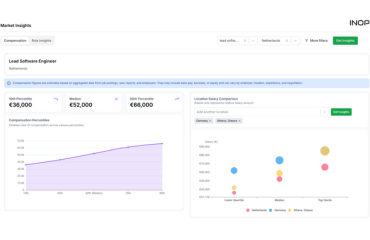
Compensation ratios compare internal pay against real-time market data. Most organizations conduct salary benchmarking during annual review cycles, creating massive blind spots throughout the rest of the year. Meanwhile, market rates fluctuate continuously, particularly in high-demand fields like data science, cybersecurity, and specialized engineering roles. When an employee’s compensation falls 15-20% below market rate, they become prime targets for recruiters. By the time your annual review cycle arrives, they may already be negotiating offers elsewhere.
Engagement drops represent subtle behavioral changes that often precede departures by months. These include decreased participation in optional meetings, declining attendance at training sessions, reduced contributions to internal communications, and withdrawal from social or team-building activities. A 2022 study by Gartner found that monitoring engagement patterns could predict turnover with 70% accuracy up to six months before resignation.
Skill deployment gaps track the delta between an employee’s capabilities and their actual work assignments. When talented professionals spend extended periods on tasks that under-utilize their skills, dissatisfaction festers. An experienced data scientist spending months cleaning data rather than building models, or a creative marketing professional stuck in administrative reporting, signals a mismatch that creates flight risk.
Interaction pattern changes include shifts in communication frequency, meeting attendance, or collaborative behaviors. When a previously engaged employee suddenly stops volunteering for projects, misses optional calls, or becomes difficult to schedule, these behavioral changes often indicate quiet quitting or active job searching.
External activity indicators monitor participation in industry events, conference speaking, heightened LinkedIn activity, or increased profile updates. While employees have every right to maintain professional visibility, sudden spikes in external engagement combined with internal disengagement create a clear risk profile.
Modern Workforce Risk Management platforms aggregate these signals into composite risk scores, allowing HR and leadership teams to prioritize interventions where they’ll have the greatest impact. The goal isn’t surveillance, it’s creating systematic awareness that enables proactive support before problems become crises.
Mitigating Obsolescence: The Skills Gap Defense
You cannot prevent skills decay without knowing what skills you currently have. This seemingly obvious statement represents a blind spot for most organizations. Ask any CHRO to produce a comprehensive, current inventory of employee capabilities across their workforce, and you’ll typically receive one of three responses: a list of job titles (which tell you nothing about actual skills), self-reported data from performance reviews (notoriously unreliable and outdated), or an admission that no such inventory exists.
Obsolescence risk mitigation requires continuous mapping of employee capabilities against evolving market demand. This process consists of three essential components:
Skills taxonomy development creates a common language for describing capabilities. Rather than vague descriptors like “good communicator” or “experienced manager,” effective taxonomies define granular, measurable skills: “financial modeling in Excel,” “Python data visualization using Matplotlib,” “stakeholder management in matrix organizations,” or “API integration with REST protocols.” This specificity enables precise gap analysis.
Continuous skills assessment replaces annual reviews with ongoing verification. Organizations implementing dynamic skills tracking use a combination of manager validations, peer endorsements, project completion records, certification tracking, and skills-based assessments. The goal is maintaining a living inventory that reflects current reality rather than historical assumptions.
Market demand forecasting projects which capabilities your organization will need in six months, twelve months, and twenty-four months based on strategic initiatives, industry trends, and competitive movements. When you combine current skills inventory with future demand forecasting, the gaps become immediately visible, and actionable.
This is where your organizational approach to talent development becomes a risk management tool. Once you identify a critical gap, you must immediately deploy targeted interventions. The choice between reskilling existing employees versus recruiting new talent depends on gap urgency, availability of external talent, cost considerations, and employee capability to acquire new skills.
Reskilling works well when you have time to develop capabilities, when internal employees possess foundational knowledge that accelerates learning, and when the skills gap represents an evolution of existing capabilities rather than entirely new domains. Upskilling succeeds when you need to deepen existing expertise, when the learning curve is moderate, and when employees show aptitude and motivation.
However, some gaps require external hiring. When you need capabilities immediately, when the skills represent entirely new domains, or when reskilling efforts have failed, recruitment becomes necessary. The key is making this determination strategically rather than reactively, before the absence of critical skills creates project failures or strategic stalls.
Organizations that excel at obsolescence risk management conduct quarterly skills gap analyses, maintain active learning and development programs targeting identified gaps, and build skills acquisition into every major strategic initiative. When leadership decides to pursue a new market or adopt a new technology, the skills requirement assessment happens concurrently—not as an afterthought six months later when implementation struggles.
Suggested Article: Key Differences of Skill Gap vs Knowledge Gap
Next-Generation Succession Planning
Traditional succession planning operates like disaster recovery for physical infrastructure: identify critical assets, designate backups, document procedures, and hope you never need them. The typical approach involves creating a static document that names one backup for the CEO, another for the VP of Sales, and perhaps a few other senior roles. This document gets filed away, reviewed annually, and rarely tested until an actual emergency occurs—at which point everyone discovers the backup candidates have moved on, developed different career interests, or lack the experience needed to step into the role.
This old model fails because it treats succession as an exceptional event rather than an ongoing process. It operates on several flawed assumptions: that you can predict which roles will need succession, that individuals named as backups will remain available and interested, and that leadership capability develops automatically over time without deliberate development.
Next-generation succession planning embraces an agile, skills-based approach called “talent pooling.” Instead of grooming one person for one specific role, organizations build pools of verified capabilities that can be deployed across multiple critical positions.
The talent pool model works like this: First, identify the critical skills and experiences required for each strategic role, not job titles, but actual capabilities. A Chief Marketing Officer needs digital strategy experience, budget management, team leadership, executive presence, and perhaps industry-specific knowledge. These capabilities become your success criteria.
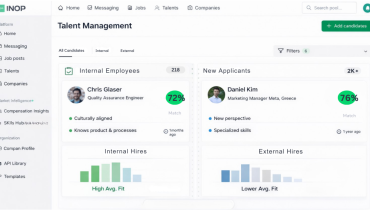
Second, assess your entire organization to identify everyone who possesses some combination of these capabilities. A director of digital marketing might have strong digital strategy and team leadership but lack budget management at scale. A VP of product marketing might excel at executive presence and budget management but need broader digital experience. Rather than picking one “successor,” you’ve identified multiple potential candidates, each with specific development needs.
Third, create targeted development plans that deliberately build missing capabilities. The director gets assigned to a cross-functional budget committee. The VP takes on responsibility for a digital campaign. You’re systematically preparing multiple people who could successfully fill the role, each approaching from different capability starting points.
This approach provides several advantages over traditional succession planning:
Flexibility: When the actual succession need arises, you can select the best-prepared candidate at that specific moment rather than being locked into a choice made years earlier based on outdated assumptions.
Motivation: Multiple employees receive development opportunities and recognition as high-potential contributors, rather than one person being designated “the chosen one” while others feel overlooked.
Risk distribution: If your designated successor leaves the organization, you haven’t lost your entire succession strategy. The talent pool remains intact.
Skills coverage: By focusing on capabilities rather than individual designations, you ensure multiple people can cover critical functions even if the exact succession scenario never occurs.
Knowledge Transfer: Systematizing Institutional Knowledge
Talent pooling addresses the succession of roles, but what about the knowledge transfer challenge? Your veteran engineer doesn’t just fill a position, they carry a decade of architectural decisions, technical debt awareness, and problem-solving shortcuts that exist nowhere in documentation.
Systematic knowledge extraction requires deliberate processes, not just good intentions:
Structured documentation programs assign specific knowledge domains to individuals and create explicit expectations for documentation. The veteran engineer gets a quarterly objective: document the three most critical architectural decisions and their rationale. The client relationship manager maintains detailed notes on key client preferences, decision-making patterns, and historical challenges. This becomes part of performance expectations, not optional activities done “when there’s time.”
Shadowing and rotation programs pair junior team members with knowledge holders for defined periods. The goal isn’t just observation—it’s active participation with structured knowledge transfer. The junior engineer doesn’t just watch the veteran troubleshoot production issues; they work through problems together while the veteran narrates their thought process, making implicit knowledge explicit.
“If I get hit by a bus” exercises ask key personnel to document what would break if they suddenly disappeared. This morbid but effective exercise forces people to identify their unique knowledge domains and create minimal viable documentation that would allow others to maintain operations in their absence.
Knowledge audits systematically assess where critical institutional knowledge resides. Organizations map out which individuals hold unique information about client relationships, technical systems, regulatory requirements, or historical context, then create redundancy plans to distribute that knowledge more broadly.
The most sophisticated organizations treat knowledge management as ongoing infrastructure rather than periodic projects. They build knowledge transfer into onboarding, cross-training, project retrospectives, and regular operations, creating cultures where information sharing is continuous rather than exceptional.
Building a Risk-Aware Talent Culture
The technical infrastructure of Workforce Risk Management—the metrics, the dashboards, the predictive models, provides necessary tools, but insufficient solutions. Without the right cultural foundation, even the most sophisticated risk management systems will fail.
The cultural element presents a delicate balance. Employees shouldn’t feel surveilled; they should feel supported. When people perceive monitoring systems as Big Brother oversight designed to catch them exploring other opportunities or struggling with skills gaps, they respond with concealment. They hide their challenges, obscure their job search activities, and view HR systems with suspicion. This defeats the entire purpose of risk management, turning it into a cat-and-mouse game where the organization tries to detect problems employees work hard to hide.
Instead, effective Workforce Risk Management creates psychological safety, an environment where employees believe they can express concerns, admit skill gaps, and discuss career aspirations without fear of negative consequences.
Actionable Steps for Building Risk-Aware Culture
Regular stay interviews represent a fundamental practice shift. Most organizations conduct exit interviews after employees decide to leave, gathering data about problems they can no longer fix. Stay interviews flip this model: have structured conversations with current employees to understand what keeps them engaged, what frustrations they face, and what might cause them to consider leaving.
Stay interviews work best when conducted by direct managers quarterly or semi-annually, following a consistent framework: What do you look forward to when you come to work? What makes you think about leaving? If you had a magic wand, what would you change about your role or our organization? These conversations surface issues while they’re still addressable and demonstrate that the organization cares about employee experience proactively rather than reactively.
Transparent career pathing addresses one of the most common drivers of flight risk: the feeling of being stuck. When employees can’t envision how they might progress within your organization, they start envisioning progression elsewhere. Transparent career pathing means showing people multiple potential trajectories, not just the vertical climb up the management ladder, but lateral moves, specialist tracks, project-based opportunities, and skill development pathways.
Organizations implementing transparent career pathing use internal job marketplaces, skills-based opportunity boards, and explicit conversations about growth options. The message shifts from “prove yourself and maybe someday we’ll promote you” to “here are the specific capabilities you’d need to develop to pursue these various opportunities, and here’s how we can help you build them.”
Psychological safety regarding skills gaps creates environments where admitting “I don’t know how to do this” is seen as professional maturity rather than weakness. When employees fear that acknowledging a skills gap will result in being passed over for opportunities or viewed as incompetent, they hide their development needs. This guarantees obsolescence risk continues to grow unaddressed.
Organizations building psychological safety around skills explicitly normalize learning, celebrate skill development, and separate skill gaps from performance evaluations. Leaders model this behavior by publicly discussing their own development areas and learning initiatives. The cultural message becomes: “everyone has skills to develop, and seeking development is a strength, not an admission of inadequacy.”
Manager enablement provides the critical bridge between organizational systems and employee experience. Individual managers largely control whether employees feel supported or surveilled, whether career conversations happen regularly or not at all, and whether skills development becomes a priority or gets perpetually delayed.
Workforce Risk Management requires training managers to conduct effective career conversations, interpret risk indicators constructively, and intervene appropriately when warning signs appear. A manager who notices declining engagement shouldn’t immediately assume the employee is job hunting and respond defensively, they should initiate a conversation about what’s driving the change and what support might help.
The cultural element of Workforce Risk Management represents a fundamental mindset shift. Traditional HR approaches treated talent management as a control function, tracking time, enforcing policies, managing discipline. Risk-aware cultures treat talent management as an enablement function, providing support, removing obstacles, and creating conditions where people want to contribute their best work and develop their capabilities within your organization rather than elsewhere.
This cultural shift requires commitment from executive leadership, consistent messaging, and behavior modeling at every level. Organizations cannot implement it through policy announcements or HR programs alone, it must become embedded in how managers interact with teams, how performance gets discussed, and how the organization responds when people raise concerns or express aspirations.
Suggested Article: Top 5 Human Capital Risks Facing CHROs in 2026
Turning Workforce Risk Management Into Competitive Advantage
Workforce Risk Management isn’t just about preventing disasters, it’s about creating sustained competitive advantage through superior talent operations. While your competitors scramble to replace sudden departures, struggle with skills gaps, and deal with knowledge loss, your organization maintains seamless continuity, proactive development, and institutional knowledge preservation.
The strategic benefits extend beyond cost avoidance:
Faster execution: When you aren’t constantly backfilling positions or dealing with knowledge gaps, projects move forward without personnel-related delays. Your competitors lose months to hiring searches and onboarding; you maintain momentum.
Better decisions: When key person dependencies are eliminated and knowledge is broadly distributed, your organization can make decisions based on comprehensive information rather than whatever one critical employee happens to know or remember.
Stronger client relationships: When account management includes systematic knowledge transfer and backup relationship building, client confidence remains high even when individual contacts change. Your competitors lose deals when key relationship holders leave; you maintain continuity.
Enhanced innovation: When obsolescence risk is actively managed through continuous skill development, your workforce maintains cutting-edge capabilities. Your competitors struggle to execute new strategies because their people lack required skills; you deploy new initiatives confidently.
Employer brand differentiation: Word spreads about organizations that invest in employee development, create clear career paths, and demonstrate genuine care for people’s growth. Your competitors can offer competitive salaries, but you offer something more valuable: an environment where people can build meaningful careers with support and transparency.
The organizations that will dominate the next decade won’t necessarily be those with the most resources to throw at talent acquisition. They’ll be the organizations that treat workforce management as strategic infrastructure, measuring risk, predicting challenges, and intervening proactively rather than reactively.
Implementation doesn’t require massive technology investments or organizational restructuring. It requires commitment to treating talent with the same analytical rigor applied to other critical business assets, building systems that surface early warning signals, and creating cultures where prevention is valued more than firefighting.
Frequently Asked Questions
How do I get started with Workforce Risk Management if my organization has no existing framework?
Begin with a focused pilot rather than attempting organization-wide implementation. Select one critical department or team, identify the three most significant talent risks they face (likely some combination of flight risk, obsolescence risk, and key person dependency), and implement basic monitoring for those specific risks. This might mean conducting stay interviews with high performers, mapping skills against upcoming project needs, or documenting knowledge held by critical team members. Run this pilot for one quarter, gather lessons, demonstrate value to leadership, then expand. Starting small allows you to prove the concept, refine your approach, and build internal capability before scaling.
What’s the difference between Workforce Risk Management and traditional succession planning?
Traditional succession planning operates episodically (usually annually), focuses on a small number of senior roles, designates specific individuals as successors, and treats succession as a rare event. Workforce Risk Management operates continuously, covers all roles with strategic or operational importance, builds talent pools rather than designating individuals, and views risk mitigation as an ongoing process. Succession planning asks “who will replace the CEO if they leave?” Workforce Risk Management asks “which capabilities are we at risk of losing across the organization, and how do we ensure continuity regardless of any individual departure?”
How can I implement monitoring systems without making employees feel like Big Brother is watching them?
Transparency is the critical element. When organizations implement monitoring secretly or with vague explanations, employees rightfully become suspicious and resentful. Instead, clearly communicate what you’re tracking, why you’re tracking it, and how the data will be used to support employees rather than police them. Frame engagement monitoring as “we want to identify people who might be struggling so we can provide support” rather than “we’re tracking who might be job hunting.” Use aggregate data rather than individual surveillance, and most importantly, demonstrate through action that the system leads to positive outcomes, career development, skills training, and meaningful support—rather than punitive measures.
What should I do if risk indicators suggest a high performer is likely to leave?
First, verify your data by having a direct, honest conversation. Approach from curiosity rather than confrontation: “I’ve noticed some changes in your engagement patterns, and I want to make sure you’re getting what you need here. How are things going for you?” This conversation may reveal issues you can address, confirm they’re actively job searching, or explain the signals through completely benign factors you hadn’t considered. If they are considering leaving, understand their reasons without being defensive. Sometimes you can address concerns through role adjustments, compensation corrections, or development opportunities. Sometimes they have legitimate reasons for moving on, and the best outcome is maintaining a positive relationship and planning a healthy transition rather than being blindsided by sudden departure.
How often should we update our skills inventory and risk assessments?
Skills inventories should be updated continuously rather than periodically. Whenever someone completes training, earns a certification, or finishes a project that demonstrates new capabilities, that information should flow into your skills database. Risk assessments should be reviewed quarterly for most organizations, monthly for high-turnover industries or during periods of significant organizational change. The key is building systems that make updates low-friction and automatic where possible, rather than relying on major periodic data collection efforts that produce outdated information almost immediately.
Can small organizations with limited HR resources effectively implement Workforce Risk Management?
Absolutely, and in many ways smaller organizations have advantages. You have closer relationships with employees, making stay interviews and career conversations more natural. You have fewer people to track, making manual monitoring feasible before investing in sophisticated platforms. Start with basic practices: regular one-on-one conversations focused on career aspirations and concerns, documented skills inventories in shared spreadsheets, and informal knowledge sharing sessions where key personnel train others on critical processes. As your organization grows, you can add more sophisticated tools, but the foundational practices work at any scale.
How do I balance Workforce Risk Management with employee privacy and autonomy?
Set clear boundaries about what you track and why. Monitoring work-related signals (meeting participation, project engagement, training attendance) is generally acceptable. Monitoring personal communications, off-hours activities, or individual web browsing crosses ethical lines. Focus on voluntary information sharing combined with behavioral patterns visible through normal work activities. The most effective Workforce Risk Management programs rely heavily on open dialogue, encouraging employees to share their career aspirations, concerns, and development interests, rather than covert tracking. When people feel they can openly discuss their plans and get support rather than punishment, you don’t need invasive monitoring.
What’s the ROI of implementing a comprehensive Workforce Risk Management program?
Calculate ROI by comparing prevention costs against the costs of talent failures. If your average employee replacement cost is $50,000 and you prevent just four high-performer departures annually through better retention practices, you’ve saved $200,000 before accounting for productivity loss, project delays, or client relationship risks. If proactive skills development prevents one failed project worth $500,000 because your team lacked critical capabilities, the ROI becomes obvious. Most organizations implementing structured Workforce Risk Management report ROI of 300-500% within the first year through reduced turnover, faster skills gap closure, and improved project execution. Start tracking your current talent failure costs, turnover expenses, project delays due to skill gaps, crisis management time spent on sudden departures, to establish your baseline, then measure improvement after implementing risk management practices.