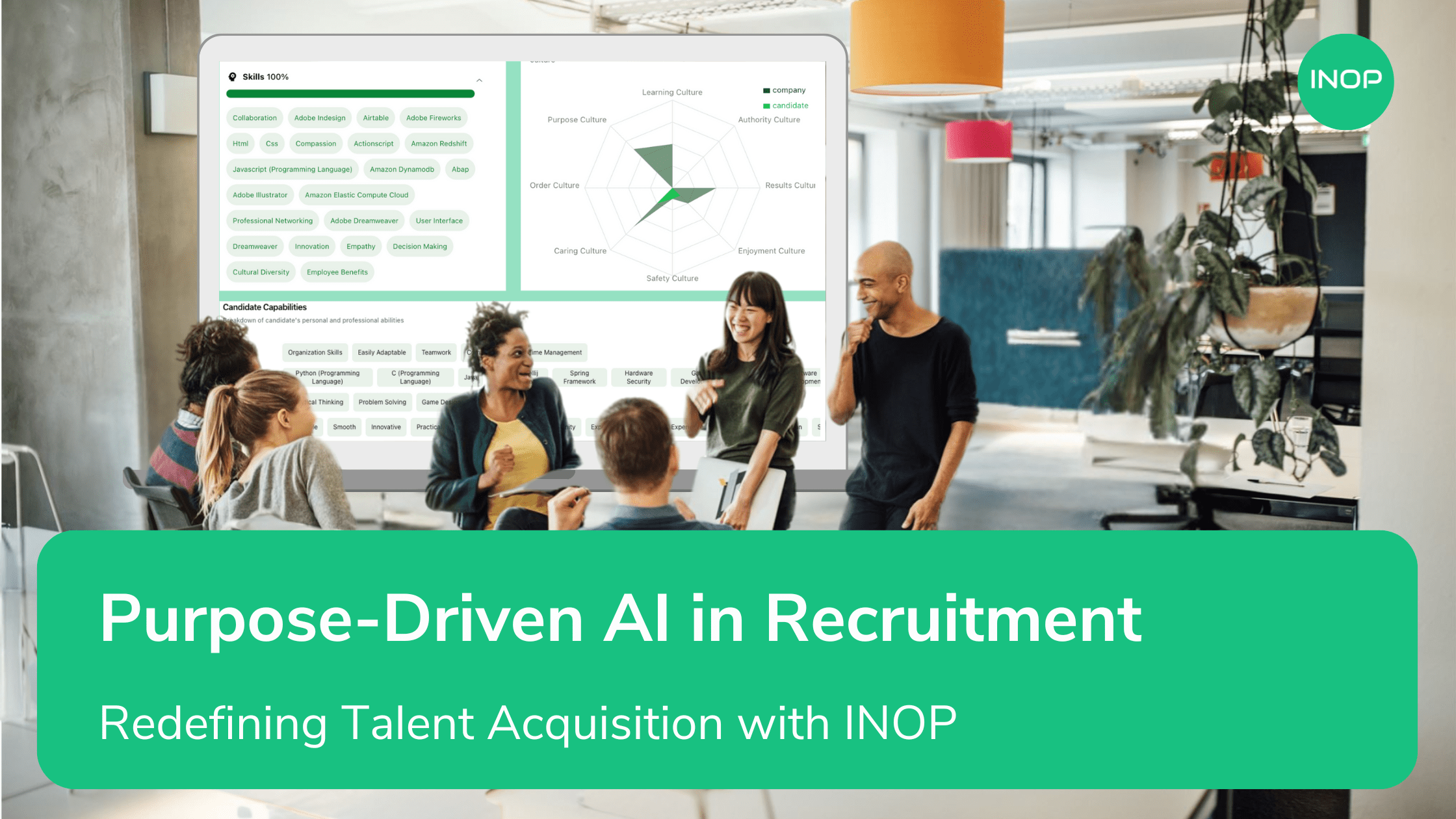
As AI continues to revolutionize recruitment, companies need more than speed and efficiency. In a world facing economic shifts, workforce agility challenges, and heightened hiring volatility, organizations must recognize that AI-powered hiring isn’t just about optimizing processes. A holistic, values-driven approach to recruitment—focusing on transparency, cultural alignment, and long-term fit—is now essential. INOP stands at the forefront of this shift, providing a recruitment platform that goes beyond skills and experience to foster connections grounded in shared purpose and values.
What Is Purpose-Driven AI in Recruitment?
Purpose-driven AI refers to the intentional use of artificial intelligence to support hiring decisions that align with a company’s values, culture, and long-term mission. Instead of relying only on technical qualifications or keyword matching, it takes a holistic approach to talent acquisition.
A purpose-driven Talent Intelligence Platform empowers recruiters to:
- Identify candidates who genuinely resonate with organizational goals and values
- Eliminate unconscious biases that often occur in traditional hiring processes
- Improve diversity and inclusion across teams
- Predict not just performance, but also long-term candidate success within the company
By combining advanced data-driven insights with a focus on purpose and culture, purpose-driven AI ensures hiring isn’t just about filling roles—it’s about building teams that thrive together.
How It Differs From Traditional AI in Hiring
| Feature | Traditional AI Tools | Purpose-Driven AI Solutions |
|---|---|---|
| Focus | Speed and keyword matching | Mission alignment and culture fit |
| Data used | Resumes, experience, skills | Behavioral, psychometric, and values-based data |
| Bias handling | Often replicates past biases | Designed to reduce bias through ethical models |
| Long-term candidate fit | Low to moderate | High, due to value alignment |
Why AI in Recruitment Needs a Purpose-Driven Evolution.
Artificial intelligence is now indispensable in hiring, yet its use must evolve. While platforms like LinkedIn and Indeed have integrated AI to streamline candidate sourcing, their focus on technical qualifications alone often provides an incomplete picture. Deloitte’s work force agility report shows that over 70% of business leaders face challenges related to workforce agility, which directly affects their ability to respond to market fluctuations. Today’s candidates seek more than just role-specific alignment—they prioritize company culture, values, and environmental, social, and governance (ESG) practices. INOP addresses these demands, delivering a comprehensive match fit that emphasizes values alignment and transparency to meet the evolving expectations of a modern workforce.
Merging Skills-Based Hiring with Purpose-Driven AI
The shift toward a skills-first approach is arguably the most important transformation in modern HR. However, hiring purely based on technical capabilities creates a dangerous blind spot. A software engineer might ace a rigorous coding challenge, or a marketing manager might possess the exact SEO expertise you need, but do they have the collaborative mindset and resilience required to thrive during a high-pressure product launch?
Skills alone dictate what a candidate can do, but purpose dictates how and why they do it.
This is where purpose-driven AI completes the puzzle. To build high-performing teams, organizations must merge these two philosophies:
- Verifying the “What”: Utilizing the best skill assessment tools to objectively measure hard skills, cognitive abilities, and technical proficiencies without relying on the biases of a traditional resume.
- Aligning the “How”: Using purpose-driven AI to map those verified capabilities against your company’s core values, ensuring the candidate’s behavioral traits complement your existing team dynamics.
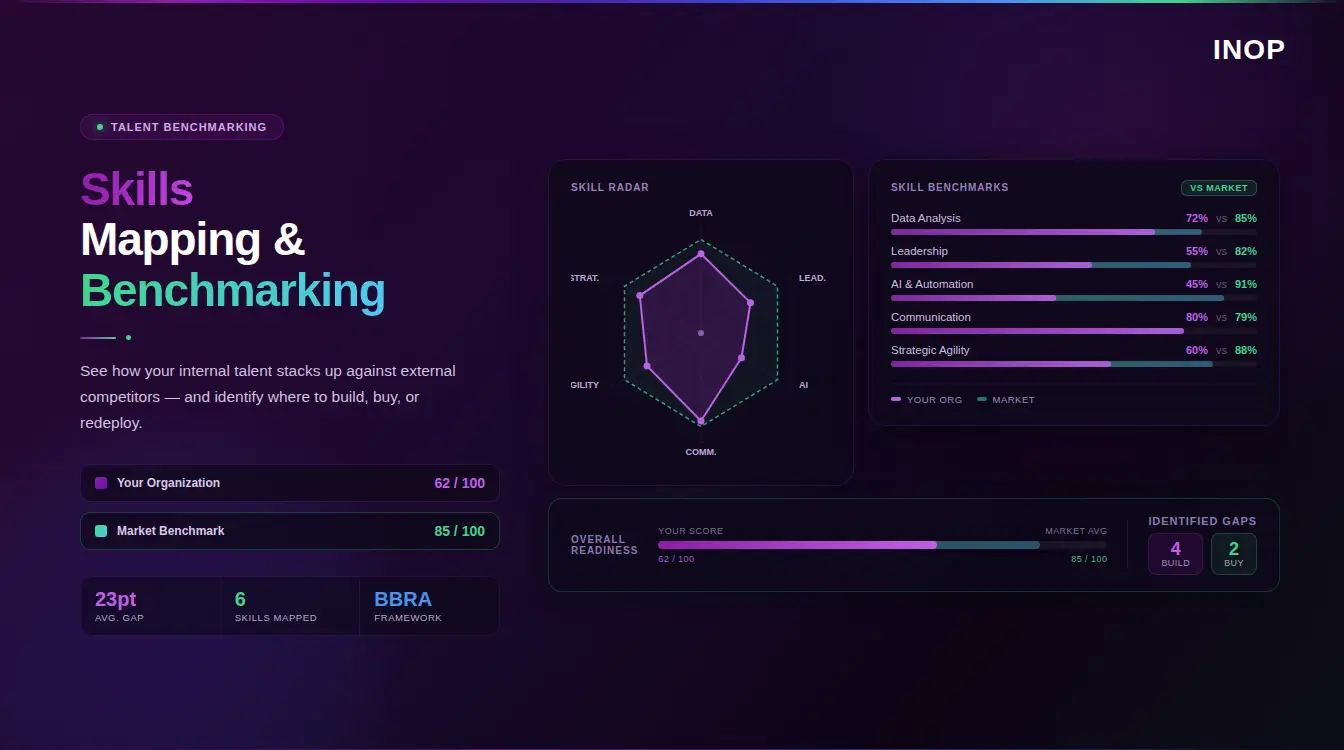
At INOP, we believe these concepts are not mutually exclusive—they are two halves of the modern talent equation. By layering values-based insights on top of capability mapping, you get a true 360-degree view of every candidate.
This holistic approach makes downstream HR processes much easier. For example, when you confidently hire employees who are both highly skilled and deeply aligned with your mission, it becomes much easier to transition away from rigid job titles and implement a dynamic skills-based pay structure. You know exactly what capabilities you are paying for, and you know those capabilities are being driven by the right motivations.
Ultimately, when you combine skills intelligence with purpose-driven recruitment, you stop merely filling empty seats and start executing true strategic workforce planning, building a resilient, adaptable workforce ready for the challenges of 2030 and beyond.
How Data-Driven Insights Boost Recruitment Success Rates.
Data-backed recruitment offers clear benefits, with PwC reporting a 16% increase in hiring success rates when companies rely on data insights. INOP leverages predictive analytics, evaluating not only a candidate’s skills and past performance but also cultural fit and values alignment. This helps companies make strategic, long-term hiring decisions that can strengthen team cohesion and resilience in uncertain economic environments. By offering insights into candidates’ potential to align with an organization’s goals, INOP helps companies make more informed choices that contribute to a stable, committed workforce.
How INOP Actually Measures “Purpose” and “Cultural Fit”
When HR leaders and technical directors hear the phrase “cultural fit,” alarm bells often ring. Historically, hiring for culture fit meant hiring people who looked, thought, and acted exactly like the existing team—a practice that severely limits diversity and stifles innovation.
So, how does purpose-driven AI measure “fit” without replicating human biases?
The answer lies in moving away from subjective gut feelings and relying on objective, multidimensional data mapping. INOP’s Talent Intelligence Platform doesn’t just scan a resume for keywords; it uses advanced algorithms to understand the human behind the application.
Here is how our proprietary SIZ AI Engine breaks down the “black box” of cultural alignment:
- Behavioral and Psychometric Data: Instead of asking, “Where did you go to school?”, INOP evaluates how a candidate approaches problem-solving, collaboration, and ethical dilemmas. The AI analyzes behavioral indicators to map out a candidate’s verified soft skills—such as adaptability, resilience, or strategic thinking.
- Core Value Cross-Referencing: Every company has a unique mission. INOP allows organizations to define their core values and ESG (Environmental, Social, and Governance) priorities within the platform. The SIZ AI Engine then correlates the candidate’s behavioral data directly against these organizational pillars to calculate a genuine “purpose-match” score.
- Continuous Bias Mitigation: Traditional AI hiring tools often learn from historical hiring data, which inadvertently bakes past human biases into future algorithms. INOP’s purpose-driven AI is built on ethical models with continuous monitoring. It intentionally blinds demographic data during the screening process, ensuring candidates are ranked strictly on their verified capabilities and value alignment.
By treating purpose and culture as measurable, data-backed metrics rather than subjective feelings, INOP empowers talent acquisition teams to build cohesive, diverse teams that are deeply committed to the company’s long-term vision.
Addressing Bias and Fostering Fairness in AI
With the rapid adoption of AI in recruitment, bias remains a key concern. INOP is committed to ethical AI practices, employing continuous monitoring and transparency to mitigate bias and ensure fair evaluations. Regular assessments help maintain an equitable recruitment process that supports diversity, fostering trust between candidates and organizations. This commitment to ethical AI, by providing transparency, strengthens INOP’s reputation as a reliable recruitment partner, allowing companies to advance inclusivity without compromising efficiency.
Complementing Established Platforms with Holistic, End-to-End Insights
For organizations already using LinkedIn and other popular recruitment platforms, INOP can act as both a complement and a full-service, end-to-end solution. INOP’s capabilities go beyond skill-based matching by layering in assessments for cultural alignment, values compatibility, and ESG priorities. This holistic approach enables companies to find candidates who not only meet technical requirements but also resonate with their long-term vision and mission.
Studies highlight the value of this multidimensional approach: Harvard Business Review reports that companies focusing on values alignment see up to a 20% improvement in employee retention. For organizations seeking to build purpose-driven teams prepared to grow together, INOP offers the tools for seamless integration with existing platforms as well as a comprehensive, standalone recruitment solution that adapts to their evolving workforce needs.
Adapting to Market Dynamics with Agility
Adaptability is crucial in today’s volatile markets, and AI-driven recruitment provides a scalable solution. INOP empowers companies to dynamically adjust hiring efforts based on market needs, ensuring teams are right-sized for both growth phases and downturns. Automated recruitment processes can save organizations up to 23%, allowing resources to be allocated efficiently without sacrificing quality. By maintaining a robust, qualified talent pipeline, companies gain the flexibility to scale up or down with minimal disruption to operations.
The Future of AI in Recruitment: Trends for 2025 and Beyond
As recruitment continues to evolve, AI is no longer just a tool—it’s becoming the foundation of modern talent acquisition strategies. By 2025 and beyond, organizations will increasingly rely on AI not only to speed up hiring processes but also to make smarter, more human-centered decisions. The future lies in purpose-driven AI systems that balance efficiency with fairness, empathy, and alignment with company values.
Some key trends shaping the next wave of AI in recruitment include:
- Hyper-Personalized Candidate Journeys
Instead of generic outreach, AI will use behavioral and contextual data to create tailored communication, ensuring candidates feel valued from the first interaction. - Ethical and Transparent AI Systems
With rising scrutiny on algorithmic bias, transparency and explainability will be core expectations in recruitment platforms. Employers and candidates alike will demand clarity on how decisions are made. - Deeper Integration with Workforce Planning
AI tools will connect talent acquisition with strategic workforce planning, helping companies forecast future skills gaps and build pipelines aligned with long-term goals. - AI-Powered Skills Mapping and Reskilling
Beyond hiring, AI will play a central role in identifying skills adjacencies, guiding employee reskilling, and fostering internal mobility—reducing turnover and strengthening organizational resilience. - Holistic Hiring Metrics
Success won’t be measured by “time to hire” alone. Future-ready AI systems will track cultural alignment, retention potential, and long-term career growth, giving organizations a 360-degree view of hiring effectiveness.
In short, the future of AI in recruitment is about more than efficiency—it’s about purpose, fairness, and adaptability. Companies that embrace these trends will not only attract top talent but also build sustainable, values-driven teams prepared for a rapidly changing workplace.
Real-World Examples of Purpose-Driven AI in Action
Unilever’s AI-Enhanced Graduate Hiring
Unilever integrated purpose-driven AI into its graduate hiring process. Using AI-powered games and video interviews analyzed by algorithms, they:
- Reduced screening time by 75%
- Increased diversity
- Improved retention in graduate hires
Most importantly, the candidates reported a more engaging and fair experience.
IBM’s Watson Recruitment
IBM used Watson AI to correlate high-performing employees with candidate data. Beyond technical skills, Watson prioritized motivation, collaboration, and alignment with IBM’s innovation-first culture, resulting in a 35% increase in employee satisfaction post-hire.
How to Implement Purpose-Driven AI in Your Hiring Process
Reading about the benefits of purpose-driven AI is one thing; putting it into practice requires a strategic, operational shift. You cannot simply plug a new algorithm into a broken hiring funnel and expect it to instantly yield diverse, values-aligned teams.
To successfully transition your talent acquisition strategy, follow this three-step playbook:
- Step 1: Define Your Purpose and Behavioral Drivers Before AI can map a candidate’s values to your company, you need to know exactly what your organization stands for. Move beyond generic corporate buzzwords. Look at your highest-performing, most engaged employees. What specific behavioral traits make them successful in your unique environment? Document these core values and ESG priorities so the AI has a clear, objective benchmark to measure against.
- Step 2: Audit Your Current Tech Stack Evaluate your existing Applicant Tracking System (ATS) and recruitment tools. Are they merely performing basic keyword matching on resumes, or are they capable of genuine capability and behavioral mapping? If your current tools rely on legacy algorithms trained on your historical hiring data, they are likely perpetuating past biases rather than actively eliminating them.
- Step 3: Deploy INOP’s Talent Intelligence Platform The best way to secure stakeholder buy-in is to prove the ROI quickly. Instead of overhauling your entire global recruitment process overnight, run a pilot program using INOP’s Talent Intelligence Platform for a single, high-turnover department (such as Sales or Customer Success). Use the SIZ AI Engine to evaluate incoming candidates on both their verified skills and their purpose-match score. Track the data—specifically time-to-hire, candidate diversity, and 90-day retention—to prove the value of the holistic approach.
By following these steps, you transition your talent acquisition from a reactive, transactional process into a strategic engine that actively drives your company culture and long-term success.
Creating Cohesive Teams Through Purpose-Driven Hiring.
Hiring based solely on skills often leads to mismatches that disrupt team cohesion. With INOP, companies can evaluate candidates more holistically, building teams that align in both expertise and values. This approach not only enhances employee engagement but also supports retention. In an industry survey, HBR found that values-focused recruitment reduces turnover by up to 20%, as employees feel more connected to their organization’s mission. INOP’s precision and insight foster stronger, more cohesive teams prepared to navigate future challenges.
The Future of Talent Acquisition is Purpose-Driven AI
INOP offers a recruitment solution that blends transparency, ethical AI, and values-based insights to create resilient, purpose-aligned teams. In a landscape where adaptability, cultural alignment, and trust are essential, INOP empowers companies to build workforce strategies that drive both immediate impact and long-term growth. Ready to redefine recruitment? Join INOP in the journey toward a purpose-driven, transparent, and adaptable workforce prepared for the demands of tomorrow.