Investors are changing how they evaluate artificial intelligence. The first wave of corporate AI enthusiasm centred largely on adoption. Companies announced new investments, launched pilots, entered technology partnerships, and set ambitious expectations for productivity, efficiency and growth.
Can those investments deliver the returns being promised? Is the organisation operationally prepared to implement AI at scale? And does management understand the workforce transformation required to get there? These questions are changing the relevance of workforce information to capital markets. Historically, investors could assess headcount, labour costs, turnover, restructuring charges and selected human capital indicators to understand the workforce a company had and, to some extent, how efficiently it was being managed.
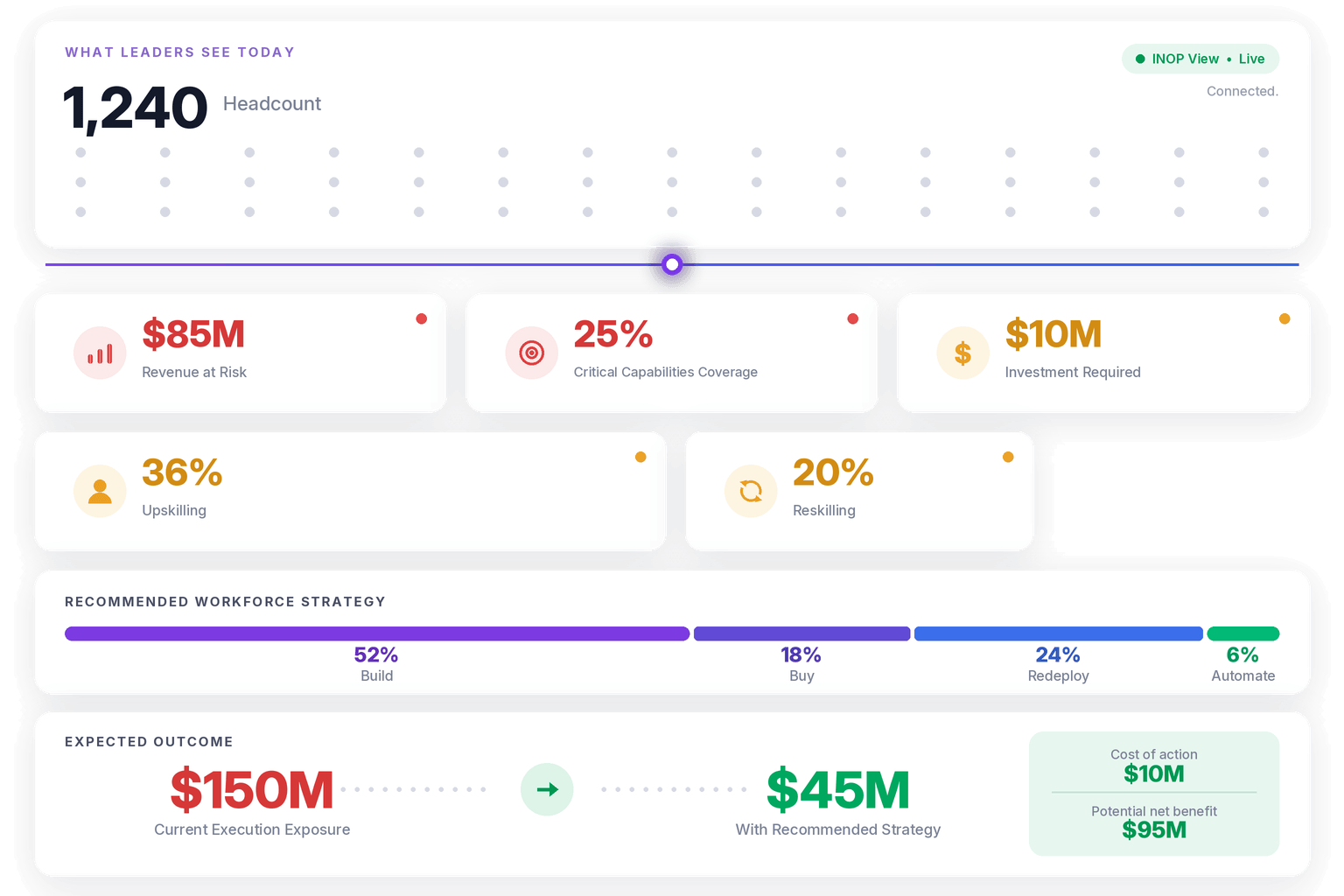
AI makes that picture incomplete. If a company tells investors that automation will improve productivity, expand margins or fundamentally reshape its operating model, understanding whether the workforce can execute that transformation becomes part of assessing whether the investment thesis itself is credible. Workforce readiness is therefore no longer simply an HR concern. It is becoming an execution question, a resilience question and a capital markets question.
From Technology Ambition to Execution Risk
This shift is already visible in investor behaviour. AI related shareholder proposals more than doubled between 2023 and 2024, reflecting growing investor attention to AI governance, workforce impact and transparency. That scrutiny has continued into the 2026 proxy season. Recent Glass Lewis analysis of proposals at Alphabet, Amazon and Meta shows investors continuing to raise questions around data sourcing, board level oversight and the operational implications of AI development. While average support for these proposals has declined from its 2024 levels, their continued presence on ballots points to an evolving investor conversation about how AI is governed and how its organisational consequences are understood.
The questions emerging in earnings discussions are changing too. Conversations around AI and automation are moving beyond optimistic narratives about augmentation towards harder questions about headcount, implementation costs, productivity assumptions, workforce transition and measurable return on investment. This evolution matters because the economics of AI ultimately depend on execution.
A projected productivity gain assumes that workflows can be redesigned effectively.
A labour efficiency target assumes that work can be redistributed without undermining critical capabilities. An automation programme assumes that employees and managers can adapt to new operating models. And an AI business case assumes that the costs and risks associated with that transition have been adequately understood. Yet many of those assumptions remain largely invisible in conventional financial and workforce reporting. Technology capability alone cannot tell investors whether an organisation can deliver its AI strategy. Workforce readiness can help reveal whether it is positioned to do so.
The Workforce Is Becoming Part of the Investment Thesis
Consider two companies pursuing similar automation strategies. Both may be investing in comparable technologies. Both may expect productivity improvements. Both may tell investors that AI will create a more efficient and scalable operating model. But beneath those apparently similar strategies, their organisational readiness may look very different.
One company may understand which workflows are most exposed to automation, which capabilities will become more important, where skills gaps are emerging, and which employees can realistically transition into adjacent roles. The other may have little visibility beyond headcount and job categories. Its automation programme may be moving faster than workforce planning. Critical capabilities may be concentrated among a small number of employees. Reskilling programmes may exist, but management may have limited evidence that they are building the capabilities the organisation will actually need.
From an investment perspective, these are not equivalent companies. The difference is not AI ambition. It is execution capability. As investors try to distinguish between the two, three workforce questions become important.
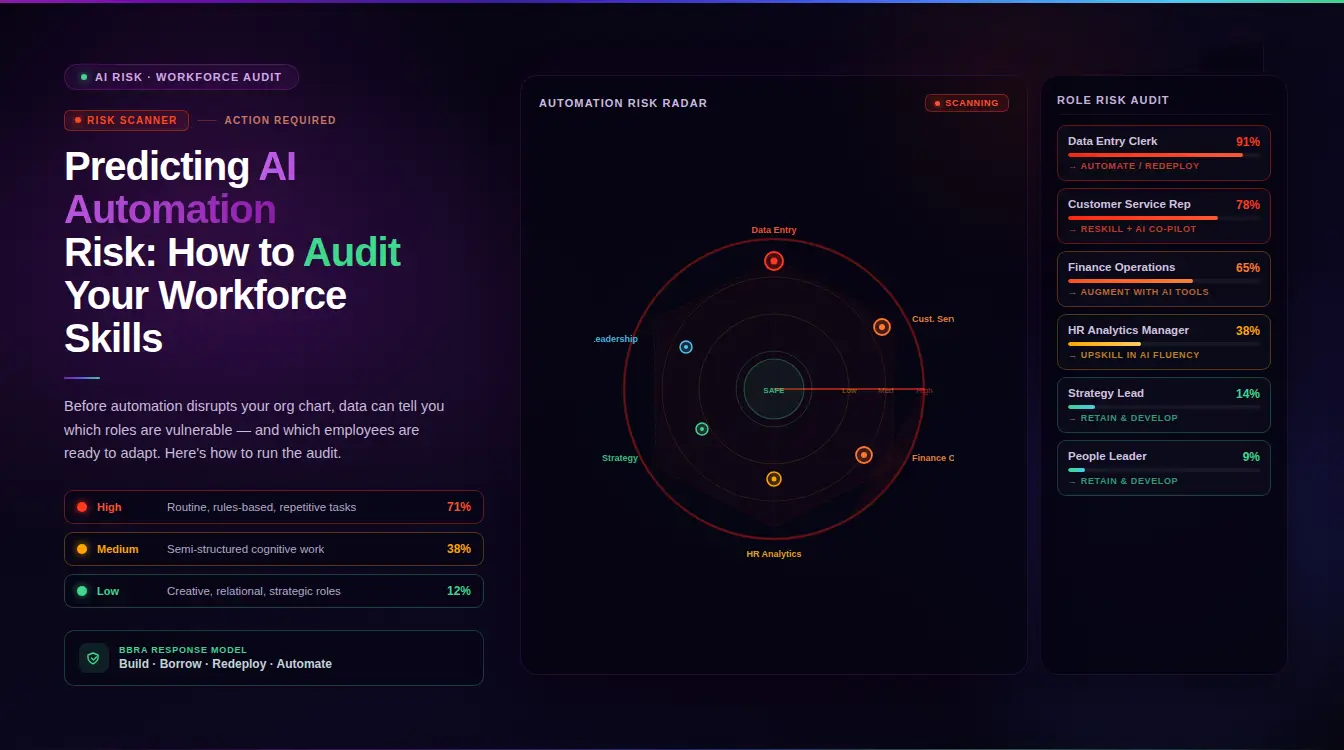
1. Where Is the Organisation Actually Exposed to Automation?
Much of the public conversation about AI and employment still takes place at the level of jobs and headcount. But automation rarely affects every activity within a role equally.
Some tasks may be highly susceptible to automation. Others depend on judgement, tacit knowledge, relationships, contextual understanding or human oversight. In practice, AI frequently redistributes work rather than simply eliminating entire roles.
That distinction matters for investors because aggregate workforce numbers reveal very little about where the economic and operational effects of automation will actually occur. A company can announce that thousands of employees have access to AI tools without explaining whether those tools are meaningfully changing work. It can announce workforce reductions without showing how the remaining responsibilities will be redistributed. And it can forecast labour savings without explaining which capabilities become more important once routine tasks are automated.
The more useful questions are therefore different. Where does automation exposure sit across the organisation? Which workflows are changing? Which activities are being automated and which are being augmented? Where does human judgement remain critical? And where could automation create new operational dependencies? These questions shift the investor lens from how much AI a company has adopted to what AI is actually changing.
2. Does the Organisation Have the Transition Capacity to Execute?
Understanding exposure is only the beginning. Investors also need to understand whether the organisation can absorb the change. Workforce transformation is not synonymous with workforce reduction. As automation changes tasks, responsibilities move between people and AI systems, capability requirements evolve, workflows require redesign, and new forms of coordination emerge.
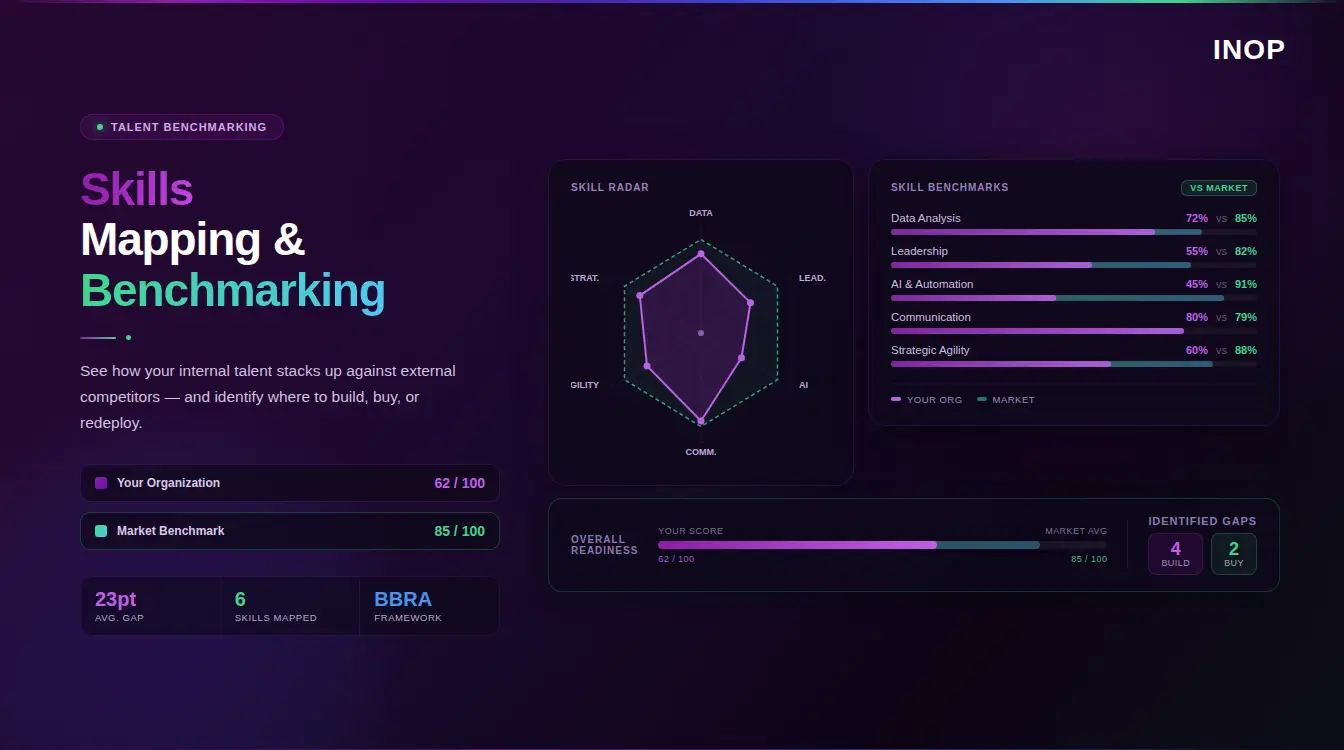
The ability to navigate that transition becomes an execution capability in its own right. Can employees move into adjacent roles as work changes? Are critical skills developing quickly enough to support the automation strategy? Is workforce planning aligned with the automation pipeline? If a critical function changes rapidly, can the organisation redeploy existing talent, or will it depend heavily on external recruitment and restructuring? And do managers have the capabilities required to lead teams through new ways of working? Traditional workforce metrics reveal relatively little about these questions. Headcount can show how many people have left. It cannot tell investors whether the remaining workforce possesses the capabilities required by a redesigned operating model.
Training hours can show how much activity has taken place. They cannot demonstrate whether critical skills gaps are actually closing. Turnover can show workforce movement. It cannot explain whether employees in automation exposed functions have credible transition pathways. This is why leading indicators such as skills gap velocity, internal mobility, alignment between automation and workforce planning, workforce transition readiness, and leadership readiness become relevant. They provide earlier visibility into whether organisational capability is keeping pace with technological ambition.
For investors, the underlying question is straightforward: Is management building the organisation required to deliver the strategy it is selling to the market?
3. Is Automation Making the Organisation More Resilient or More Fragile?
Efficiency and resilience are not necessarily the same thing. An organisation may automate successfully and reduce costs while simultaneously creating new concentrations of operational dependency. It may remove roles and later discover that it has also removed institutional knowledge. It may automate customer interactions and encounter unexpected service quality problems.
It may redesign workflows around AI while underestimating the continued need for human judgement, exception handling or coordination.
And it may achieve short term labour savings while creating capability gaps that become expensive to resolve later. The difficulty is that these vulnerabilities do not always appear immediately in financial performance.
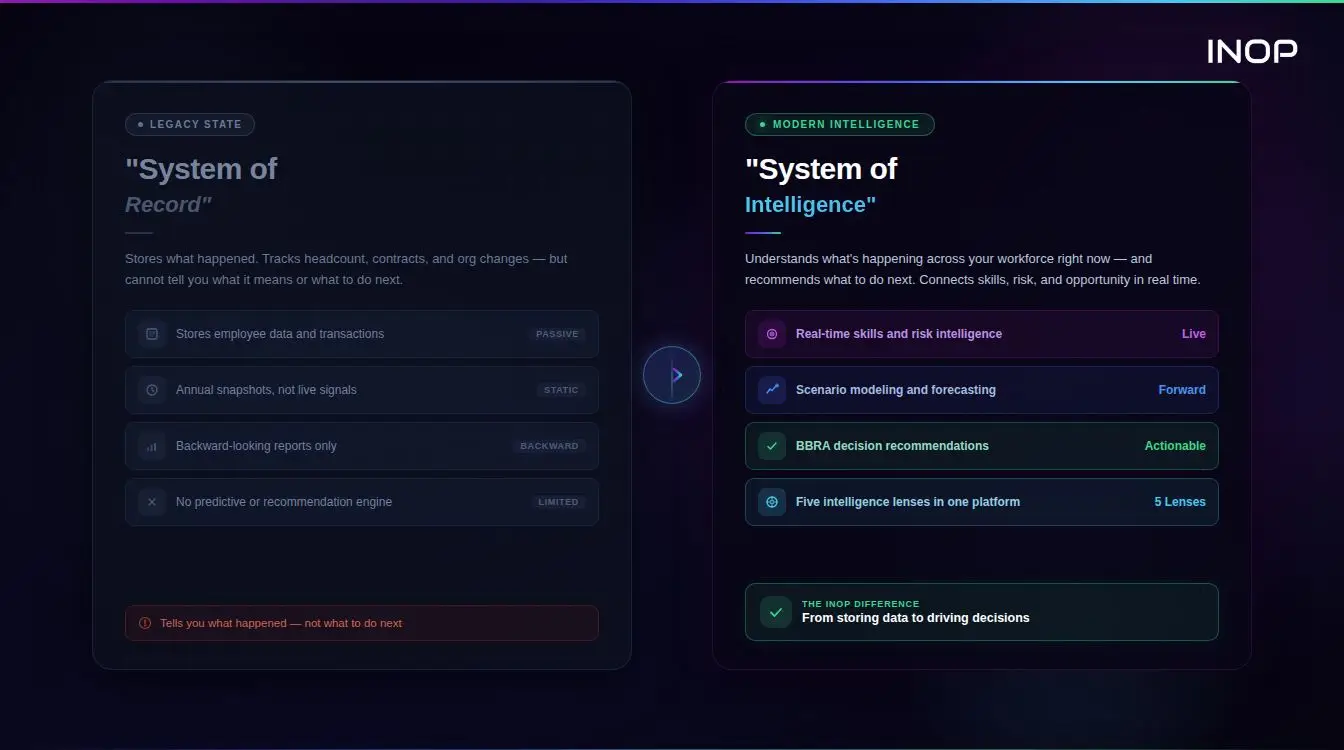
Traditional workforce reporting is predominantly retrospective. Layoffs, turnover, productivity deterioration, restructuring costs and operational disruption become visible primarily after transformation pressures have materialised. The governance challenge is to identify capability shortages, workforce fragility and execution constraints before they become operationally or financially significant.
This creates an important capital markets implication. Workforce indicators can become leading indicators of execution risk. An accelerating skills gap may signal that transformation is moving faster than organisational capability. Weak internal mobility may indicate limited capacity to redeploy talent as work changes.
Poor alignment between automation programmes and workforce planning may suggest that projected efficiencies underestimate the organisational transition required to achieve them. Weak leadership readiness may indicate that technical capability is advancing faster than managerial capacity to implement it effectively.
Viewed this way, workforce information does more than describe an organisation. It begins to explain its capacity to adapt.
Investor Questions Are Evolving Faster Than Workforce Reporting
However, there is another challenge. While investor questions are becoming more sophisticated, much of corporate workforce and AI disclosure remains qualitative and technology centric. Companies can often explain what AI systems they are deploying, how much they are investing, or what productivity benefits they expect. Far fewer can provide decision useful information about workforce adaptability, transition readiness, capability evolution or the operational risks emerging as work changes. That gap will become difficult to ignore.
A small number of organisations are already beginning to communicate workforce transformation and automation related impacts through annual reports, sustainability disclosures, investor presentations and governance communications. Although these practices remain inconsistent, early disclosures are beginning to shape expectations about what credible workforce transparency and governance maturity can look like.
This creates a disclosure asymmetry. Companies with stronger workforce visibility are better positioned to explain how automation is changing work, what transition plans are in place, where execution risks exist, and how management is responding.
Companies without that visibility are left largely communicating ambition. Over time, that difference may become meaningful to investors trying to distinguish between organisations that can articulate an AI strategy and those that can actually execute one. The answer is not hundreds of additional workforce metrics. The objective should not be disclosure for disclosure’s sake. It should be decision useful visibility into the organisational assumptions underpinning strategy and expected financial performance.
A New Capital Markets Information Category
The implications extend beyond investor relations. The information boards need to govern AI transformation overlaps with the information investors need to assess it. Boards need visibility into workforce exposure, implementation risk, capability evolution, organisational preparedness and long term operational resilience. Investors need confidence that those issues are understood, governed and reflected in the assumptions underlying corporate strategy.
That creates a new connection between workforce governance and capital markets communication. Investor relations teams will need a deeper understanding of workforce transformation. Human resources leaders will hold information relevant to enterprise risk, strategy and value creation.
Finance teams will need to understand how workforce transition costs and capability investment affect automation business cases. And boards will need to determine which elements of that information are sufficiently material and decision useful to communicate externally. This represents a fundamental change in the role of workforce information. Workforce intelligence is moving from an HR information category to a capital markets information category.
The companies best positioned for this shift will not necessarily be those producing the greatest volume of workforce disclosure. They will be those capable of connecting workforce information to the questions investors ultimately care about.
- Can this organisation execute its strategy?
- Can it realise the economic benefits it is promising?
- Can it adapt when assumptions change?
- And is automation strengthening the organisation or quietly creating new sources of fragility?
Conclusion
Workforce visibility is no longer purely an internal HR concern. It is becoming a capital markets issue. As AI transformation accelerates across sectors, investors need to understand not only what organisations are investing in, but whether they have the workforce capability, organisational readiness and governance infrastructure to translate those investments into sustainable value.
That changes the role of workforce information. Automation exposure, skills gaps, internal mobility, transition readiness and organisational resilience can provide important signals about execution risk before those risks become visible in financial performance. For investors, these indicators can provide greater insight into whether the assumptions underpinning an AI strategy are credible.
The challenge for companies is therefore not simply to disclose more. It is to provide better visibility into how work is changing, how the organisation is adapting, and whether management can govern that transition effectively. The next generation of workforce disclosure will not simply describe the workforce a company has. It will help investors understand whether that workforce can deliver the company it intends to become.