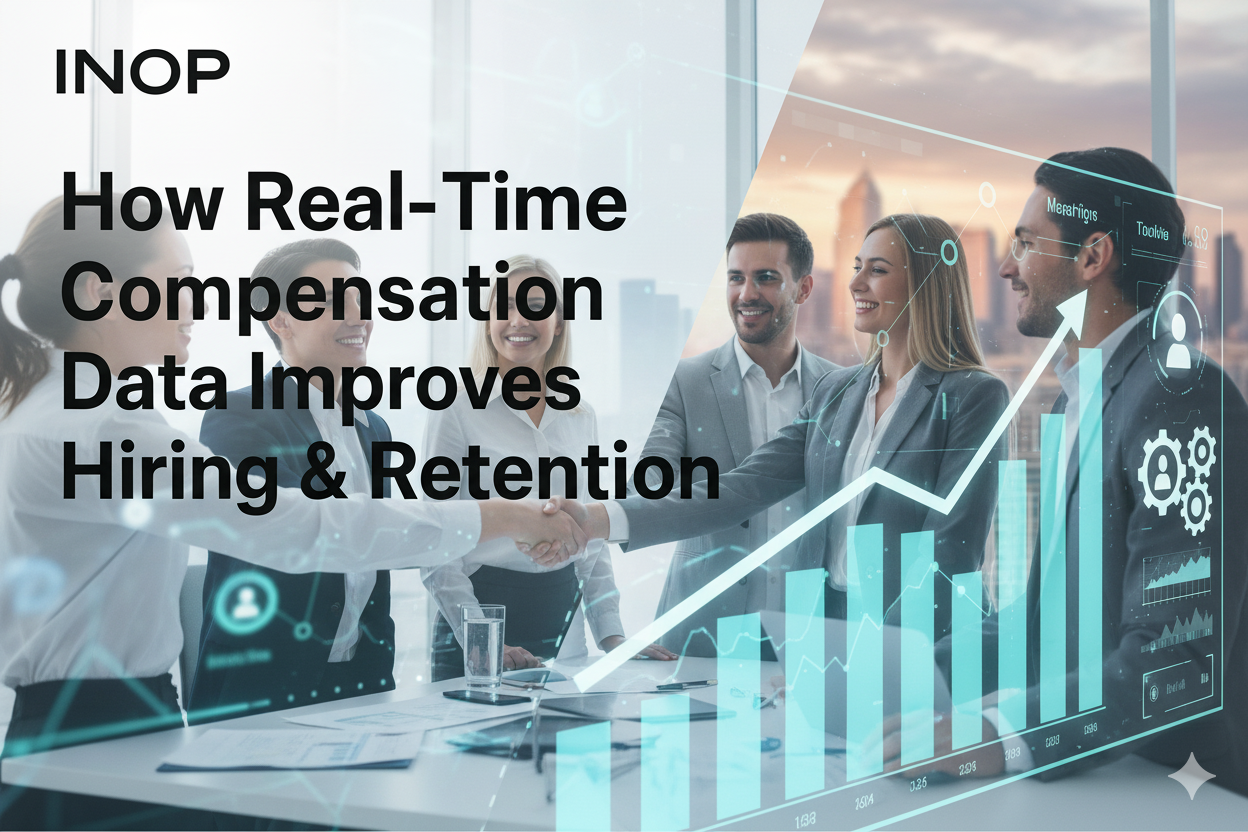
What if you could see — in real time — how much your competitors are paying for the same talent you’re trying to hire? Or instantly know whether your employees feel fairly compensated before they even think about leaving? That’s the power of real time pay data.
In today’s competitive labor market, compensation is no longer just about offering a paycheck — it’s a strategic tool for both attracting top talent and keeping them engaged long-term. Companies that fail to adapt often struggle with high turnover, wasted recruiting budgets, and missed opportunities.
This article explores how real-time compensation insights transform hiring and retention strategies, why businesses should move beyond outdated salary surveys, and how HR leaders can leverage data-driven tools to build a sustainable workforce.
Visualizing Value: The Role of Total Rewards Dashboards
Having real-time compensation data is only half the battle; the other half is how you present it. To truly impact hiring and retention, companies must effectively visualize total comp for both candidates and current employees.
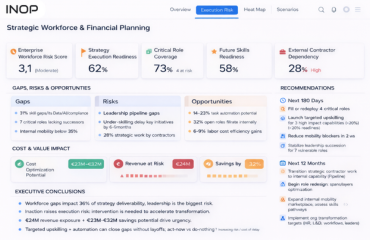
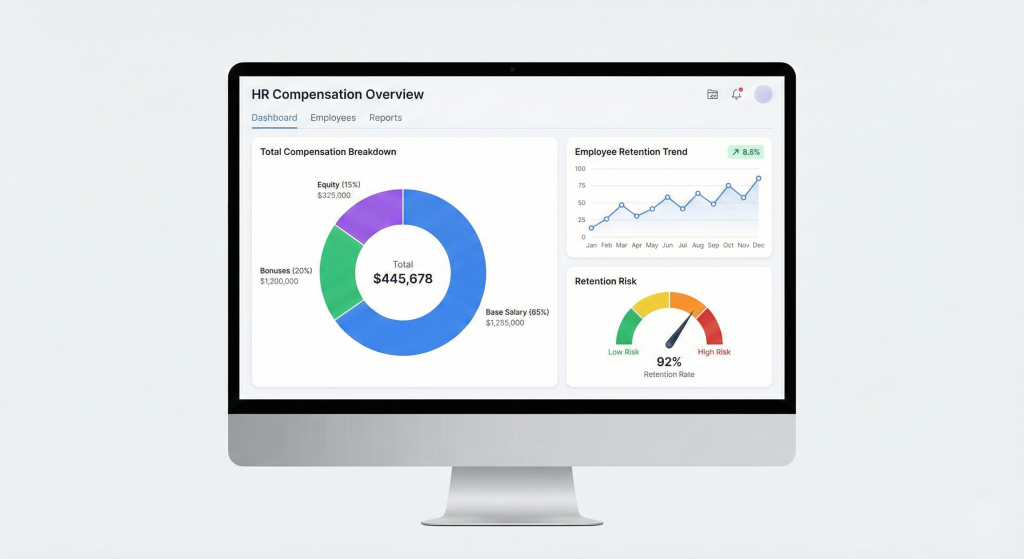
This is where total rewards dashboards become critical. Instead of handing an employee a static PDF once a year, a dynamic dashboard surfaces an employee’s position to the market in real-time. It visually breaks down base pay, bonuses, equity, healthcare, and L&D stipends. When employees can log into a personal dashboard and see the exact, real-time market value of their total compensation package, trust increases, and the temptation to test the job market drops significantly.
How to Visualize Total Comp for Hiring and Retention Decisions
To make fast, data-driven decisions on talent, HR leaders must move beyond traditional spreadsheets and adopt clear, real-time visual models of their Total Rewards. Here is exactly how modern companies visualize total compensation to win and retain top talent:
- Implement dynamic compensation dashboards: Replace static, quickly outdated spreadsheets with real-time visual UI tools that automatically update as market conditions change.
- Map the full Total Rewards package: Create clean visual breakdowns (like donut charts or stacked bar graphs) that combine base salary, equity, performance bonuses, and benefits into one unified, easy-to-read view.
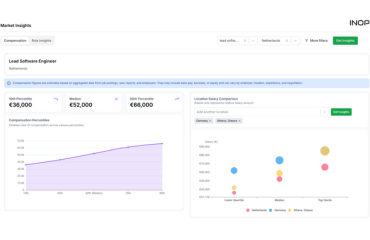
- Overlay real-time market data: Use trend lines and heat maps to compare your current employee compensation against live market rates, allowing you to instantly spot flight risks before they resign.
- Compare internal bands against competitor offers: Visualize where your candidates sit within your internal pay ranges alongside what competitors are currently offering. This ensures your hiring offers are both competitive and equitable.
By visualizing these elements together, organizations can present highly compelling, transparent offers to candidates while proactively adjusting pay to retain their highest-performing employees.
Why Traditional Pay Data Falls Short
For decades, HR leaders and recruiters relied on annual or bi-annual salary surveys to benchmark pay. While these reports provided value, they came with three critical limitations:
- Time lag: By the time data was published, market conditions had already shifted.
- Averages only: Salary surveys often masked pay disparities within industries, geographies, or niche roles.
- Limited scope: They rarely accounted for fast-emerging roles in AI, cybersecurity, or green tech.
In fast-changing industries, outdated pay data leads to offers that fall flat, employees feeling undervalued, and an overall erosion of trust. A 2023 LinkedIn Workplace report found that 61% of job seekers prioritize competitive pay above all other factors, underscoring why static benchmarks are no longer enough.
The Shift Toward Real-Time Pay Data
Organizations are increasingly turning to real time pay data platforms that aggregate compensation information across roles, industries, and geographies. Unlike traditional surveys, these tools update continuously, offering HR leaders a live view of what the market truly looks like.
With real time compensation analytics, companies can:
- Spot sudden spikes in demand for critical skills.
- Compare pay structures against competitors in real time.
- Adjust job offers instantly to stay competitive.
- Detect internal pay inequities before they lead to disengagement or attrition.
This agility not only strengthens recruitment but also fosters trust with existing employees who want transparency and fairness in their pay.
How Real-Time Data Transforms Hiring Outcomes
Hiring success today hinges on more than just posting a job ad and waiting for applicants. Compensation plays a direct role in whether top talent accepts an offer. Here’s how real-time pay insights make a measurable difference:
- Competitive offers at speed: Instead of negotiating blindly, recruiters can back up offers with up-to-date market data.
- Reduced time-to-hire: Candidates are more likely to accept offers that align with what they’ve already researched online.
- Better alignment with skills-based roles: As businesses shift toward specialized hiring, accurate pay ranges for niche skills reduce hiring risks.
For example, if your data reveals that data engineers with cloud security expertise are commanding 15% more this quarter than last, you can adjust compensation instantly rather than losing candidates to rivals.
This is where compensation becomes more than a transactional detail — it becomes a talent retention pay strategy right from the hiring stage.
Retention: Keeping Talent in a Transparent Market
Hiring is only half the battle. Keeping employees engaged and committed requires pay structures that reflect real-time realities. Employees today have unprecedented access to salary transparency tools — if your compensation isn’t competitive, they’ll know.
By leveraging intelligent compensation analytics, HR leaders can identify flight-risk employees, close pay gaps before they become issues, and design career progression pathways that align with both skills and compensation growth.
Consider these measurable benefits:
- Lower turnover rates: Studies show companies that benchmark pay quarterly have 20% lower voluntary attrition than those relying on annual adjustments.
- Increased trust and morale: Transparent pay policies reduce workplace dissatisfaction and boost engagement.
- Future-proofing compensation models: Continuous data helps anticipate shifts in skills demand — for example, the rising premiums for AI-related roles.
Navigating Highly Inflationary Markets
Traditional annual salary reviews are fundamentally broken in highly inflationary markets. When the cost of living spikes over a few months, employees who are forced to wait for an annual review will simply leave for a company offering an inflation-adjusted starting salary.
Modern compensation platforms allow HR teams to monitor economic shifts and push real-time cost-of-living adjustments directly to employee total rewards dashboards. By proactively adjusting pay based on real-time market inflation metrics—rather than arbitrary annual schedules—organizations eliminate the financial anxiety that drives top performers to quit.
Beyond Pay: Building a Data-Driven Talent Strategy
Real-time pay insights should not be siloed within HR. They intersect with broader workforce strategy, influencing:
- Workforce planning: Understanding where critical roles will face pay pressure in the future.
- Budget allocation: Aligning salary bands with real-time competitive data ensures smarter financial planning.
- DEI goals: Identifying pay inequities across gender, ethnicity, or regions and correcting them proactively.
When pay structures reflect real-time realities, businesses can shift from reactive compensation adjustments to proactive workforce design — a move that strengthens both recruitment and retention.
Suggested To read: Organizations can go a step further by using predictive compensation models to anticipate pay trends.
Dedicated Compensation Platforms vs. Generic BI Tools
Many HR leaders eventually hit a wall with manual processes and decide it is time to sunset their Google Sheets comp tracker. However, a common mistake is trying to migrate that data into generic BI tools (like Tableau or PowerBI).
How do dedicated compensation platforms differ from generic BI tools? Generic BI tools are built to display static historical data. They require massive manual data cleansing and don’t understand HR taxonomy. A dedicated compensation platform is purpose-built for total rewards. It automatically ingests real-time market benchmarking data, flags pay equity compliance risks, and provides secure, role-based access so managers can model merit cycles without breaking complex formulas. When migrating from spreadsheets, adopting a dedicated platform ensures your data isn’t just visually appealing—it is legally compliant and actively benchmarked against your competitors.
The Next Frontier: Predictive Compensation Analytics
The most mature HR organizations are no longer just reacting to market data; they are using it to look into the future. By leveraging predictive compensation analytics, AI-driven platforms can forecast exactly when an employee’s salary will fall below the market average, flagging them as a “flight risk” before they update their resume.
Predictive analytics allows finance and HR leaders to model future compensation scenarios. You can accurately forecast the budget required to maintain competitive pay bands over the next 12 to 24 months, ensuring your hiring and retention strategies are always one step ahead of the market.
Conclusion
Compensation has evolved from a static HR function to a dynamic business strategy. Companies that embrace real time pay data gain a significant edge: faster hiring, higher employee retention, and stronger trust with their workforce. By pairing this with advanced tools like real time compensation analytics and intelligent compensation analytics, HR leaders can move beyond outdated benchmarks and build pay structures fit for a transparent, skills-driven economy.
If your organization is still relying on last year’s salary survey, you’re already behind. Now is the time to invest in smarter data-driven compensation strategies that keep your workforce engaged and your talent pipeline strong.
👉 What are your biggest challenges with compensation data — hiring or retention? Share your thoughts in the comments below.
Frequently Asked Questions
What is real time pay data?
It’s live, continuously updated compensation information collected from multiple sources, offering HR leaders an accurate view of current salary benchmarks for different roles and skills.
How does it differ from traditional salary surveys?
Salary surveys are typically annual and provide averages, while real-time data is updated continuously and reflects immediate market changes.
Can real-time data really reduce turnover?
Yes. By identifying pay discrepancies before employees notice them, companies can adjust proactively, improving retention and engagement.
Does this apply to small businesses or just large corporations?
Both. Small businesses benefit from real-time insights to stay competitive, while large organizations use them to maintain equity and consistency across global teams.
Is real time pay data expensive to implement?
The cost varies by platform, but many organizations find the investment worthwhile because it reduces turnover costs and shortens hiring timelines.