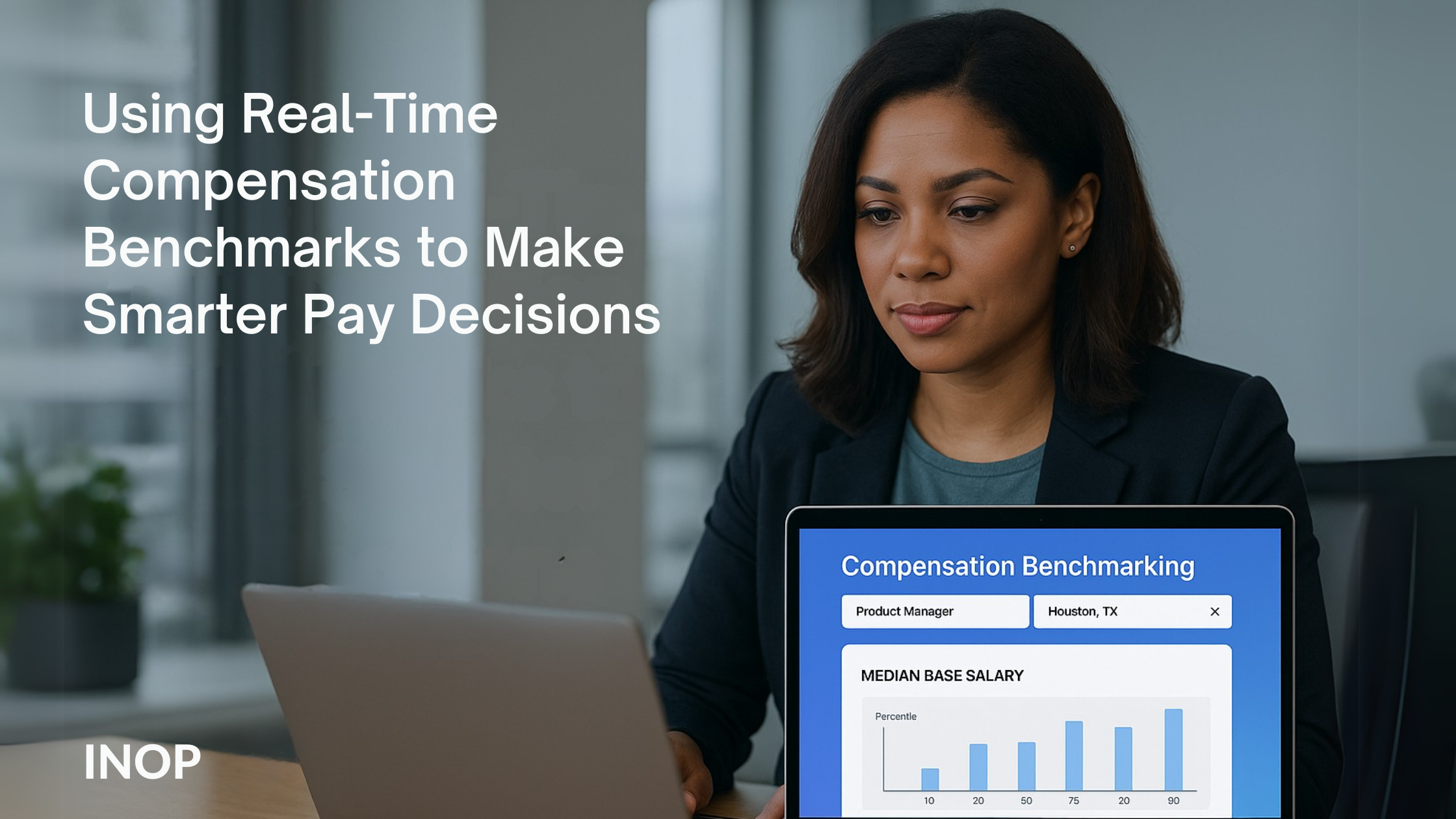
Salary expectations in tech hubs have shifted by as much as 15 % in the last six months alone. If your pay data is six or even three months old, you may already be out of step with the market. Real‑time compensation benchmarks—continuously updated salary and total‑rewards data—equip HR and finance leaders to move at market speed, protect pay equity, and reinforce employee trust.
This article explains what real‑time benchmarks are, how they differ from traditional salary surveys, and how to build a data‑driven pay strategy around them. You’ll see practical examples, key metrics, and implementation tips that translate directly to stronger attraction and retention.
Why Traditional Benchmarking Falls Short
Annual or semi‑annual surveys still have value, but they lag behind:
| Issue | Traditional Surveys | Real‑Time Benchmarks |
|---|---|---|
| Update cycle | Once a year | Daily or weekly |
| Market accuracy | ±10–15 % variance | ±2–5 % variance |
| Geographic detail | Broad metro averages | Zip‑code or remote‑tier filters |
| Time to insight | Months | Near‑instant |
With inflation, remote work, and skill shortages reshaping pay every quarter, delayed data increases the risk of lowball offers, pay‑equity gaps, and higher attrition.
What Counts as “Real‑Time” Compensation Data?
Real‑time benchmarks aggregate multiple live sources:
- Ongoing employer submissions from HRIS and payroll feeds
- Peer‑group exchanges within compensation networks
- Public job‑posting analytics that track offered pay ranges
- Instant employee‑reported updates from platforms like Levels.fyi or Glassdoor
Algorithms clean and normalize these inputs, weighting them for reliability before publishing fresh medians and percentiles—often every 24 hours.
The Pay‑Strategy Advantages
- Faster Hiring
Recruiters armed with live salary medians can craft competitive offers within hours, cutting time‑to‑accept by up to 30 %. - Proactive Pay‑Equity Audits
Monthly or quarterly scans flag compression or gender gaps before they snowball into risk or turnover. - Budget Precision
Finance teams improve forecast accuracy, reducing salary‑budget variance from ±5 % to near ±1 %. - Data‑Backed Retention
Real‑time alerts tell HR which roles are drifting below market—so you can adjust before your best people get recruiter calls.
Building a Real‑Time Benchmarking Workflow
Map Your Critical Roles
Start with hot‑market positions—software engineers, product managers, revenue leaders. Define job families, levels, and geographic tiers.
Connect Data Feeds
Select a platform that unifies live survey inputs, crowdsourced data, and peer‑group exchanges. Confirm it supports API links to your HRIS for seamless updates.
Set Market Positioning Rules
Establish whether you pay at the 50th, 65th, or 75th percentile, and vary by role criticality or location. Document exceptions and governance steps.
Integrate Review Cycles
Move from annual to quarterly—and for hard‑to‑hire roles, even monthly—benchmark reviews. Automate alerts when ranges slip outside tolerance.
Combine With Total‑Rewards Philosophy
Market‑aligned base salary is table stakes. Layer bonuses, equity refreshers, and flexible benefits to create differentiated offers.
Case Examples
FinTech Scale‑Up
Problem: Rejected offers for senior engineers jumped to 45 %.
Action: Adopted real‑time benchmarks and raised base pay by 12 % for key roles.
Result: Offer acceptance rose to 83 % in one quarter.
Global SaaS Provider
Problem: Inflation caused mid‑year pay drift in high‑cost cities.
Action: Quarterly benchmark checks triggered off‑cycle adjustments averaging 4 %.
Result: Voluntary quits in engineering dropped by 18 % year‑on‑year.
Metrics to Track
- Internal‑to‑Market Ratio (IMR) – Median internal salary ÷ median market salary. Target 0.95–1.05.
- Offer Acceptance Rate – Percentage accepted within seven days. Goal ≥ 80 %.
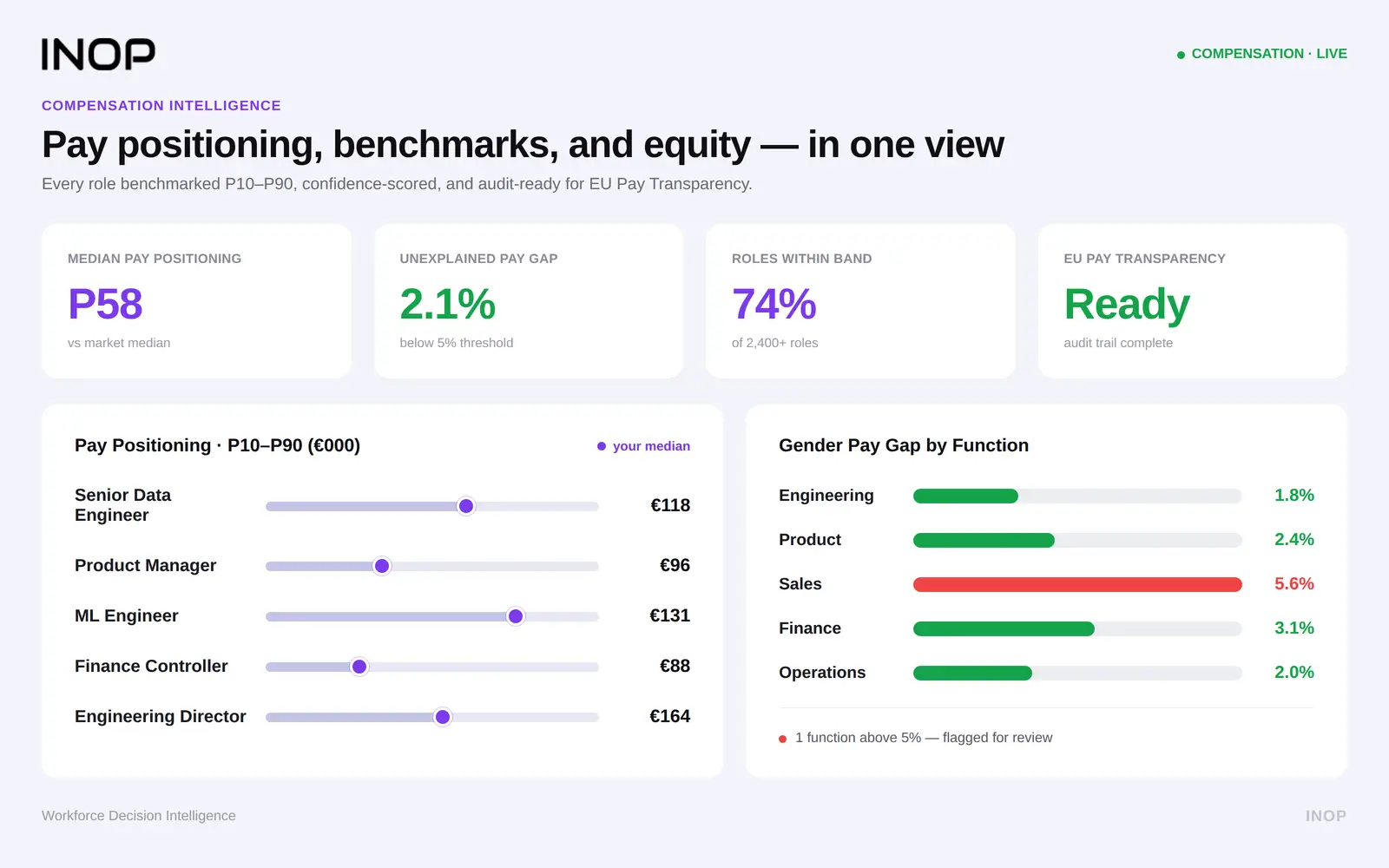
- Pay‑Equity Gap – Difference in median pay for protected classes vs. overall. Aim ≤ 1 %.
- Salary‑Budget Variance – Forecast vs. actual spend. Keep within ±2 %.
Implementation Pitfalls to Avoid
- Data overload – Too many sources without weighting leads to noisy benchmarks.
- One‑size ranges – Remote roles may need multi‑tier geo differentials, not national averages.
- Ignoring total rewards – Focusing solely on base pay can still leave you uncompetitive if equity or bonus norms shift.
Strategic Add‑Ons
- Complement live salary data with an AI‑powered compensation intelligence platform that models budget impact and pay‑equity scenarios in minutes.
- For foundational concepts, see what is compensation benchmarking to understand how traditional surveys evolved into real‑time analytics.
Conclusion
Real‑time compensation benchmarks transform pay from reactive maintenance to proactive strategy. By pairing always‑current data with clear pay philosophy and robust analytics, organizations gain a decisive edge in hiring, retention, and equity.
Ready to modernize your pay strategy? Start a pilot with live benchmarks for your most competitive roles—or reach out for a consultation on integrating real‑time data into your existing comp cycle.
Frequently Asked Questions
How often should we refresh compensation benchmarks?
High‑growth or high‑turnover roles deserve at least quarterly updates, while niche or stable roles may suffice with semi‑annual reviews.
Are real‑time benchmarks reliable?
Yes—when sourced from multiple verified feeds and normalized by a reputable provider, the margin of error decreases to about 2–5 %.
Can small businesses afford real‑time data?
Most platforms offer tiered pricing. Even basic access to live medians can prevent costly mis‑hires or turnover, delivering strong ROI.
Do real‑time benchmarks eliminate the need for annual surveys?
Annual surveys still add depth and governance credibility, but real‑time data fills the agility gap between releases—both together create the strongest program.