Is your company’s pay strategy aligned with the market—or are you risking losing top talent to better offers? In today’s competitive labor landscape, having a solid grasp of compensation benchmarking is no longer optional—it’s essential. This guide will explain what a compensation benchmark is, why it matters, and how to apply it effectively to attract, retain, and motivate your workforce.
What is simple meaning of Compensation Benchmarking?
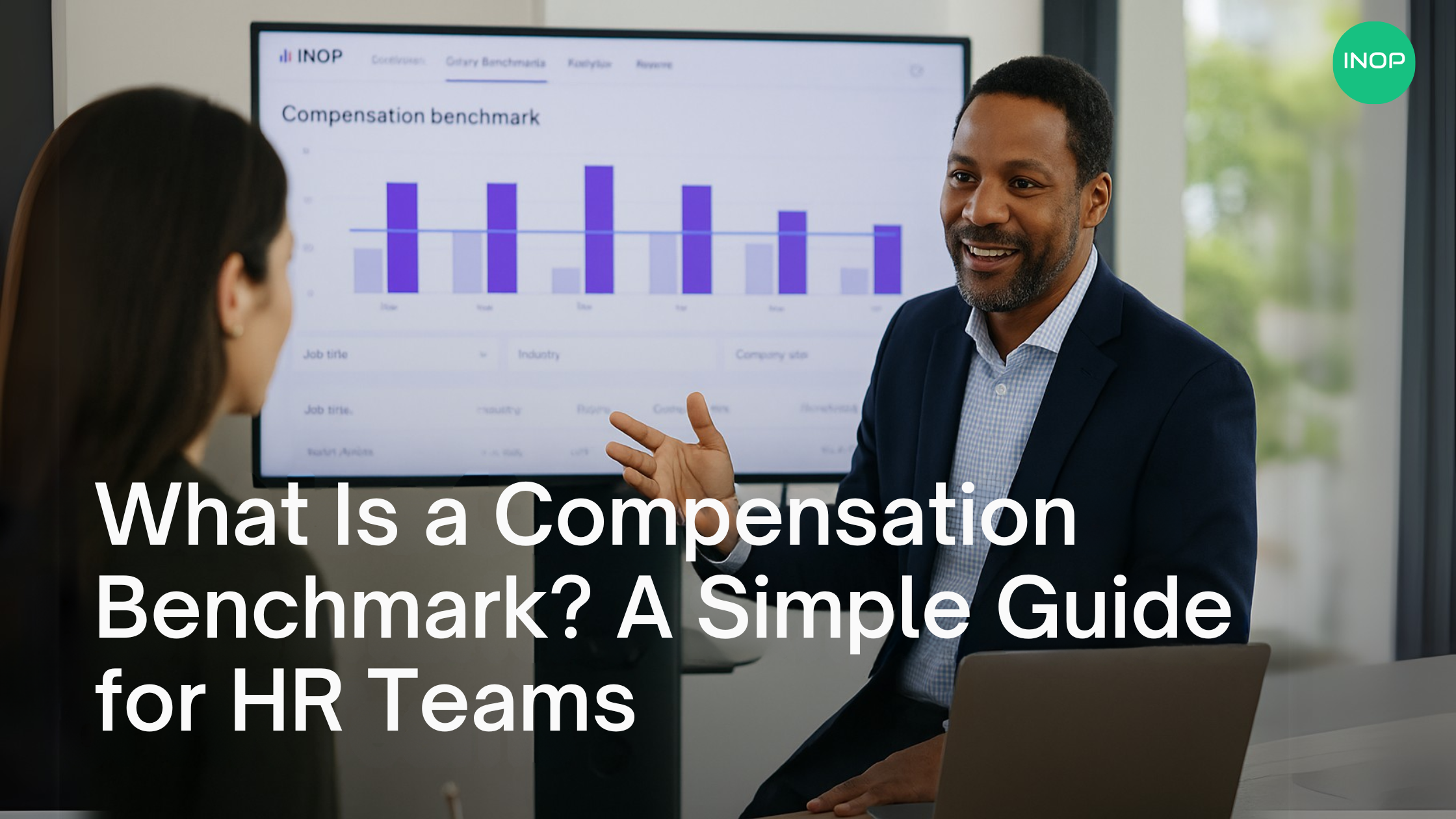
Benchmarking Compensation is the process of comparing your company’s salary structure and benefits to the broader market. It helps HR teams ensure internal pay practices are competitive, equitable, and aligned with company goals. At its core, benchmarking supports smarter pay decisions through data—not guesswork.
Unlike ad hoc salary reviews or gut-feel adjustments, benchmarking relies on structured analysis to answer questions like:
- Are we compensating fairly compared to industry peers?
- Are we aligned with regional pay standards?
- How should our pay differ for remote or hybrid roles?
📌 Looking to benchmark remote and flexible roles? Explore the hybrid pay structure framework.
When Should Companies Do Compensation Benchmarking?
Compensation benchmarking isn’t just a one-time event — it’s a strategic, recurring process that should align with key moments in your organization’s lifecycle. Knowing when to benchmark pay is just as important as knowing how to do it.
Here are the most common (and recommended) times to conduct compensation benchmarking:
1. Annually During Budget Planning Cycles
The most common time for benchmarking is during annual compensation reviews. This allows HR teams to:
- Adjust salaries based on current market rates
- Prepare competitive offers for open roles
- Stay within budgeting guidelines while remaining competitive
Benchmarking before annual reviews ensures alignment between compensation strategy and business objectives.
2. Before Launching a Hiring Surge or Expansion
If your company is entering a new market, scaling up hiring, or expanding into different geographies, benchmarking helps ensure that salary offers are regionally competitive and aligned with the roles’ responsibilities.
3. When Introducing New Roles or Job Families
When adding entirely new positions — especially in tech, data, or product — market data provides guidance on:
- Salary bands
- Job level expectations
- Bonus and equity structures
This avoids under- or over-compensating based on internal guesses.
4. After a Major Business Event
Mergers, acquisitions, restructurings, or layoffs can disrupt internal pay equity and external competitiveness. Post-event benchmarking helps recalibrate compensation strategy to fit the new business reality.
5. When Employee Turnover Spikes
A sudden increase in resignations — especially in key roles — may be a signal that your compensation is lagging. Benchmarking can help identify whether pay is a root cause and inform necessary adjustments.
6. To Support Pay Transparency and Compliance
With evolving legal requirements around pay transparency (e.g., EU Pay Transparency Directive, U.S. state laws), regular benchmarking helps ensure your organization is compliant, fair, and audit-ready.
Why Compensation Benchmarking Matters for HR Teams
1. Attracting and Retaining Talent
Candidates today do their research. According to multiple surveys, job seekers list transparent, competitive pay as one of the top decision factors when accepting a job. Falling short can mean higher offer rejection rates—and lost opportunities.
related Article: What Motivates Gen Z in the Workplace?
2. Enabling Pay Equity
Benchmarking prevents disparities in pay based on gender, location, or subjective judgments. It supports compliance with labor laws and fosters internal trust in your compensation strategy.
3. Improving Budget Accuracy
HR and finance teams can better plan for salary increases, bonuses, and merit adjustments by referencing market data rather than relying on assumptions.
Internal vs External Benchmarking: What’s the Difference?
Understanding the distinction between internal and external compensation benchmarking is critical for building a well-rounded and equitable pay strategy. Both serve different but complementary purposes, and HR teams should leverage them together to make informed, balanced decisions.
🔍 What Is Internal Benchmarking?
Internal benchmarking focuses on evaluating pay equity and consistency within your organization. It answers questions like:
- Are employees in similar roles paid fairly across departments or locations?
- Is compensation aligned with internal job levels and responsibilities?
- Are promotion-based salary increases consistent across the business?
Use cases for internal benchmarking:
- Ensuring fairness and consistency across teams
- Identifying internal pay compression or disparities
- Supporting diversity, equity, and inclusion (DEI) goals
- Preparing for internal audits or transparency reporting
Internal benchmarking relies on your organization’s own job architecture, compensation bands, and performance data.
🌐 What Is External Benchmarking?
External benchmarking compares your compensation data to market rates for similar roles at other companies. It helps you understand:
- How competitive your salaries are compared to industry standards
- What competitors are offering for in-demand roles
- Whether your compensation strategy aligns with current market trends
Use cases for external benchmarking:
- Setting salary ranges for new roles
- Designing competitive total rewards packages
- Reducing offer rejection rates from top talent
- Staying ahead in a competitive hiring market
External benchmarking uses third-party market data sources such as salary surveys, compensation databases, and job boards.
🎯 Why You Need Both
Relying solely on external data may lead to inconsistencies or internal equity issues, while focusing only on internal data can cause you to lose talent to better-paying competitors. A strategic compensation benchmarking process incorporates both:
- Use internal benchmarking to promote fairness and employee trust
- Use external benchmarking to stay competitive and attract top talent
The real power comes when these approaches are integrated into a holistic, data-driven compensation strategy.
How Compensation Benchmarking Works in process?
Compensation benchmarking typically includes:
- Job Matching: Aligning internal roles to industry-standard job descriptions.
- Market Data Collection: Using trusted sources like Mercer, Salary.com, and regional labor data.
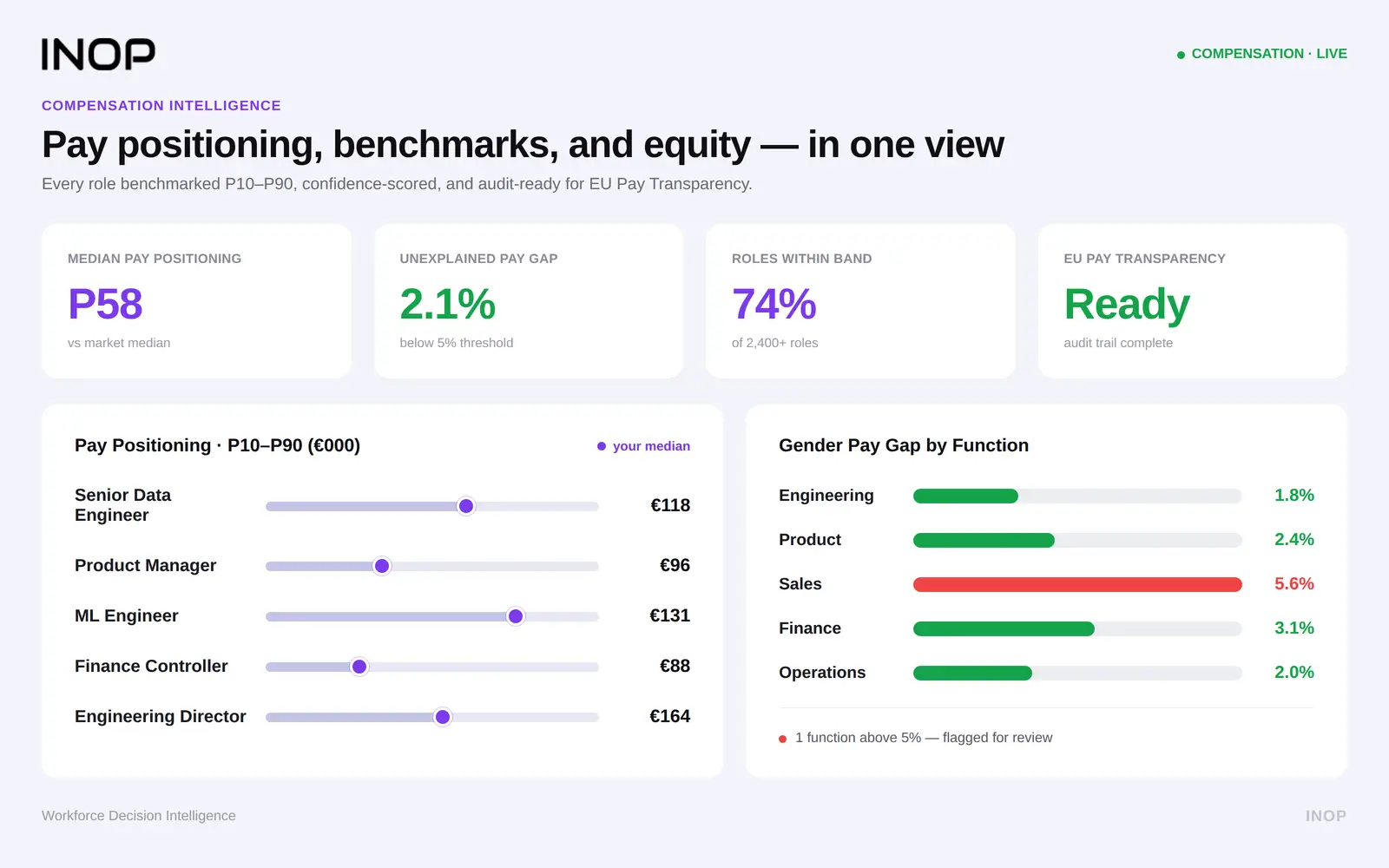
- Pay Comparison: Evaluating how your pay structure aligns with market medians (e.g., 50th or 75th percentile).
- Salary Band Adjustments: Adjusting roles that are significantly below or above market rate.
- Ongoing Review: Monitoring benchmarks regularly as market trends evolve.
🔍 Want deeper insights? Learn how pay analytics can help you extract smarter, real-time insights from your compensation data.
Process Guide: Key Benchmarking Metrics to Use
- Base Salary: Annual fixed income before bonuses.
- Total Cash Compensation (TCC): Base plus variable incentives (bonuses, commissions).
- Total Rewards: TCC plus equity, retirement, wellness perks, and other benefits.
Example:
A mid-level software developer in London might receive:
- Base: £55,000
- Bonus: £5,000
- Stock options: £10,000
- Total rewards: £70,000
Good benchmarking practices factor in all components—not just base salary.
Common Pitfalls HR Teams Should Avoid
Even with the right data, benchmarking can go wrong. Here are a few mistakes to avoid:
- Inconsistent job titles (e.g., “Senior Analyst” vs. “Data Lead”)
- Regional bias: Ignoring cost-of-living and market differences
- Outdated data: Markets shift quickly—especially in tech, healthcare, and remote work
- Ignoring internal equity: Adjusting salaries without a holistic strategy
📌 See the top 5 mistakes pay benchmarking companies make—and how to avoid them.
Regional & Industry-Specific Benchmarking Considerations
When conducting compensation benchmarking, one size does not fit all. Salaries vary widely depending on geographic region and industry — and failing to account for these nuances can result in flawed benchmarking data and costly HR decisions.
This section highlights the key factors HR teams should consider when tailoring compensation benchmarking to specific locations and industries.
📍 Why Regional Differences Matter
Salaries for the same role can differ dramatically based on cost of living, talent availability, and local market demand. For example:
- A software engineer in San Francisco may command a much higher salary than one in Austin or Warsaw — even with the same skills.
- Roles in major financial hubs like London or New York often pay more than the same roles in rural regions.
Best practice: Adjust benchmarking data based on:
- City or metro area
- National vs. international workforce
- Remote vs. on-site requirements
- Local tax and employment regulations
Tools like geographic pay differentials and location-based market data can help create regionally adjusted salary bandsthat are both fair and competitive.
🏭 Industry-Specific Benchmarking: Don’t Overlook It
Each industry operates with its own compensation norms, talent supply, and hiring expectations. For example:
- Tech companies may offer generous equity packages that are less common in manufacturing.
- Healthcare salaries must factor in certifications and licensure.
- Retail and e-commerce roles may have different bonus structures than finance or legal sectors.
Why it matters:
Benchmarking against generic or unrelated industry data can lead to:
- Overpaying for roles that don’t demand it
- Underpaying and losing talent in competitive fields
- Designing benefits packages that don’t resonate with your workforce
Tip: Choose benchmarking sources and surveys that allow industry-level filtering for more accurate insights.
🔄 Adapt Benchmarking as Markets Shift
Both regional economies and industry demands are constantly evolving. Remote work has shifted talent availability across borders. Economic downturns or booms impact market rates. Make sure to update your benchmarks regularly — at least annually — to stay aligned with current realities.
Best Practices for Compensation Benchmarking
- Use at least 2–3 reputable data sources to avoid outliers.
- Create detailed job profiles before matching externally.
- Segment your analysis by location, department, and level.
- Update your benchmarks annually—or more frequently in fast-moving industries.
- Involve finance and executive leadership early to gain alignment and buy-in.
Tailoring Benchmarking by Business Size
Startups
Leverage flexibility, equity, and mission-driven culture to offset lower cash compensation. Use benchmarks to stay realistic without overextending budgets.
Mid-Market Firms
Compete with both startups and large enterprises. Benchmarking helps define where to lead, match, or lag on compensation.
Enterprises
Use benchmarking to standardize pay structures across regions, business units, and job families.
Communicating Benchmarking Internally
- To executives: Show how competitive pay enhances employer brand and retention.
- To managers: Provide them with benchmarks to guide compensation conversations.
- To employees: Be transparent about how pay decisions are made—even if you don’t share raw data.
Transparent communication builds trust and reduces skepticism around compensation processes.
Suggested Article: What Does Benchmarking Mean in Compensation?
Tools to Support Your Benchmarking Strategy
Here are some common tools used in benchmarking:
- Compensation databases: Mercer, Radford, Payscale
- HRIS and analytics platforms: Pave, INOP, Payfactors
- Public benchmarks: Glassdoor, LinkedIn Salary, Levels.fyi
- Government data: Eurostat, BLS (US)
For modern teams, tools that integrate pay analytics are essential to move from reactive to proactive pay strategies.
Conclusion
Compensation benchmarking is more than a salary exercise—it’s a foundational element of any strategic HR function. When done right, it enhances retention, ensures fairness, and strengthens your overall talent strategy.
If your current approach feels outdated, it may be time to upgrade your compensation model with real-time pay analytics, smarter tools, and continuous data monitoring.
👉 Start by exploring your own gaps—are you compensating fairly across job roles, locations, and departments? Benchmarking is the first step toward building trust and loyalty within your workforce.
FAQ
What’s the difference between compensation benchmarking and salary surveys?
Salary surveys provide raw market data. Benchmarking is the application of that data to your specific roles and structures.
How often should we review benchmarks?
At least annually. In volatile markets or fast-scaling companies, quarterly reviews may be necessary.
What are the risks of not benchmarking compensation?
You may underpay top performers, overpay for low-impact roles, or face high turnover due to market misalignment.
Can benchmarking work for remote teams?
Yes, but you must use a hybrid pay structure that accounts for geographic differences and remote work dynamics.
How do I know if our data is reliable?
Use reputable sources, cross-check with internal data, and ensure job matches are accurate. If you’re unsure, start with a trusted platform like INOP.