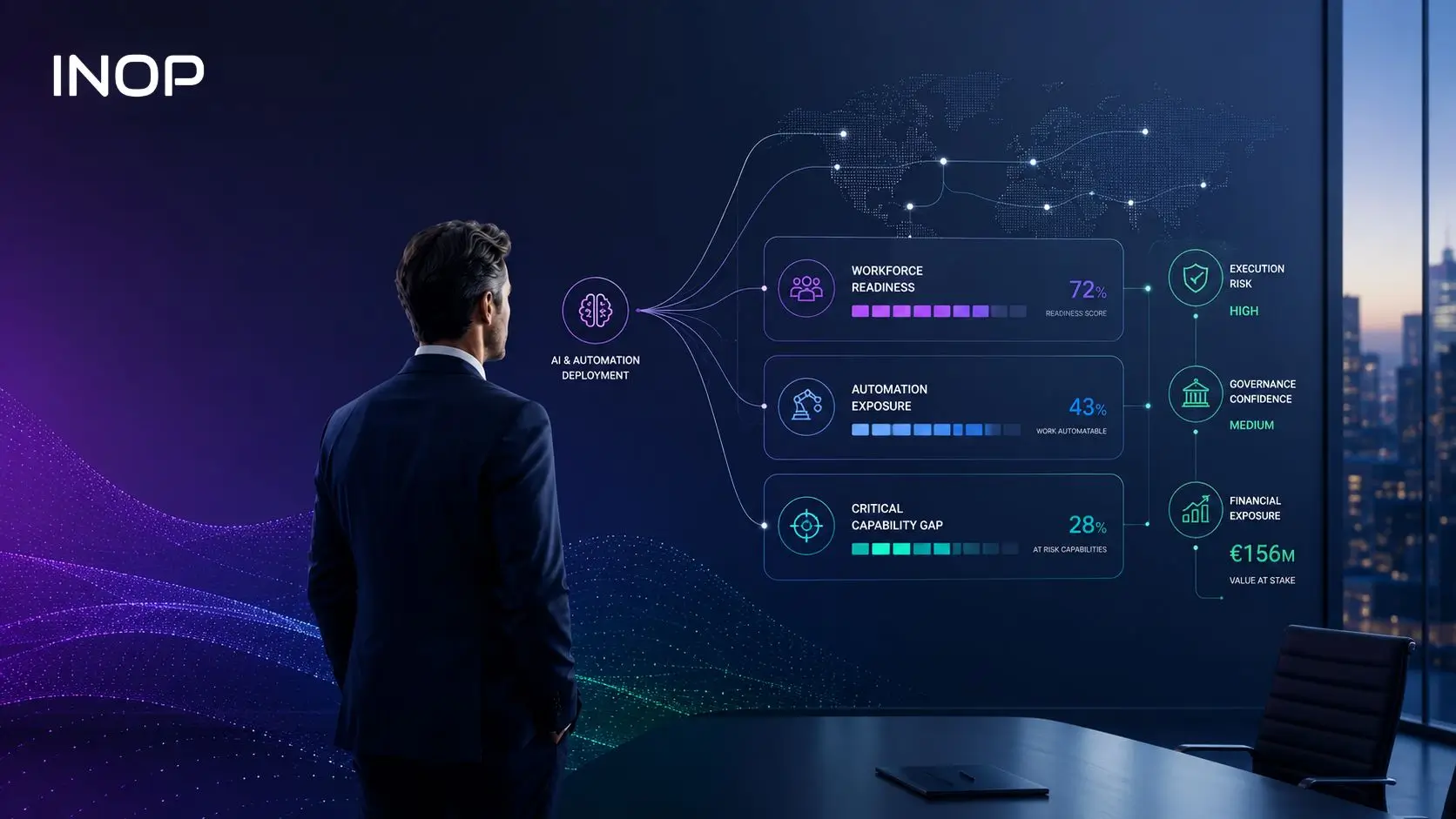
Artificial intelligence (AI) has become a standing agenda item in many boardrooms. Yet one question remains surprisingly difficult to answer: can boards actually explain AI’s workforce impact?
Boards receive regular updates on AI investments, implementation milestones, and projected productivity gains. But governing workforce transformation requires something different. It requires visibility into how work itself is changing.
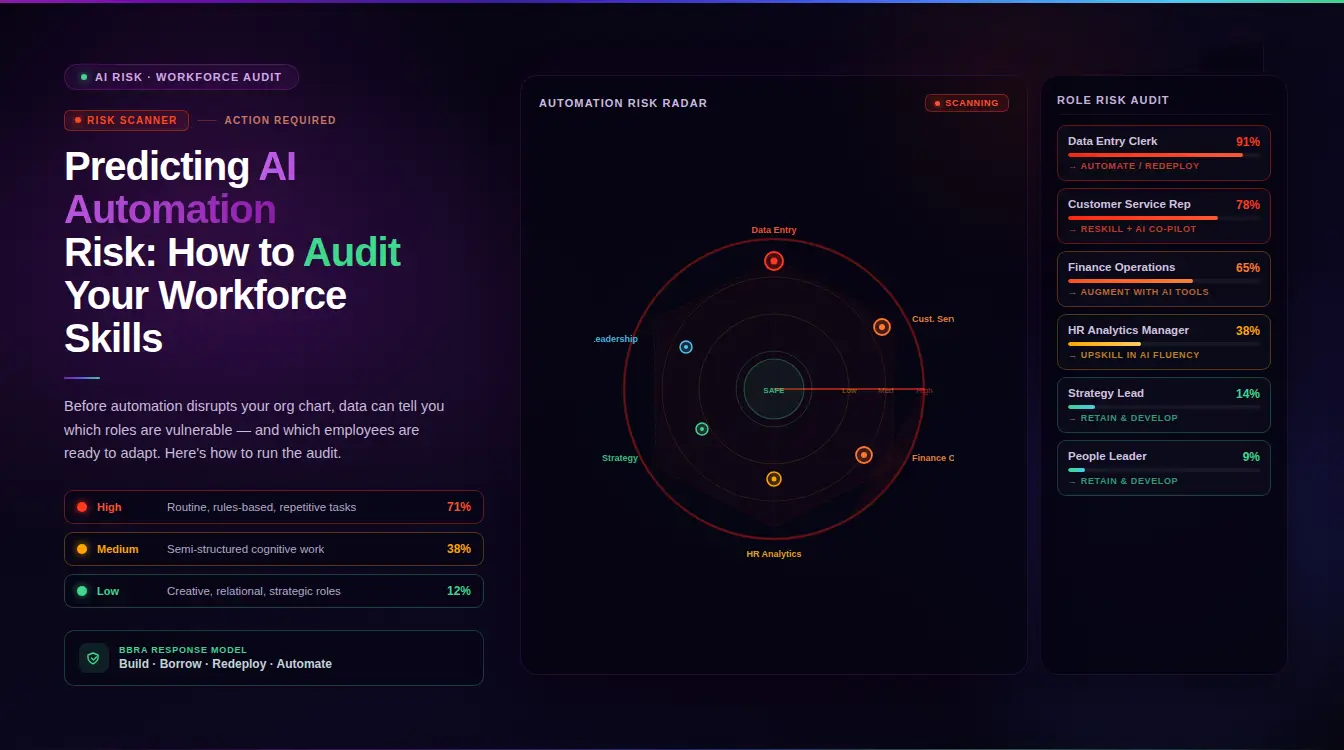
Many organisations can explain the technology they have deployed. Far fewer can explain which tasks are being automated, which skills are becoming obsolete, which capabilities are becoming more valuable, where workforce vulnerabilities are emerging, or how workforce resilience is evolving as automation expands.
We describe this as the Automation Accountability Gap.
The Data Gap vs. The Visibility Gap
The challenge is not that organisations lack workforce data. In fact, most possess extensive workforce information across HR systems, learning platforms, operational processes, and enterprise applications. The problem is that this information rarely provides the visibility required to govern workforce transformation effectively.
As a result, boards often find themselves overseeing AI transformation without a clear understanding of how work itself is changing. This matters because workforce transformation is becoming a strategic governance issue rather than simply an operational one.
AI does more than change technology. It reshapes how decisions are made, how work is organised, and which capabilities create value. The long-term success of AI therefore depends as much on workforce adaptation as technological performance.
This challenge is becoming increasingly visible in practice. Research cited in INOP’s Automation Accountability Gap report found that 42% of organisations abandoned most of their AI initiatives in 2025, up from 17% the previous year. The lesson is sobering: technical capability alone does not guarantee successful transformation. Execution, workforce readiness, and organisational adaptation remain decisive.
The Questions Investors Are Beginning to Ask
Increasingly, investors recognise this reality. Questions that were once directed exclusively to HR departments are beginning to appear in governance discussions, investor engagements, and earnings calls:
- Workforce Readiness: How prepared is the workforce for AI-driven transformation?
- Disruption Exposure: Which critical roles face the greatest disruption, and how much reskilling will be required?
- Capability Gaps: Where are execution bottlenecks emerging?
- Resilience: How resilient is the organisation if workforce adaptation fails to keep pace with automation deployment?
These are not workforce questions alone. They are execution questions. They are risk questions. They are value creation questions.
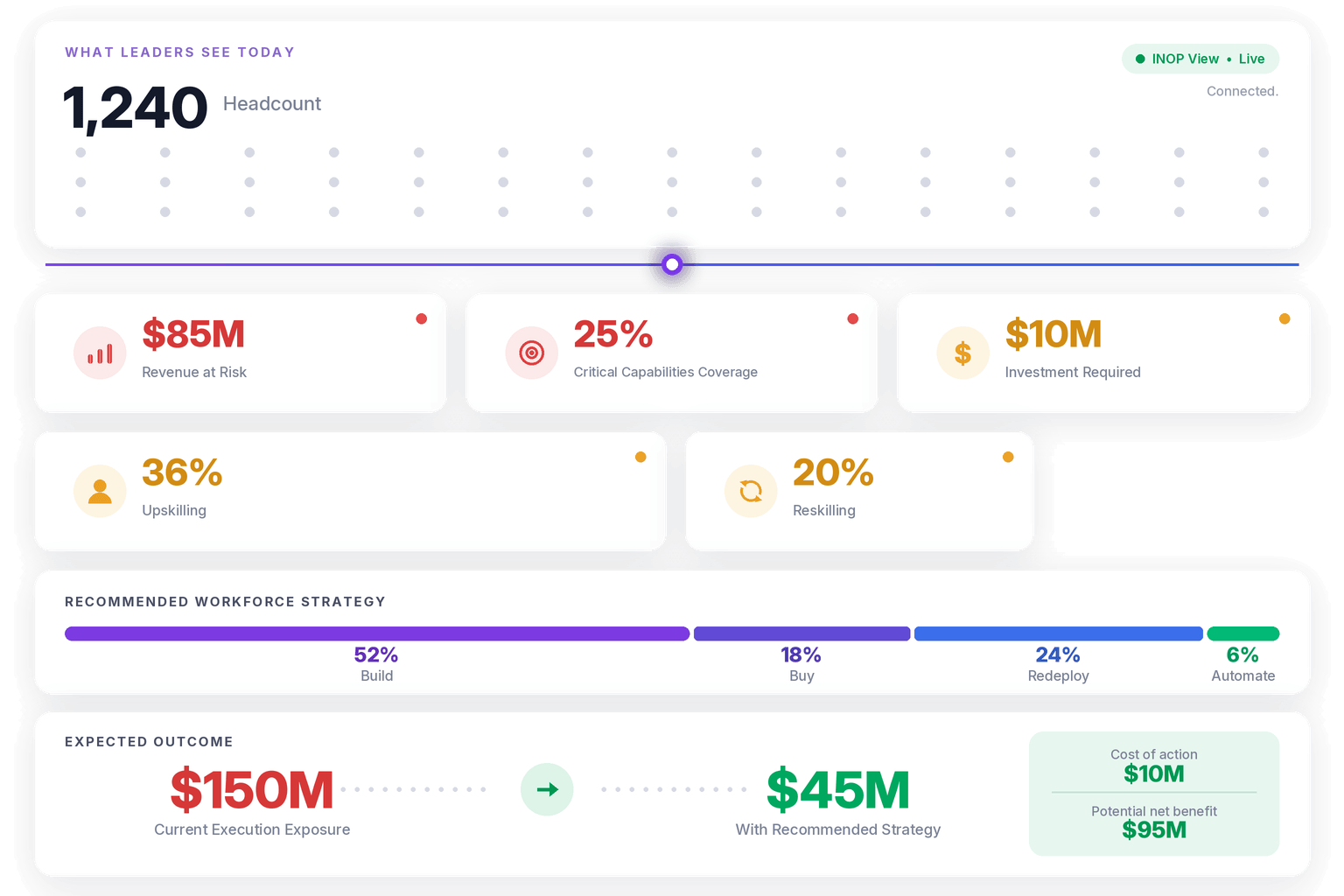
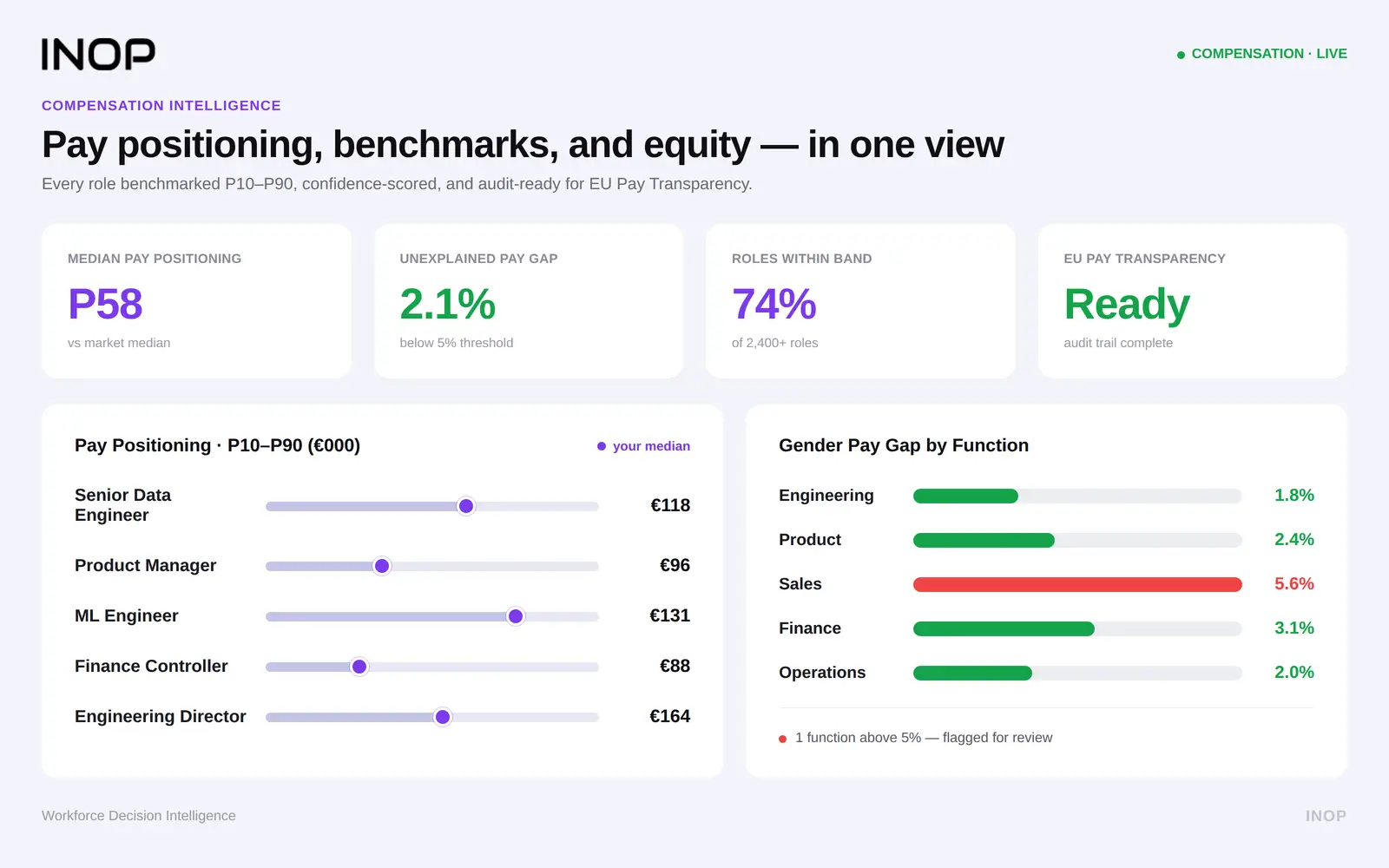
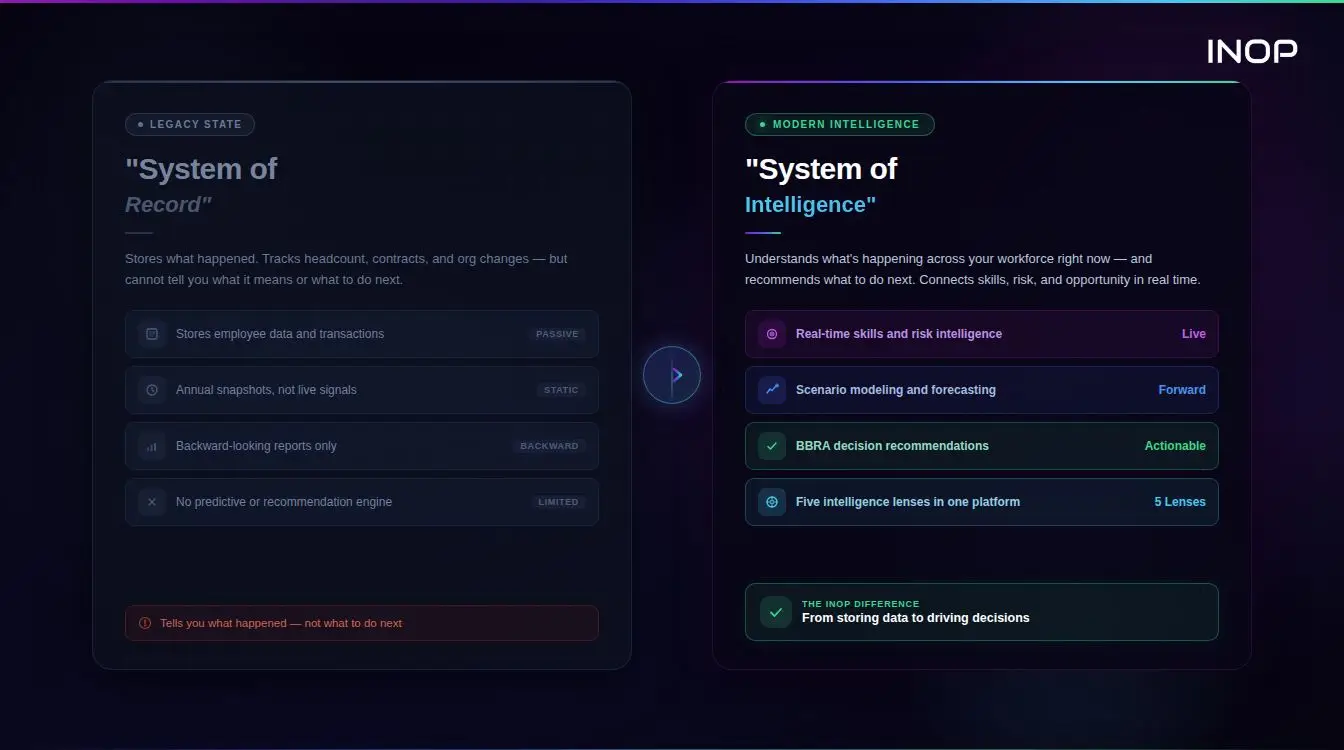
Answering these questions requires a different kind of workforce intelligence from the reporting boards have traditionally received. Many boards struggle to answer them because traditional workforce reporting was never designed for this purpose. Headcount, turnover, labour cost, hiring activity, and training completion rates remain important metrics. However, they provide limited visibility into automation exposure, capability evolution, workforce adaptability, transition risk, and long-term organisational resilience.
The New Governance Imperative
The result is a growing governance asymmetry. Organisations possess increasingly sophisticated AI systems while lacking equivalent sophistication in measuring workforce transformation. Boards are therefore expected to govern changes they often cannot fully observe.
This is where the conversation around AI governance needs to evolve. The challenge is no longer whether organisations are adopting AI. The challenge is whether organisations possess the visibility infrastructure necessary to measure, govern, and explain how automation is reshaping work across the enterprise.
Board members do not need to become AI engineers. They do, however, need sufficient visibility to understand where decisions are changing, where workforce risks are emerging, and where organisational capabilities will be falling behind technological ambition.
In an AI economy, workforce visibility is no longer an HR capability. It is a governance capability. Organisations that cannot explain AI’s workforce impact will ultimately struggle to govern AI’s business impact as well.
This article draws on insights from INOP’s latest research report, The Automation Accountability Gap: Why Boards Can’t Explain AI’s Workforce Impact.
Get your PDF Report
Enter your details to receive the report directly in your inbox.