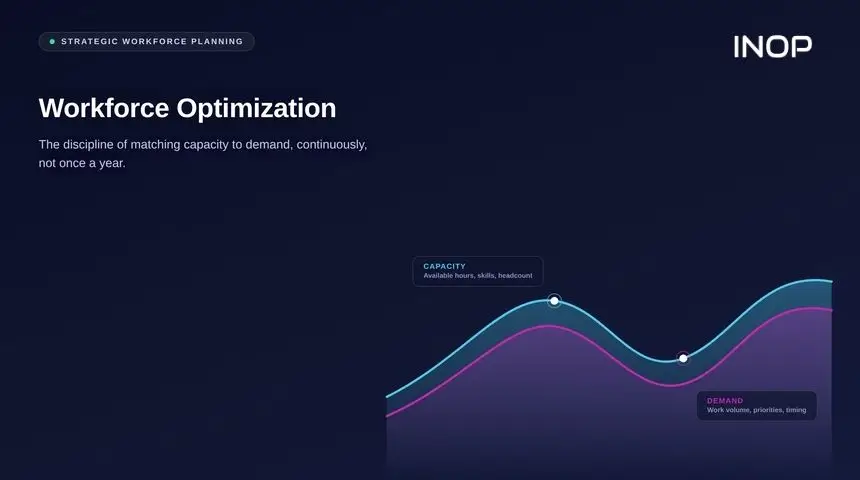
Workforce optimization is the ongoing practice of aligning workforce size, cost, skills, and deployment with actual business demand, rather than a fixed headcount plan set once and left unexamined until the next budget cycle. The term has roots in call center scheduling, matching agent shifts to call volume, but its modern scope is far broader: continuously balancing capacity against demand across an entire organization, not just a shift roster. Automation is one lever inside that discipline. A one-time redesign is another. Workforce optimization is the ongoing practice that decides when and how to pull each one.
This guide covers what workforce optimization actually requires, the real financial cost of getting the capacity-to-demand balance wrong in either direction, and why it functions best as a continuous discipline rather than a project with a start and end date.
What Workforce Optimization Actually Means
Workforce optimization is the strategic alignment of people, technology, and process to maximize productivity while controlling labor cost, evaluated across cost, risk, and productivity simultaneously rather than in isolation. That last point matters more than it first appears. A cost-cutting initiative that reduces headcount without checking productivity and risk impact is not workforce optimization. It is a budget cut wearing a more sophisticated label, and the two produce very different outcomes over a full business cycle.
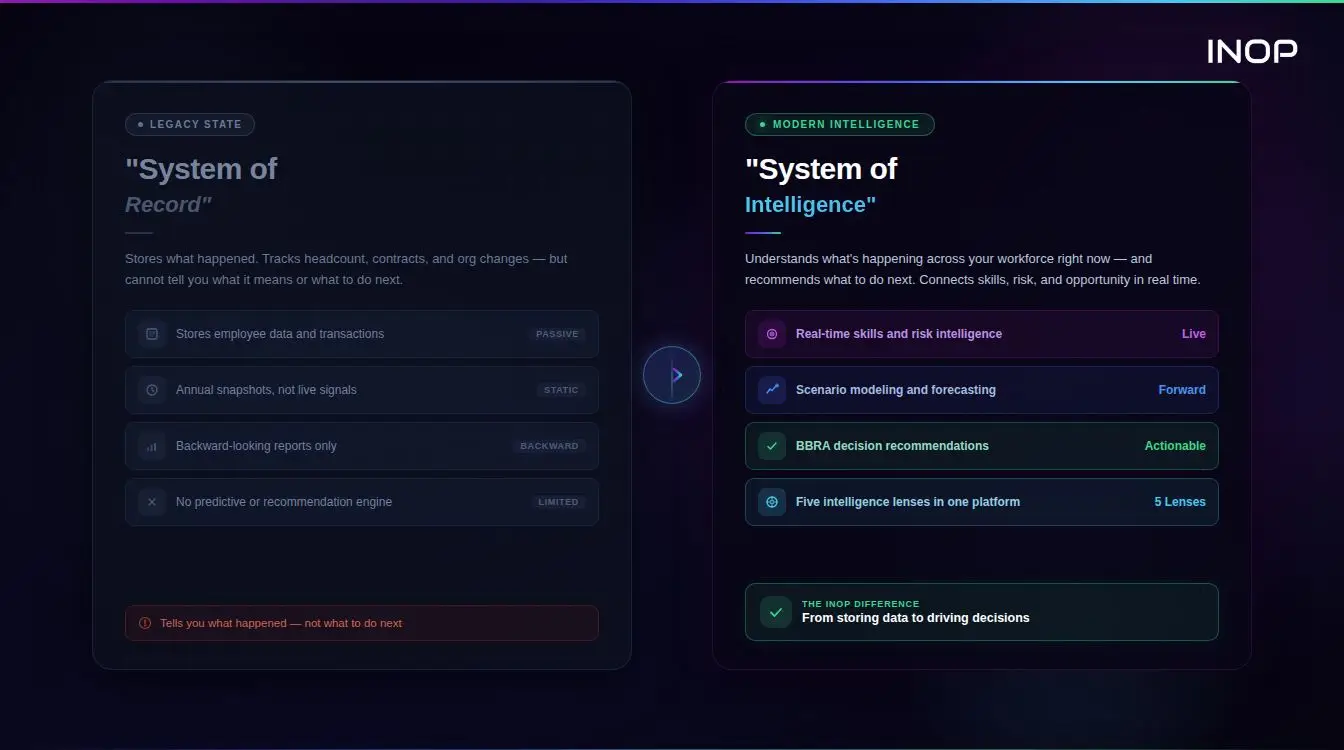
The term is also worth distinguishing from its narrower historical use. Classic workforce optimization software emerged in call centers, matching agent schedules to predicted call volume, forecasting, scheduling, and monitoring adherence within a single, relatively contained environment. That core logic, matching capacity to demand, still holds, but the scope has expanded well beyond shift scheduling into headcount planning, skills deployment, and cross-functional resource allocation across an entire organization. An HR leader searching for workforce optimization today is far more likely to mean the enterprise-wide version than the contact center scheduling tool the term originally described.
The Real Cost of Getting Workforce Optimization Wrong
Both overstaffing and understaffing carry real, quantifiable costs, and most organizations underestimate at least one side of that equation.
Overstaffing Costs More Than It Looks Like
Excess headcount does not just inflate payroll directly. It creates unclear roles, limits growth opportunities for the people affected, and measurably reduces engagement, since teams that are too large make it harder for managers to provide the direction and feedback that keeps people invested. Manual scheduling compounds the problem: roughly 88 percent of business spreadsheets contain errors, and in a workforce context those mistakes produce overstaffing, unplanned overtime, and ghost shifts that can inflate total labor spend by 10 to 20 percent with no offsetting operational value.
Understaffing Is the More Expensive Mistake Long Term
Understaffing is often treated as the more disciplined, cost-conscious choice, and the long-term consequences frequently prove far more expensive than the short-term savings suggest. Chronic understaffing accelerates turnover, and the Society for Human Resource Management estimates that replacing an employee costs between 50 and 200 percent of their annual salary depending on the role. The average cost to replace a single employee in the United States has reached 45,236 dollars in 2026, a figure that makes the true cost of chronic understaffing, and the turnover cycle it drives, considerably harder to justify once it is actually quantified rather than assumed to be the safer option.
See how INOP keeps workforce capacity matched to real demand, continuously. Book a demo to walk through a live optimization view for your organization.
Why Workforce Optimization Is a Continuous Discipline, Not a Project
Workforce deployment cannot rely on a one-time analysis. It requires a repeatable framework connecting labor economics, demand patterns, and productivity levers to ongoing monitoring, shifting the conversation from a fixed payroll number to a continuous read on workforce effectiveness. Organizations using AI-powered demand forecasting for staffing have reduced scheduling-related labor waste by 18 to 22 percent compared to those relying on traditional, static methods, and AI adoption specifically within HR and workforce planning functions is projected to reach 80 percent of large enterprises, up from just 30 percent a few years earlier. That trajectory only pays off, however, if the underlying discipline treats optimization as continuous rather than as an annual exercise revisited once and then left alone.
INOP’s Five Intelligence Lenses Applied to Workforce Optimization
Optimizing purely for cost, or purely for productivity, in isolation from the rest of the picture is how a workforce optimization initiative quietly becomes a cost-cutting exercise with collateral damage. INOP evaluates every optimization decision through five intelligence lenses simultaneously.
| Lens | What It Evaluates in a Workforce Optimization Decision |
|---|---|
| Strategy | Whether a proposed staffing adjustment actually supports a business priority, not just a payroll target |
| Finance | The real cost of both overstaffing and understaffing for the specific role or team in question, not just the headline payroll number |
| People | Engagement, morale, and retention risk tied to a proposed capacity change, since both over- and understaffing carry real people costs |
| Market | Whether external labor market conditions make a proposed capacity change realistic on the timeline assumed |
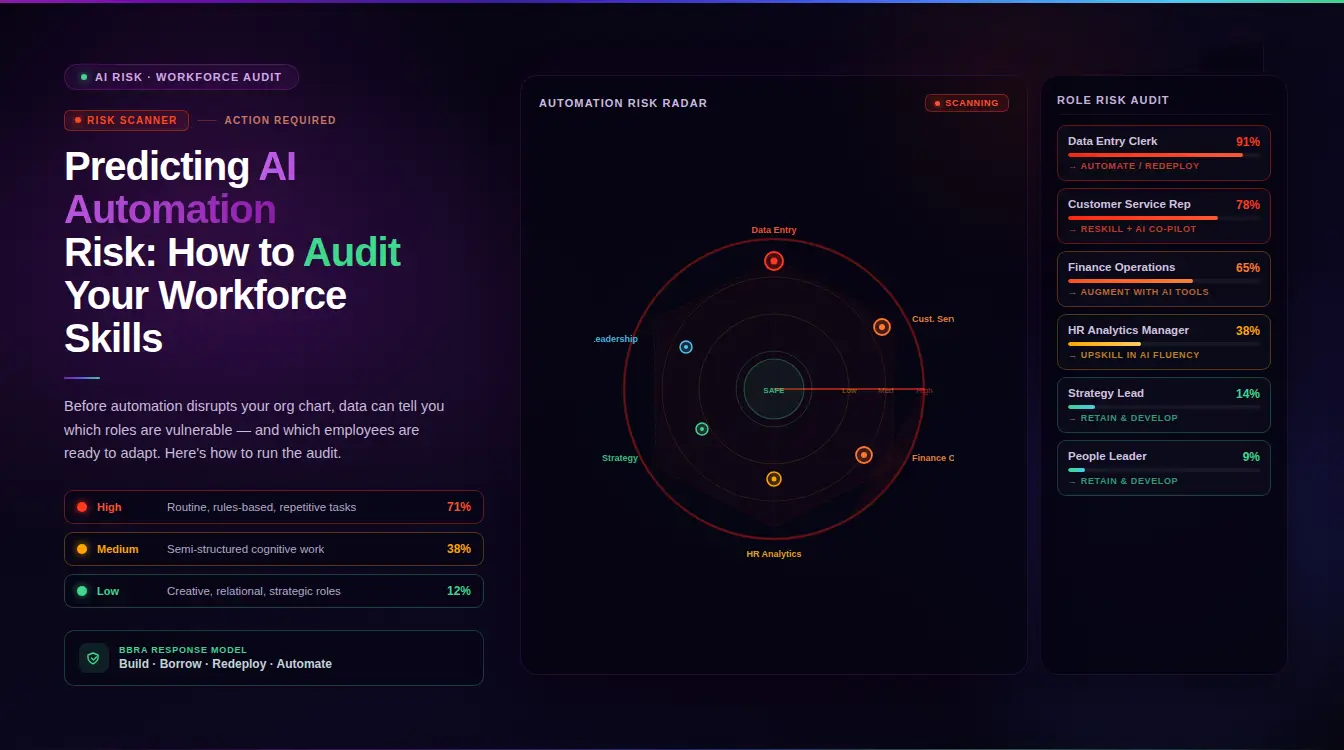
| AI and Automation | Whether automation is a genuine lever for this specific capacity gap, or a headcount reduction dressed up in automation language |
Automation and continuous optimization are related but distinct disciplines worth keeping separate in practice. INOP’s guide on workforce automation covers the specific question of which tasks are genuine automation candidates, one lever inside the broader optimization picture rather than a synonym for it.
BBRA: The Decision Engine Behind Continuous Optimization
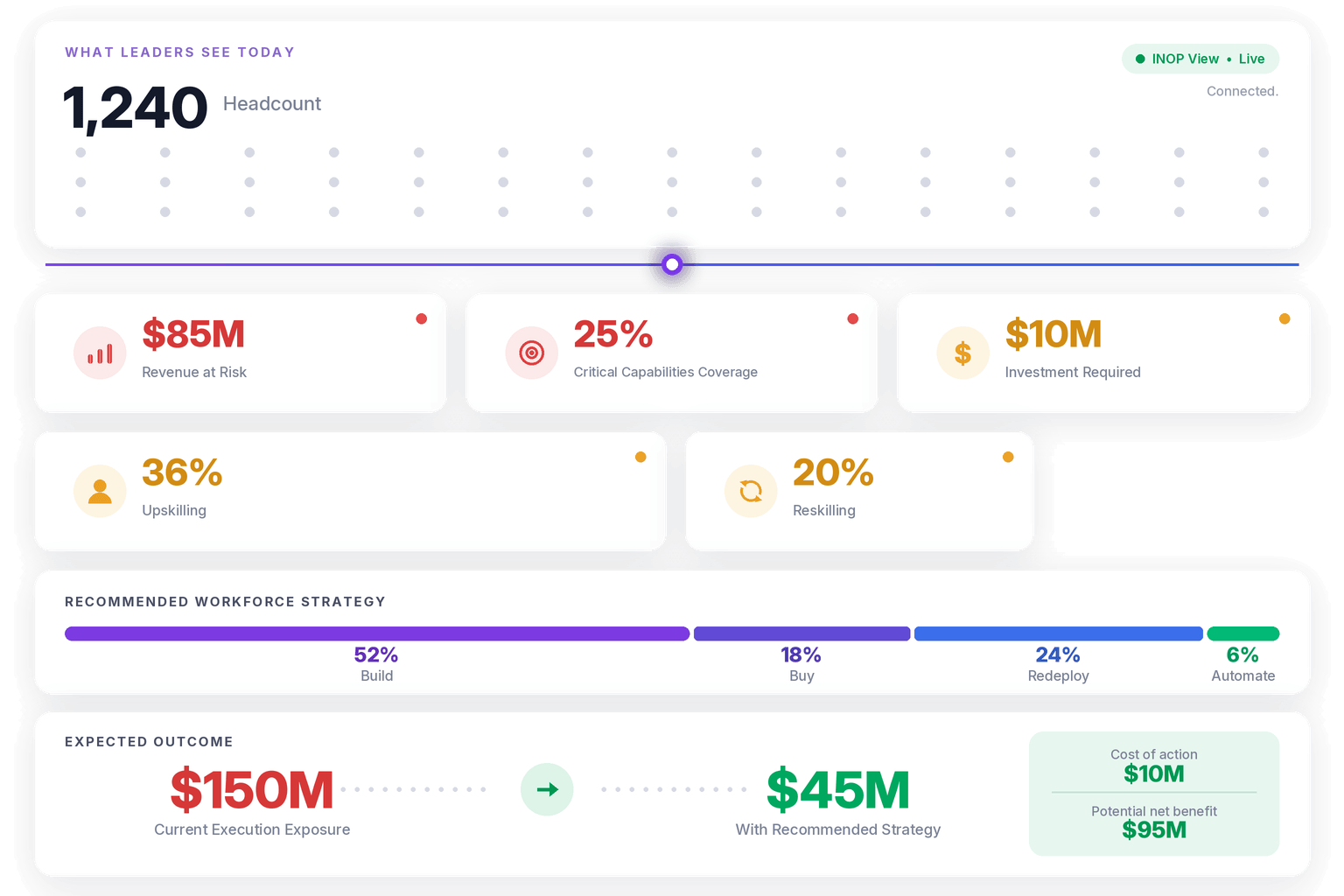
Every capacity gap workforce optimization identifies eventually needs a response, and INOP’s proprietary BBRA framework, Build, Buy, Redeploy, and Automate, gives that response a real financial comparison instead of a default answer. BBRA models all four pathways against tradeoffs across four time horizons: thirty days, one hundred eighty days, one year, and three years.
Applied to an optimization finding, this means a team flagged as understaffed relative to demand does not default automatically to a hiring plan, and a team flagged as overstaffed does not default automatically to a reduction. Both get modeled: would redeploying capacity from an overstaffed team close the understaffed gap faster than external hiring, does upskilling existing staff address the shortfall more cost-effectively, or does part of the workload make more sense to automate rather than staff at all in either direction. Running this comparison continuously, rather than once a year, is what separates ongoing workforce optimization from a periodic restructuring exercise, which INOP’s guide on workplace transformation strategy covers as its own distinct discipline, a broader, less frequent redesign of structure and process, compared to the continuous rebalancing that workforce optimization requires week to week.
Workforce Optimization for Private Equity Operating Partners
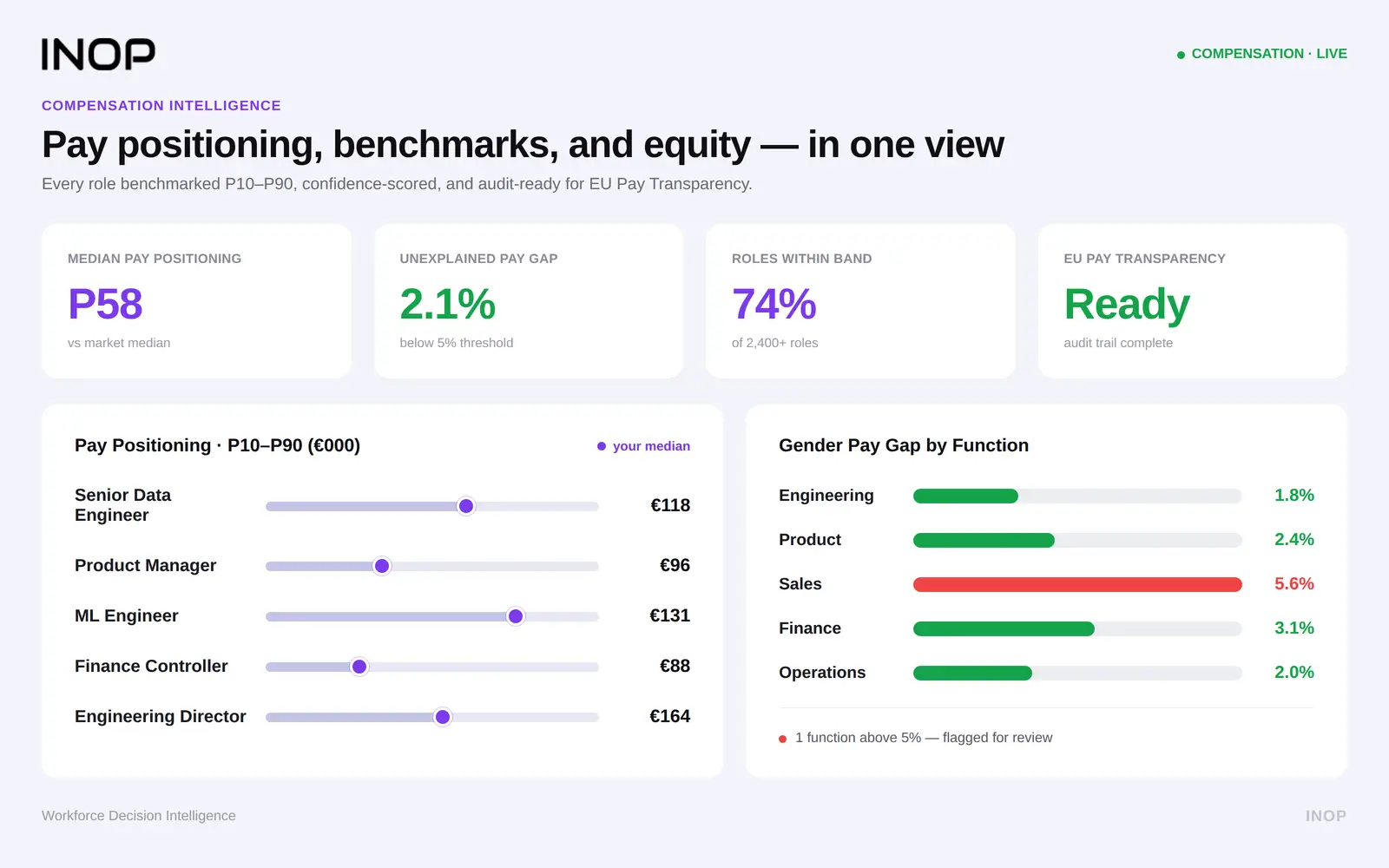
Inside a portfolio company, workforce optimization claims are frequently indistinguishable from a straightforward cost-cutting plan wearing better language, and the distinction matters enormously for post-close performance. A reduction that ignores the real cost of the resulting understaffing, missed deadlines, quality errors, and the eventual rehiring cycle documented across current research, often erases the projected savings within a year or two. Standardizing this evaluation across a portfolio through INOP’s strategic workforce planning platform gives operating partners a consistent way to check whether a portfolio company’s optimization plan is genuinely balancing cost, risk, and productivity, or simply cutting headcount and calling it optimization. Where an optimization plan touches roles carrying scarce, high-demand skills, INOP’s compensation analytics platform connects that finding directly into pay benchmarking, since redeploying or retaining talent identified through optimization often requires a compensation adjustment a pure headcount plan will not surface. Continuous demand forecasting is the input every optimization decision depends on, a discipline covered in more depth in INOP’s guide on workforce demand forecasting and the methods for keeping that forecast accurate as conditions shift.
Common Mistakes in Workforce Optimization
Treating workforce optimization as a synonym for cost-cutting. Optimization evaluates cost, risk, and productivity together. A plan that only tracks headcount reduction is a budget exercise, not workforce optimization, regardless of what it gets called internally.
Running the analysis once a year instead of continuously. Workforce deployment cannot rely on a single annual review. Demand shifts faster than an annual cycle can track, which is why optimization functions best as continuous monitoring rather than a periodic project.
Underestimating the true cost of understaffing. Understaffing often looks like the more disciplined choice in the short term, while the turnover, error rate, and eventual rehiring costs it generates frequently exceed what the original staffing level would have cost.
Confusing automation with optimization. Automating a task is one lever inside workforce optimization, not the whole discipline. A team can automate several tasks and remain poorly optimized if the underlying capacity-to-demand balance was never actually addressed.
Relying on internal data alone to judge whether staffing levels are right. An internal view of workload says nothing about whether the skills behind that workload are still the right ones. INOP’s skills intelligence platform closes this gap by mapping verified skills data against external labor market signals, so optimization decisions reflect current market reality rather than an internal assumption about capability.
Optimizing each team in isolation from the rest of the organization. A team that looks perfectly staffed on its own metrics can still be part of a larger imbalance, carrying capacity that would create more value redeployed elsewhere. Optimization decisions made team by team, without visibility across the organization, routinely miss exactly this kind of cross-functional opportunity.
Frequently Asked Questions
What is the difference between workforce optimization and workforce automation?
Workforce automation is one lever inside the broader discipline of workforce optimization, specifically automating tasks that are technically and economically ready for it. Workforce optimization is the ongoing practice of balancing cost, risk, and productivity across the entire workforce, of which automation is only one available response.
Is workforce optimization the same as reducing headcount?
No, though the two get conflated often. Genuine workforce optimization evaluates cost, risk, and productivity simultaneously, and can just as easily recommend adding capacity in an understaffed area as reducing it in an overstaffed one.
How often should workforce optimization be reviewed?
Continuously is the ideal, rather than on a fixed annual cycle. Demand patterns and labor market conditions shift faster than an annual review can track, which is why treating optimization as ongoing monitoring produces better outcomes than a periodic project.
What is more costly, overstaffing or understaffing?
Both carry real, quantifiable costs. Overstaffing inflates payroll and can reduce engagement, while understaffing accelerates turnover and drives replacement costs that commonly run between 50 and 200 percent of an employee’s annual salary, often making it the more expensive mistake once the full cycle is accounted for.
How should private equity operating partners evaluate a portfolio company’s workforce optimization plan?
By checking whether the plan accounts for the cost and risk of both overstaffing and understaffing, not just projected payroll savings. A reduction plan that ignores understaffing risk commonly erases its own projected savings within a year or two through turnover and rehiring costs.
Ready to see workforce capacity matched to real demand, continuously, instead of once a year? Book a demo and INOP will walk through the five-lens model and BBRA, live.