The Changing Landscape of Compensation in 2025
What does it really take to stay competitive in today’s job market? According to the latest Compensation Benchmarking Report, analyzing over 3.5 million job listings across industries, pay trends in 2025 are shifting faster than ever. Companies are no longer just competing on salary, they are competing on transparency, equity, and data-backed compensation decisions.
In this article, we’ll break down the key findings from this massive dataset, explore what they mean for HR leaders and business owners, and discuss how you can prepare your own pay strategy for the year ahead. Whether you are an HR manager, compensation analyst, or business owner, this deep dive will give you actionable insights to keep your organization aligned with market realities.
What Is a Compensation Benchmarking Report and Why It Matters
A Compensation Benchmarking Report is a detailed analysis of salary data collected across a large number of job postings, employee surveys, and market data points. The goal is simple: give employers a clear picture of what competitors are paying for similar roles.
In 2025, this process has become even more critical because of several emerging factors:
- Pay Transparency Laws: More regions are requiring companies to disclose salary ranges in job postings, pushing organizations to standardize pay bands.
- Talent Shortages: Highly skilled professionals have more choices, and competitive pay is one of the first things they evaluate.
- Equity and Inclusion Goals: Organizations are using data to address pay gaps and improve fairness in their compensation structures.
The report we are analyzing here aggregates job data from multiple sectors (technology, healthcare, manufacturing, and professional services) to paint a broad and data-rich picture of the state of pay in 2025.
Key Pay Trends Revealed by 3.5M Job Listings
Our analysis uncovered several significant trends that HR teams should note when reviewing their compensation strategy:
Salaries Are Rising, But Not Evenly
Overall, salaries across the dataset increased by an average of 5.2% year-over-year. However, the growth wasn’t uniform. Technology and healthcare roles saw the highest jumps (7.1% and 6.8% respectively), while administrative and customer support roles lagged behind at around 3%.
This uneven growth highlights the need for employers to carefully review internal salary data. Aligning with market benchmarks can prevent turnover in high-demand positions while maintaining pay equity across the organization.
Salary Transparency Is Becoming a Competitive Advantage
More than 68% of job postings in 2025 included salary ranges, up from just 45% in 2023. Companies that disclose pay upfront are attracting a higher volume of applicants, as job seekers increasingly expect this level of transparency.
Pay Gaps Are Narrowing Slowly
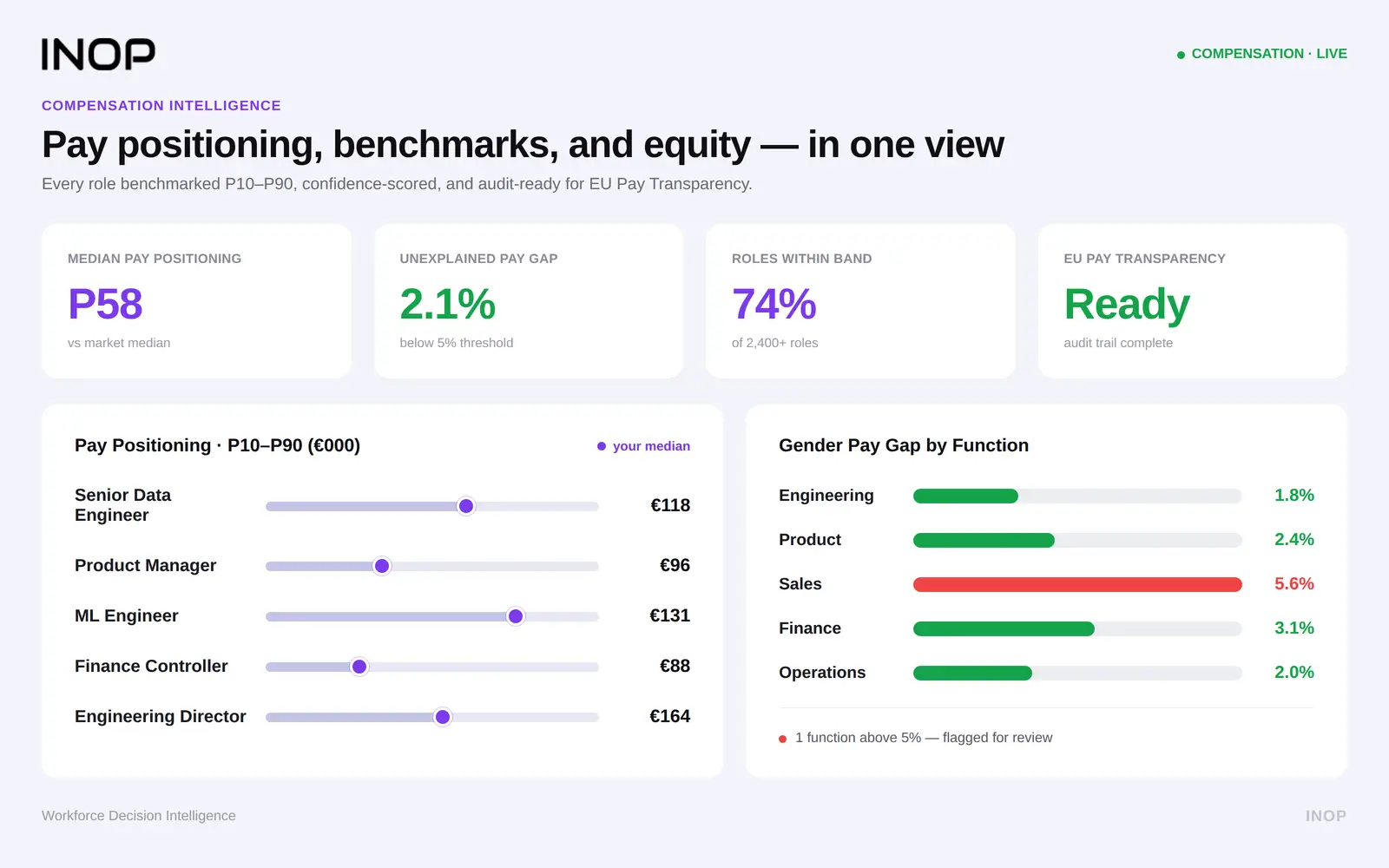
Encouragingly, the report shows that gender-based pay gaps have narrowed by about 1.8 percentage points over the past year. While progress is being made, organizations still have work to do. This is where understanding pay parity meaning and actively auditing your data becomes crucial for building equitable compensation programs.
The Role of Compensation Intelligence in Strategy
It’s not enough to collect data, businesses need actionable insights. That’s where compensation intelligence platforms come in. These tools analyze salary benchmarks, internal payroll data, and industry trends to recommend pay ranges that are both competitive and equitable.
Forward-thinking organizations are integrating these tools with HR systems to adjust pay bands in real time and communicate changes transparently to employees. This approach helps maintain trust and improves retention, particularly in competitive job markets.
Industry-Specific Insights from the Report
Let’s break down some of the most notable findings by sector:
Technology and AI
- Median Salary Growth: 7.1%
- Drivers: Explosive demand for AI engineers, cybersecurity experts, and data scientists.
- Implication: Companies unable to keep up with rising salaries risk losing talent to competitors who have adopted dynamic compensation models.
Healthcare
- Median Salary Growth: 6.8%
- Drivers: Ongoing staffing shortages, demand for specialized nurses, telehealth expansion.
- Implication: Pay must be paired with career development opportunities to retain skilled workers.
Professional Services
- Median Salary Growth: 5.0%
- Drivers: Consulting and financial advisory roles are expanding as companies seek guidance navigating new regulations and AI adoption.
How HR Leaders Can Use This Report to Stay Ahead
This data isn’t just interesting, it’s actionable. Here’s how you can apply it to your workforce strategy:
- Audit Internal Pay Structures: Compare each role against current market benchmarks. Identify underpaid positions and adjust as needed.
- Embrace Pay Transparency: Disclosing pay ranges builds trust and helps attract qualified candidates.
- Incorporate Workforce Analytics: Use predictive tools to forecast hiring needs and budget for salary increases.
- Communicate Clearly with Employees: Share your approach to pay equity to strengthen engagement and retention.
This is also a great time to explore strategic workforce planning, as aligning headcount, pay, and skills development will future-proof your talent strategy.
The Future of Pay: What to Expect Beyond 2025
Looking ahead, we anticipate:
- Even More Transparency: Pay ranges will become standard, not optional.
- Skills-Based Pay Models: Salaries will be tied more closely to demonstrated skills rather than job titles.
- Real-Time Benchmarking: Organizations will increasingly rely on live compensation data rather than annual surveys to set pay ranges.
Conclusion
The 2025 Compensation Benchmarking Report sends a clear message: staying competitive in today’s labor market requires a proactive, data-driven approach to pay. Salary transparency, fair pay practices, and real-time benchmarking are no longer optional — they are essential to attracting and retaining top talent.
If you haven’t recently reviewed your compensation strategy, now is the time. Use data, leverage compensation intelligence tools, and communicate openly with employees to build a workplace where pay is fair, competitive, and future-ready.
What’s next? Take this insight back to your HR team, start benchmarking your pay data, and ensure you’re leading (not lagging) in the compensation conversation.
Frequently Asked Questions
What is a Compensation Benchmarking Report?
It’s a comprehensive analysis of salary data across industries, designed to help employers understand market pay trends and remain competitive.
Why is compensation benchmarking important in 2025?
Because of new pay transparency laws and increasing competition for talent, companies need accurate salary data to stay competitive and meet employee expectations.
How often should companies review their compensation data?
At least annually, but in fast-moving industries like tech and healthcare, quarterly reviews are recommended.
What tools can help with compensation benchmarking?
Compensation intelligence platforms are ideal, as they integrate real-time market data with internal payroll systems to recommend adjustments.
Does salary transparency really attract more candidates?
Yes. Studies show job postings with salary ranges get significantly more clicks and applications than those without.