Imagine spending 18 months building a bold, investor-backed growth strategy, complete with market expansion targets, a digital transformation roadmap, and ambitious M&A plans, only to watch it stall in year one. Not because a competitor outmaneuvered you. Not because the market shifted. But because you simply didn’t have the right people to execute it. This is execution risk, and in 2026, it has quietly become the most underestimated threat to corporate strategy.
Execution risk, the probability that an organization fails to achieve its strategic objectives due to workforce capability gaps, is no longer a fringe concern for HR departments. It sits squarely in the boardroom, on earnings calls, and inside PE deal rooms. And yet, most organizations continue to treat talent as an afterthought to strategy rather than a prerequisite for it.
This article breaks down how talent shortages translate directly into strategic failure, what the financial consequences look like, and (critically) what leaders can do to measure and mitigate this risk before it derails their plans.
Redefining Execution Risk in 2026
Execution risk has always existed, but its definition has evolved considerably. A decade ago, it largely meant operational inefficiency: projects running over budget, timelines slipping, poor change management. Today, execution risk is fundamentally a capabilities problem.
The 2026 talent landscape is defined by two converging pressures. First, demand for highly specialized skills, AI integration, machine learning operations, advanced data modeling, cybersecurity architecture, has outpaced supply at a staggering rate. According to the World Economic Forum’s Future of Jobs Report, over 85 million jobs globally could go unfilled by 2030 due to skills mismatches. Second, the pace of strategic change has accelerated. Companies are pursuing digital transformation, generative AI adoption, and international expansion simultaneously, each requiring fundamentally different workforce capabilities.
The result is a dangerous gap: strategies are approved at the executive level with the assumption that the talent will follow. It rarely does, at least not fast enough, and not in the right configuration.
This makes execution risk inseparable from the broader discipline of human capital risk, the structured practice of identifying, measuring, and mitigating people-related risks across the organization.
How Capability Gaps Derail Business Strategy
The relationship between workforce capability gaps and strategic failure is not theoretical. It plays out in predictable, measurable ways across every industry. Here are the three most common and costly failure modes.
Delayed Time-to-Market and Lost Competitive Advantage
When critical technical roles remain vacant, product development stalls. A 2023 McKinsey study found that companies experiencing significant capability gaps in software engineering and data science were, on average, 6 to 9 months behind their planned product roadmaps. In fast-moving sectors (fintech, healthtech, enterprise SaaS) a 9-month delay is not a minor inconvenience. It is a window for a competitor to capture market share that may never be recovered.
Consider a regional bank pursuing an open banking strategy. The business case is solid, the technology investment is approved, and the regulatory groundwork is laid. But if the organization lacks AI engineers and API architecture specialists, that strategy sits dormant. Competitors who built those capabilities 18 months earlier are already acquiring the customers the bank intended to win.
The Burnout Contagion: When Talent Shortages Destroy Your Best People
There is a compounding dynamic that leaders consistently underestimate. When specialized roles go unfilled, the work does not disappear, it gets absorbed by the high performers who are already there. This is not just inefficient. It is strategically dangerous.
Gallup’s 2024 State of the Global Workplace report found that employees in organizations with significant understaffing were 2.6 times more likely to experience severe burnout. And burnout does not affect average performers disproportionately, it targets your most capable people, precisely because they are the ones absorbing the excess load.
The downstream effect is a collapse of strategic momentum. Your top engineers, analysts, and operators (the people your strategy depends on) begin disengaging. When they leave, institutional knowledge leaves with them, and the organization finds itself in a worse position than before the strategic initiative began. This is what we call the burnout contagion: a talent shortage that starts small, spreads through your best people, and ultimately consumes the very capability your strategy requires.
M&A Failure and Pre-Deal Skills Blindness
Nowhere is execution risk more financially consequential than in mergers and acquisitions. Research consistently places M&A failure rates between 70 and 90 percent when measured against anticipated synergies. While multiple factors contribute (cultural misalignment, integration complexity, market timing) a lack of pre-deal workforce intelligence is among the most preventable causes.
Organizations routinely conduct rigorous financial due diligence on acquisition targets while performing only surface-level workforce assessments. They know the target’s EBITDA down to decimal points but cannot answer whether the combined entity has the software engineering depth, data science capacity, or operational leadership bandwidth to execute the integration strategy. The capabilities gap discovered post-close then drives up integration costs, extends timelines, and erodes the deal’s value thesis.
Why Boards and Investors Are Demanding Workforce Transparency
Something has fundamentally changed in how institutional investors and corporate boards evaluate organizations. Five years ago, a workforce section in an investor presentation typically meant headcount numbers and average tenure. Today, sophisticated PE operating partners and activist investors are asking materially different questions.
Private equity firms, in particular, have sharpened their focus on workforce capability as a driver of portfolio company performance. When a PE firm underwrites a growth thesis (say, 3x revenue over five years through product expansion and market penetration) they are implicitly betting on the organization’s execution capability. If that capability does not exist at the current state, the investment thesis depends on the company building or acquiring it. Without a clear plan and measurable milestones, execution risk becomes a direct risk to returns.
The central board-level question has become: ‘Do we have the workforce capabilities to execute our three-year strategy?’ Most leadership teams cannot answer it with precision. This is not a minor gap in reporting, it is a material blind spot in governance.
Progressive organizations are beginning to close this gap by adopting structured workforce disclosure frameworks, systematic approaches to quantifying the financial impact of capability gaps and reporting on capability readiness alongside financial metrics. This is no longer a best practice; for companies in high-scrutiny sectors or PE-backed portfolios, it is rapidly becoming an expectation.
Moving from Headcount Planning to Capability Intelligence
The root cause of most execution risk is structural: organizations plan strategy at the capability level but measure workforce readiness at the headcount level. These two frameworks are fundamentally incompatible.
Why Traditional Headcount Planning Falls Short
Traditional workforce planning asks: ‘How many people do we need, at what cost, in which roles?’ It optimizes for budget and organizational structure. It does not ask whether the people in those roles have the specific skills required to execute the strategy. A company can be fully staffed by headcount while being critically under-resourced in the capabilities that matter most.
A pharmaceutical company pursuing a digital health pivot, for example, might have 200 IT professionals on payroll, fully ‘staffed’ by traditional metrics. But if only 12 of those 200 have meaningful experience in cloud-native architecture, real-time data pipelines, or health data interoperability standards, the digital strategy is built on a foundation of 12, not 200. Headcount planning never surfaces this distinction. Capability intelligence does.
The Strategic Workforce Planning Alternative
Strategic workforce planning (SWP) reframes the question. Instead of starting with roles and budgets, it starts with strategic objectives: What capabilities are required to achieve our three-year goals? What capabilities do we currently have? Where are the gaps, and what is the most cost-effective way to close them?
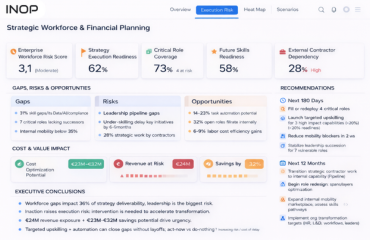
This approach requires three connected data sets: a precise map of current workforce capabilities (skills inventory), a clear articulation of the capabilities required by the strategy (capability requirements model), and a labor market analysis of where talent can be sourced and at what cost. When these three data sets are connected and dynamically updated, leaders can make genuinely informed decisions about workforce investment.
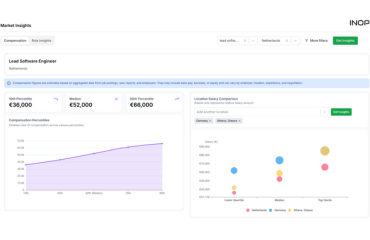
Modern AI-powered workforce intelligence platforms enable this kind of capability mapping at a level of granularity and speed that was previously impossible. They connect HR, Finance, and Strategy into a unified decision layer, so when the CFO asks ‘What is the cost of closing our AI engineering gap over 18 months?’ the answer is grounded in real skills data, real labor market rates, and real strategic timelines rather than estimates.
Three Steps to Neutralize Talent-Driven Execution Risk
Reducing execution risk is an organizational discipline, not a single initiative. It requires connecting strategy and workforce planning in a continuous loop. Here is a practical framework for getting started.
Audit Your Current Capabilities
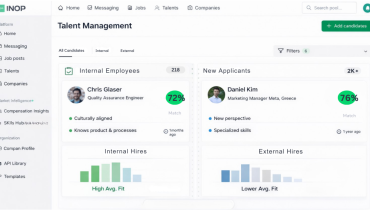
You cannot close a gap you cannot see. The starting point is a rigorous skills inventory: a structured assessment of the capabilities your workforce actually possesses today, mapped at the individual, team, and organizational level. This is not the same as a job title audit. Two employees with the title ‘Data Analyst’ might have vastly different capability profiles, one with strong SQL and visualization skills, another with machine learning and statistical modeling expertise. Strategy execution depends on knowing the difference.
A meaningful capability audit should cover both technical skills (programming languages, tools, certifications, domain expertise) and organizational capabilities (leadership depth at each level, cross-functional collaboration capacity, change management experience). The output is a capability baseline, the honest starting point for all subsequent workforce decisions.
Model Future Scenarios Against Your Strategic Goals
With a capability baseline in hand, the next step is to map your strategic objectives onto that baseline and identify where shortfalls will occur. If your three-year plan requires launching a new AI-driven product line, what data science and ML engineering capacity is required? When is it required? What is the current gap?
Scenario modeling allows leaders to pressure-test the strategy against realistic workforce trajectories. It surfaces not just where gaps exist today, but where they will emerge as the strategy unfolds, often 12 to 24 months before they become critical. This lead time is the difference between a managed capability build and an emergency hiring scramble that drives up costs and compromises quality.
Make the Build, Buy, or Automate Decision
Once gaps are identified and quantified, the organization must decide how to close them. There are three fundamental options, each with distinct cost, speed, and risk profiles.
- Build (Upskill): Develop existing employees through targeted learning and development programs. This is typically the most cost-effective option for adjacent skills and preserves institutional knowledge, but it requires time, generally 12 to 24 months for meaningful capability development.
- Buy (Hire): Acquire capability from the external labor market. This is faster but significantly more expensive, particularly in high-demand technical domains. In competitive talent markets, it also carries retention risk.
- Automate: Determine which capabilities can be augmented or replaced by AI and automation tools. In 2026, this is no longer a futuristic option. Generative AI, workflow automation, and intelligent process tools are closing capability gaps in areas from financial modeling to code review in real time.
The optimal strategy for most organizations involves a combination of all three, calibrated to the urgency, strategic importance, and cost-effectiveness of each capability gap. The key is making these decisions with data rather than instinct, using workforce intelligence platforms to model the financial impact of each pathway before committing resources.
Conclusion: Execution Risk Is a Board-Level Responsibility
Execution risk has been hiding in plain sight. It shows up in missed product launches, failed integrations, burned-out teams, and strategies that look brilliant on paper but never gain traction in practice. At its root, almost every execution failure traces back to the same cause: an organization that committed to a strategy without honestly assessing whether it had the capabilities to deliver it.
The solution is not simply to hire faster or spend more on training. It is to fundamentally upgrade how organizations connect workforce capability to strategic planning, measuring capability readiness with the same discipline applied to financial capital, and making workforce intelligence a core input to every significant strategic decision.
For CEOs, CFOs, CHROs, and board members, the imperative is clear: stop treating talent planning as an HR function that follows strategy, and start treating it as a strategic capability that enables it. The organizations that make this shift in 2026 will build a durable execution advantage. Those that don’t will continue to discover (one missed milestone at a time) that the most expensive strategy is one you cannot execute.
If this resonates with challenges you’re navigating inside your own organization, we’d encourage you to explore how modern workforce intelligence platforms can help you build a real-time view of your execution risk.
Frequently Asked Questions
What is execution risk in a business context?
Execution risk refers to the probability that an organization fails to achieve its strategic objectives due to a gap between the capabilities required to implement a strategy and the capabilities actually available in the workforce. It encompasses talent shortages, skills mismatches, leadership depth issues, and cultural readiness gaps.
How do talent shortages directly cause strategy failure?
Talent shortages cause strategy failure through several mechanisms: delayed product development when technical roles go unfilled, burnout and turnover of existing top performers who absorb excess workload, failed M&A integrations where post-close capability gaps destroy the deal’s value thesis, and missed market windows when competitors with stronger capabilities move faster.
What is the difference between headcount planning and capability intelligence?
Headcount planning focuses on the number of people in defined roles and the cost of maintaining that workforce. Capability intelligence maps the specific skills, expertise, and competencies within the workforce and compares them against what the organization’s strategy actually requires. Capability intelligence answers strategic questions that headcount planning cannot: ‘Do we have enough AI engineers to build this product?’ or ‘What is the financial impact of our data science gap?’
What does ‘capability readiness’ mean, and why does it matter to investors?
Capability readiness is an assessment of how prepared an organization’s workforce is to execute its strategic plan. It matters to investors (particularly PE firms and institutional shareholders) because it is a leading indicator of whether a growth thesis or transformation plan will actually deliver returns. An organization that scores high on financial metrics but low on capability readiness is carrying hidden execution risk that may not surface in financial due diligence but will eventually show up in results.
How can organizations start measuring execution risk today?
Organizations can begin by conducting a structured skills inventory to establish a capability baseline, then mapping that baseline against the capability requirements of their strategic plan to identify gaps. From there, scenario modeling tools (ideally supported by an AI-powered workforce intelligence platform) can help quantify the financial impact of those gaps and model the cost and timeline of closing them through upskilling, hiring, or automation.
Is execution risk relevant for small and mid-market companies, or only large enterprises?
Execution risk is arguably more acute for smaller organizations precisely because they have less slack in their systems. A large enterprise can absorb a capability gap in one function with resources from another. A mid-market company with a lean team has no such buffer. When a key technical role is vacant, or when a handful of critical contributors burn out, the strategic impact is immediate and visible. The framework for managing execution risk scales down as well as up.