Introduction: Why Headcount Planning Is Your Most Expensive Blind Spot
Here is a number that should stop you in your tracks: headcount typically accounts for 70% of a company’s total operating expenses. That’s not a minor line item, it’s the budget. And yet, in 2026, a surprising number of organizations still manage this massive cost center with a patchwork of disconnected spreadsheets, quarterly gut checks, and annual plans that are obsolete before the ink dries. If that sounds familiar, headcount planning at your company isn’t broken, it simply hasn’t evolved.
Headcount planning has moved from being an HR administrative task to one of the most strategically critical functions in a modern business. With AI adoption accelerating across every industry, remote and hybrid work reshaping talent pools, and economic volatility becoming the norm rather than the exception, the old “hire in January, freeze in Q3” cycle is no longer viable. Companies that still rely on annual planning cycles are essentially navigating a high-speed highway using last year’s map.
This ultimate guide is built for CFOs, CHROs, VP-level talent acquisition leaders, and RevOps professionals who are ready to do headcount planning properly. You will find a clear definition of what headcount planning actually is, a step-by-step process framework, a breakdown of the tools that belong in your 2026 tech stack, proven best practices for agile execution, and the KPIs that tell you whether your plan is actually working. Let’s start from the foundation.
In an era of economic uncertainty, headcount planning is under strict scrutiny. Every time we see earnings results, guidance, layoffs or hiring plans reported by major companies like Anaplan, Inc. (such as those seen around February 20, 2026), it serves as a stark reminder that reactive headcount reductions are costly. Proactive, skills-based workforce planning is the only way to insulate your organization against sudden market shocks.
What Is Headcount Planning?
Headcount planning is the strategic process of aligning your company’s business objectives with its talent requirements. The goal is deceptively simple: ensure you have the right number of people, with the right skills, in the right locations, at the right time, and within the boundaries of an approved budget.
Done well, headcount planning answers questions that keep executives up at night. How many engineers do we need to hit our product roadmap? Can we afford to open that regional office next quarter? Which teams are understaffed relative to their revenue targets? What happens to our cost structure if we win that major contract, or lose it?
Headcount Planning vs. Workforce Planning: Understanding the Difference
These two terms are often used interchangeably, but they are not the same thing, and conflating them leads to planning gaps.
Headcount planning is primarily about numbers and budget. How many full-time equivalents (FTEs) do we need? What will they cost? When do we need them? It is fundamentally a financial and operational exercise.
Workforce planning is broader and more strategic. It looks at the organizational design, skills architecture, capability gaps, and long-term talent strategy. It asks not just how many people, but what kind of people, and whether to build, buy, or borrow that talent.
Think of it this way: headcount planning is the math; workforce planning is the strategy. Both are necessary, and in the best-run organizations, they are deeply integrated rather than managed in separate silos.
Traditional vs. Modern Headcount Planning: A Paradigm Shift
To understand where headcount planning needs to go in 2026, it helps to clearly see where it has been. The table below captures the fundamental differences between the traditional approach most organizations still use and the modern model that high-performing companies have adopted.
| Feature | Traditional (Pre-2025) | Modern (2026 & Beyond) |
| Frequency | Annual | Continuous / Quarterly Rolling |
| Currency | Job Titles & FTEs | Skills & Capacity |
| Tooling | Siloed Excel Spreadsheets | Integrated HRIS & FP&A Software |
| Focus | “Filling Seats” | “Unlocking Capacity” |
| Reaction to Change | Hiring Freezes & Layoffs | Dynamic Redeployment |
| Data Source | HR-only data | Finance + HR + Market Intelligence |
| Planning Horizon | 12 months fixed | Rolling 3–12 month windows |
The most critical shift in that table is the move from “filling seats” to “unlocking capacity.” Traditional planning asked: do we have enough people? Modern planning asks: are the people we have, and the people we are adding, actually generating the capability and output the business needs?
Consider a real-world scenario: a mid-size SaaS company finishes its annual planning in November and approves 40 new hires for the following year. By March, a major competitor launches an AI-powered feature that shifts the product roadmap significantly. Under traditional planning, the company is locked into headcount decisions that may now be misaligned. Under modern, agile planning, scenario models are already built for exactly this kind of market shift, and the steering committee can make a informed pivot within days, not at the next annual cycle.
The Five-Step Headcount Planning Process
The most effective headcount planning process is not a straight line from request to approval, it is a continuous loop that feeds on real-time business data and cross-functional collaboration. The following five steps represent that loop in its most practical form.
Step One: Strategic Alignment
Every headcount plan must begin with a clear understanding of where the business is going. This means direct engagement with C-suite leadership to understand revenue targets, product roadmaps, geographic expansion plans, and any anticipated M&A activity.
Too many headcount plans begin inside HR or Finance without a clear mandate from the top. The result is a plan that reflects departmental wish lists rather than strategic priorities. The first step is to establish a formal planning kickoff (ideally facilitated by the CFO and CHRO together) where organizational objectives are translated into specific capability and capacity requirements.
Key output: A validated strategic brief that maps each major business objective to a talent requirement. For example: “Achieving $50M ARR by Q4 requires 12 additional Account Executives and 4 Customer Success Managers by Q2.”
Step Two: Audit Your Current Capacity
You cannot plan for the future without an honest assessment of where you stand today. This means taking a full inventory of your current workforce, not just headcount numbers, but the skills, experience levels, performance data, and deployment efficiency of your existing people.
Many companies are surprised to discover during this audit that they have more internal capacity than they realized. Research consistently shows that large organizations utilize only 30-50% of their employees’ full skill sets. A rigorous capacity audit often surfaces talent that can be redeployed before a single external hire is made.
This step also involves mapping attrition data. What is your historical voluntary turnover rate by department and role? If your engineering team loses 18% of its senior developers annually, that is a mandatory input into your hiring plan, one that is easy to miss if you only look at open requisitions rather than total capacity.
Step Three: Forecast Demand
With the strategic direction clear and current capacity mapped, the next step is to model future demand. This is where headcount planning gets genuinely complex, and where most organizations make their biggest errors.
Demand forecasting in 2026 must account for multiple variables simultaneously. Revenue growth projections drive sales team sizing. Product launches require engineering and support capacity. Regulatory changes may mandate specific compliance roles. Geographic expansion creates location-specific talent needs. And increasingly, AI adoption is changing the ratio of work that requires human intervention versus automation.
A practical example: If your revenue model projects a 35% increase in enterprise accounts over the next 12 months, and your historical data shows that each enterprise CSM can manage approximately 8 accounts, the math is straightforward: you need roughly 4 to 5 additional CSMs to cover that growth, assuming zero attrition, which brings you back to step two.
Strong demand forecasting also includes predictive turnover modeling. By combining tenure data, engagement scores, compensation benchmarking, and promotion velocity, modern workforce analytics tools can identify employees at elevated flight risk 3 to 6 months before they resign, giving you lead time to plan replacement hiring rather than react to sudden vacancies.
Suggested Article: Workforce Risk Management: How to Predict & Prevent Talent Failure
Step Four: Gap Analysis, Build, Buy, or Borrow?
The gap analysis is where supply meets demand. You now know what capacity you have and what capacity you need. The gap between those two data points is your planning problem. The strategic question is how you close it.
Most organizations have three core options, and the best headcount plans use all three in different proportions:
- Build: Invest in reskilling and upskilling your existing workforce to meet emerging needs. This is typically the most cost-effective approach for skills that are adjacent to what employees already do. For example, training a data analyst to work with AI tooling rather than hiring a dedicated prompt engineer.
- Buy: Hire externally. This is appropriate when the skill gap is significant, the ramp time for internal development would miss a critical deadline, or the required capability simply does not exist within the organization.
- Borrow: Engage contractors, consultants, or fractional experts for skills that are needed temporarily or intermittently. This approach preserves headcount budget flexibility while still accessing critical capabilities.
The build-versus-buy decision should be quantified wherever possible. If reskilling an existing employee costs $8,000 and takes 90 days, but external hiring costs an average of $25,000 in recruiting fees plus a 60-day time-to-fill with a 90-day ramp, the math often favors internal development, unless you have a hard deadline that the internal timeline cannot meet.
Step Five: Budget Approval and Reconciliation
The final step is where talent strategy meets financial reality. Every headcount request must be translated into a financial model that the CFO can evaluate alongside other capital allocation priorities.
This step requires a common language between HR and Finance. Headcount must be expressed not just in FTE counts but in fully-loaded cost models that include base salary, benefits (typically 20-30% of base), recruiting fees, onboarding costs, equipment, software licensing, and real estate footprint where applicable.
The best organizations use their FP&A software to create a rolling headcount budget that updates monthly rather than a static annual plan. This allows Finance to see the cost implications of headcount decisions in real time and enables course correction before variances become material. Budget reconciliation meetings between HR and Finance should happen at minimum quarterly, and in high-growth or high-volatility environments, monthly.
Top Headcount Planning Tools for 2026
No headcount planning process is stronger than the technology supporting it. The 2026 HR tech landscape has matured significantly, and understanding which tool categories serve which function is essential before evaluating specific vendors.
Core HRIS and HCM Platforms
Your Human Resource Information System (HRIS) or Human Capital Management (HCM) platform is the system of record. It holds your master headcount data: employee profiles, compensation data, organizational hierarchy, and historical workforce metrics. Leading platforms in this category include Workday, SAP SuccessFactors, and Oracle HCM. These systems are not planning tools per se, they are data sources that feed your planning process.
Financial Planning and Analysis Software
FP&A platforms are where headcount data gets modeled alongside the broader financial plan. Tools like Anaplan, Pigment, and Workday Adaptive Planning allow finance teams to build dynamic headcount models that link directly to revenue forecasts, departmental budgets, and scenario models. The ability to run “what-if” scenarios, what happens to our cost structure if we delay 10 hires by one quarter? is a core capability that spreadsheets simply cannot deliver at scale.
Talent Intelligence and Skills Platforms
This is the newest and fastest-growing category in the headcount planning tech stack. Platforms like Eightfold AI, Gloat, and Beamery use artificial intelligence to map the skills that exist within your workforce, identify emerging skill gaps before they become critical, and recommend whether to reskill internally or hire externally. These tools are particularly valuable for companies shifting from title-based to skills-based headcount planning.
Integration Middleware
Perhaps the most underappreciated element of the headcount planning tech stack is the integration layer. Your HRIS and your FP&A tool almost certainly do not speak the same language natively. Integration platforms, whether purpose-built HR tech connectors or broader middleware like MuleSoft or Workato, ensure that headcount data flows accurately and in real time between systems. Without this layer, you are back to manually exporting and importing spreadsheets, which reintroduces exactly the data latency problems you are trying to solve.
Suggested Article: how chros use ai for strategic workforce planning
Three Best Practices for Agile Headcount Planning in 2026
Shift From Titles to Skills
The single most impactful change most organizations can make to their headcount planning process is to stop planning in job titles and start planning in skill sets and capacity units. Planning for “5 Marketing Managers” tells you almost nothing useful. Planning for “300 hours per month of demand generation capacity, including proficiency in paid media, marketing automation, and conversion rate optimization” gives you a basis for comparing internal redeployment, part-time resources, agency support, and full-time hires on a level playing field.
This shift also future-proofs your planning against the AI disruption to job architectures. Many traditional job titles are being fundamentally restructured by AI tools. Companies that plan at the skills level can adapt their models as AI changes what work requires human expertise, rather than being stuck with outdated role-based frameworks.
Scenario Planning: Always Have Three Models
In a high-volatility environment, planning for one future is not planning, it is wishful thinking. Every headcount planning cycle should produce three distinct models: a Base Case, a Best Case, and a Downside Case.
The Base Case reflects your most likely trajectory given current market conditions and internal performance trends. The Best Case models accelerated growth, what the team looks like if you win that major contract, close the funding round, or exceed your sales targets by 20%. The Downside Case models a recession scenario, a major market disruption, or significant revenue shortfall, and crucially, it should include pre-approved response protocols so that if the downside materializes, decisions can be made in days rather than weeks.
A rule of thumb: the more uncertain your business environment, the closer together your three scenarios should be in terms of planning frequency. If your industry is stable, quarterly scenario reviews may suffice. If you are in a high-growth startup or a market being actively disrupted by AI, monthly model updates are not excessive.
Build a Joint Finance and HR Steering Committee
Headcount planning fails most consistently not because of bad data or weak tools, but because Finance and HR are planning in parallel rather than together. The solution is structural: establish a formal, recurring joint steering committee with representation from Finance (ideally the CFO or VP of FP&A), HR (the CHRO or VP of People Operations), and business unit leaders.
This committee meets on a defined cadence, monthly in dynamic environments, quarterly in stable ones, to review actual headcount versus plan, approve or escalate new headcount requests, and update scenario models based on the latest business intelligence. When this committee is functioning well, the question “did Finance approve that headcount?” stops being a source of friction because Finance was part of the decision from the beginning.
Headcount Planning Best Practices for Mid-Size Companies
Establishing best practices and collaboration workflows for a mid-size company (250-1000 employees) in 2025 and 2026 is fundamentally different from enterprise planning. At this stage of scaling, disjointed spreadsheets create massive bottlenecks. The most successful mid-market companies establish a unified workflow where the CFO and CHRO review talent intelligence dashboards monthly, rather than annually, to dynamically adjust hiring budgets based on real-time market shifts.
KPIs: How to Measure Headcount Planning Success
A headcount plan without measurement is a hypothesis without a test. The following KPIs are the ones that most directly indicate whether your headcount planning process is functioning effectively. Note that the best companies track these on a rolling basis, not just at the end of the fiscal year.
| KPI | What It Measures | Target Benchmark |
| Budget Variance | Planned headcount cost vs. actual spend | < 5% variance = strong alignment |
| Time-to-Fill | Days to fill critical open roles | < 45 days for strategic hires |
| Turnover Rate | % of workforce leaving per quarter | Benchmark: 3–5% per quarter |
| Quality of Hire | Performance rating at 90/180 days | Top quartile = effective planning |
| Headcount to Revenue Ratio | Revenue generated per FTE | Track YoY for productivity trends |
| Skills Coverage | % of critical skills with coverage | Target: > 90% coverage |
Budget Variance deserves special attention as a leading indicator of planning quality. A consistent budget variance above 10% (in either direction) signals a fundamental disconnect between your planning assumptions and operational reality. Overspending suggests demand was underestimated or hiring timelines were compressed. Underspending typically reflects open roles that could not be filled, which means planned capacity never materialized, which likely impacted business performance downstream.
Time-to-Fill for critical roles is the operational check on whether your headcount plan is executable. A beautiful model that approves 30 hires but cannot actually recruit those hires within the required timeframe is not a headcount plan, it is a wish list. If Time-to-Fill is consistently above 60 days for strategic roles, the root cause investigation should look at whether the roles are being adequately prioritized in the recruiting function, whether the compensation bands are competitive, or whether the role requirements are so narrow that the available talent pool is effectively empty.
Choosing the Best Tools for Headcount and OpEx Planning
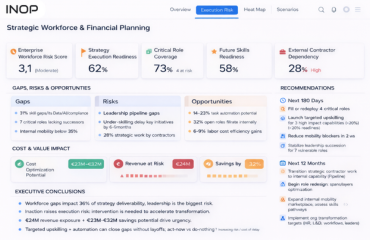
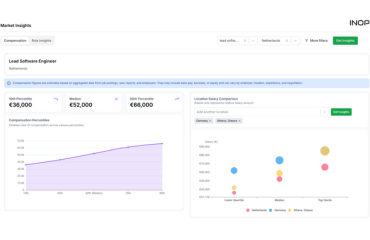
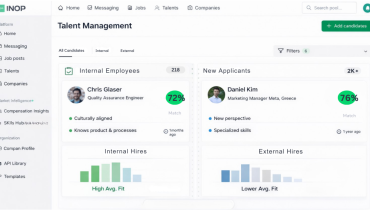
When evaluating the most flexible financial planning tool for detailed opex and headcount planning, organizations must look for platforms that break down the silos between HR and Finance. The best platforms don’t just act as spreadsheets; they use talent intelligence to drive strategic decisions. So, what headcount planning platforms integrate well with finance tools? Solutions like INOP provide the critical bridge, allowing HR teams to map skills while seamlessly passing headcount cost projections into finance tools, ensuring your operating expenses (OpEx) perfectly align with your talent acquisition strategy.
Conclusion: Headcount Planning Is Now a Competitive Advantage
Headcount planning in 2026 is no longer the administrative handoff between HR and Finance that it was a decade ago. It has become one of the most strategically consequential processes in a company, one that directly determines whether the business has the people and capabilities it needs to execute on its goals, or whether it is perpetually playing catch-up.
The companies pulling ahead in today’s environment share a common set of characteristics: they plan continuously rather than annually, they think in skills rather than titles, they maintain active scenario models rather than single-point forecasts, and they have built genuine operational trust between their Finance and HR leadership. These are not luxuries reserved for enterprise organizations with large planning teams. They are achievable for any organization that is willing to be intentional about the process.
The five-step framework, tool categories, and best practices in this guide give you the foundation. The next move is yours. Start by auditing your current process against the traditional-versus-modern comparison table. Identify the one or two gaps that are causing the most pain right now, whether that is disconnected data systems, an absent joint planning committee, or the absence of scenario models, and fix those first. Incremental improvement in headcount planning compounds quickly. also we invite you to take a look at emerging ai skills crucial 2026 2030 future technology jobs we provided for you.
Frequently Asked Questions
How do I forecast headcount needs for the next fiscal year?
To accurately forecast headcount needs for the next fiscal year, HR and Finance teams must align their strategic workforce plans with the annual operating plan (AOP)…
How to combine headcount and financial planning in one tool?
The most effective way to combine headcount and financial planning in one tool is to use a Talent Intelligence Platform like INOP that natively integrates HR skills data with Finance OpEx forecasting…
What is the difference between headcount planning and workforce planning?
Headcount planning focuses on the quantitative and financial dimensions of talent, how many people are needed, what they will cost, and when they need to be in place. Workforce planning is a broader strategic process that encompasses organizational design, skills architecture, and long-term capability development. Headcount planning is essentially the operational output of a workforce planning strategy. In practice, the two should be deeply integrated rather than managed as separate functions.
How often should a company update its headcount plan?
The right cadence depends on how quickly your business environment changes. For most organizations, a quarterly rolling review of the headcount plan, with monthly tracking of actuals versus plan, represents a solid baseline. High-growth companies, startups, or businesses in rapidly evolving markets may benefit from monthly model updates. The goal is to ensure that your plan remains aligned with current business reality, not to generate planning activity for its own sake.
What are the biggest mistakes companies make in headcount planning?
The most common errors are: planning in job titles rather than skills (which reduces flexibility), building a single annual plan without scenario models (which creates rigidity), allowing HR and Finance to plan independently without a formal joint process (which creates misalignment), ignoring internal attrition data (which leads to underestimating total hiring need), and failing to track Time-to-Fill alongside headcount approvals (which means planned capacity never actually materializes in time).
How do you build a business case for a new headcount request?
A strong headcount business case answers four questions: What specific business outcome will this role drive or protect? What is the cost of not filling this role, in lost revenue, missed deadlines, or additional burden on existing team members? What is the fully-loaded annual cost of the hire, including salary, benefits, recruiting, and onboarding? And how does this request rank against other headcount priorities given the available budget? Business cases that quantify the cost of inaction are consistently more persuasive than those that only describe the value of the hire.
What is skills-based headcount planning and why does it matter in 2026?
Skills-based headcount planning shifts the unit of planning from job titles and FTE counts to specific skill sets and capacity levels. Instead of planning for “three Data Analysts,” an organization using this approach plans for “coverage of SQL querying, data visualization, and predictive modeling at senior proficiency level.” This approach matters in 2026 because AI tools are fundamentally restructuring which tasks require human expertise. Organizations that plan at the skills level can adapt more quickly as AI changes the composition of work, rather than being anchored to role definitions that may become outdated within 12 to 18 months.
How do small and mid-sized businesses approach headcount planning differently from enterprises?
Smaller organizations typically operate with less formal structures and more compressed planning cycles. For a company with fewer than 200 employees, a dedicated FP&A tool may be cost-prohibitive, and a well-structured spreadsheet model combined with a clear quarterly review process can be highly effective. The core principles, strategic alignment, capacity auditing, demand forecasting, gap analysis, and financial reconciliation, apply regardless of company size. The difference is primarily in the tools and the formality of the process, not in the underlying logic.
How does scenario planning work in practice for headcount decisions?
In practice, scenario planning for headcount involves building three versions of your people plan: a Base Case (your most likely trajectory), a Best Case (what happens if growth significantly exceeds expectations), and a Downside Case (what happens in a recession or major revenue miss). Each scenario should have different headcount counts, hiring timelines, and ideally pre-defined decision triggers, for example, “if Q2 ARR falls below $X, we pause all backfill hiring and delay 40% of planned new roles.” The value of scenario planning is not that it predicts the future accurately, but that it eliminates the need for crisis decision-making when the business environment changes.