Did you know that human capital risk is now ranked among the top three concerns for global CEOs in 2026? In an era where talent drives competitive advantage, the risk of losing key employees, failing to upskill teams, or mismanaging workforce strategies can directly impact business growth. Human capital risk refers to any potential threat that arises from your people, from skills shortages to compliance issues, and if left unmanaged, it can cost organizations millions annually.
In this guide, we’ll first understand human capital risk definition, why it’s critical for business resilience, and how to identify, measure, and mitigate people-related risks effectively. You’ll also learn how strategic workforce planning can help you stay ahead of future talent disruptions.
What Is Human Capital Risk? human capital risk definition
The concept of human capital risk refers to the potential negative financial and operational impacts on a business caused by its workforce. Unlike traditional financial or cybersecurity risks, human capital risk focuses on the unpredictable nature of people. If a business fails to manage talent effectively, it exposes itself to severe vulnerabilities that can derail organizational growth, disrupt operations, and damage employer brand reputation.
Examples of Human Capital Risks in business
To truly understand the threat, leaders must look at real-world human risk examples in business. These risks typically fall into a few major categories:
- Talent and Skill Shortages: The inability to attract or retain employees with critical, future-ready skills, leading to stalled business objectives.
- Key Person Dependency: Relying too heavily on a single executive or specialist without a proper succession plan in place.
- Employee Burnout and Turnover: High attrition rates that result in massive recruitment costs and severe productivity losses.
These risks often go unnoticed until they lead to measurable losses, such as decreased revenue, reduced productivity, or damage to employer brand. if you want to find out exact types of human capital risks in 2026, we suggest to click and read our article.
Artificial Intelligence and Skills Obsolescence
While AI is often viewed as a solution, the rapid adoption of Generative AI is simultaneously acting as a massive risk catalyst. This technological shift accelerates the loss of human capital value through sudden “skills obsolescence.” Capabilities that were highly valued just a year ago are now easily automated, rendering parts of the workforce obsolete overnight if they are not rapidly upskilled.
Furthermore, the unchecked use of these tools introduces severe compliance and security threats. Employees uploading proprietary code or sensitive client data to public, unapproved AI platforms creates immediate operational vulnerabilities. To protect the organization, leaders must implement AI human capital risk management protocols—tracking exactly how AI is impacting their required skill sets and establishing secure frameworks for its use before it causes irreversible damage.
The Growing Threat of Compliance and Human Capital Risk
Among all workforce vulnerabilities, compliance and human capital risk is often the most financially damaging. As governments worldwide crack down on corporate governance, the legal landscape surrounding the workforce is becoming a minefield for HR leaders.
This risk goes far beyond basic payroll errors. Today, compliance and human capital risk includes:
- Pay Transparency & Equity: Failing to comply with new regulations (such as the EU Pay Transparency Directive or US state laws) can lead to massive class-action lawsuits and severe brand damage.
- ESG Mandates: Investors now demand strict reporting on Diversity, Equity, and Inclusion (DEI) metrics. Failing to meet these social governance standards can result in a loss of institutional funding.
- Data Privacy: Mishandling sensitive employee data or using non-compliant AI hiring tools can violate strict global privacy laws like GDPR.
What is Human Capital Risk Management (HCRM)?
While human capital risk is the threat itself, human capital risk management (HCRM) is the systematic discipline of forecasting, evaluating, and mitigating those threats before they impact the bottom line. It shifts HR from a reactive administrative function into a proactive, strategic powerhouse.
Effective human capital risk management requires a continuous loop of data analysis. Instead of just reacting to high turnover when it happens, HCRM uses predictive analytics to identify flight risks months in advance. By integrating talent data with financial forecasting, organizations can build safety nets—such as automated succession planning, dynamic upskilling programs, and real-time compensation adjustments—ensuring business continuity regardless of external workforce fluctuations.
Why Human Capital Risk Matters for Every Organization
Ignoring workforce-related risks is like driving without a seatbelt, everything seems fine until something goes wrong. Studies show that companies with poor workforce risk management face 20–30% higher operational disruptions compared to peers with strong human capital strategies.
A few reasons why human capital risk management is so critical:
- Direct Impact on Business Performance: Employee productivity and engagement directly influence revenue and customer satisfaction.
- Cost Control: Replacing an employee can cost up to 150% of their annual salary. Proactively managing turnover can save significant recruitment and training expenses.
- Regulatory Compliance: With pay transparency and workplace equality laws tightening globally, compliance-related risks are growing.
- Reputation Protection: How an organization treats its people is now a major factor in employer brand and customer trust.
Reputational Damage and Employer Brand
In an era of hyper-transparency, human capital mismanagement rarely stays hidden. Executive misconduct, toxic workplace cultures, or failing to meet public ESG (Environmental, Social, and Governance) diversity mandates can instantly result in severe reputational damage.
When internal dysfunction goes viral on platforms like Glassdoor, LinkedIn, or in the press, the fallout is immediate and financial. Severe reputational damage not only alienates current clients and investors but directly inflates the cost of future talent acquisition. Top-tier candidates will either refuse to apply or demand a significant “reputation premium” in their compensation to join an organization with a compromised employer brand.
Understanding Human Capital Execution Risk
While human capital risk encompasses everything from compliance to workplace safety, the most immediate threat to your bottom line is Execution Risk.
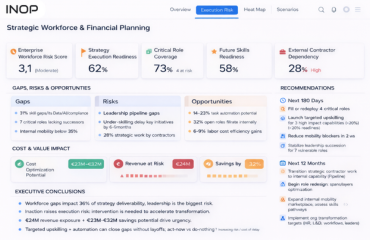
Human capital execution risk is the probability that an organization will fail to achieve its strategic business objectives due to workforce-related shortcomings. A company can have a brilliant go-to-market strategy, but if the workforce lacks the capabilities, alignment, or bandwidth to deliver it, the strategy will fail.
For CHROs and business leaders, execution risk typically manifests in three critical areas:
1. The Strategic Skill Gap
The most common driver of execution risk occurs when the business pivots, but the workforce’s skills remain static. If your company’s growth relies on adopting artificial intelligence, but your team lacks AI orchestration and data literacy skills, your execution timeline will stall. Identifying these blind spots before a product launch or digital transformation is critical.
2. Workforce Misalignment
Sometimes the talent is there, but it is deployed incorrectly. Execution risk spikes when top performers are bogged down by low-value tasks or when departmental silos prevent cross-functional collaboration. Misalignment means your payroll dollars are not directly driving your core business objectives.
3. Change Fatigue and Burnout
Ambitious corporate strategies often require intense change management. If your workforce is already experiencing high levels of burnout or turnover, their capacity to absorb and execute new initiatives drops to zero. High attrition in critical, revenue-generating roles is the ultimate execution killer.
How CHROs Can Mitigate Execution Risk
To close the gap between strategy and execution, HR leaders must move from reactive hiring to predictive talent mapping. By leveraging Strategic Workforce Planning tools, CHROs can audit current workforce capabilities against future business goals, ensuring the right talent is always in place to execute the company’s vision.
Identifying Human Capital Risks
The first step in managing risk is to make it visible. Here’s how organizations can systematically identify potential workforce risks:
Conduct a Step-by-Step Human Capital Risk Assessment
The foundational step in protecting your organization is conducting a formal, structured human capital risk assessment. You cannot mitigate what you haven’t measured. To effectively manage multiple human capital risks, leaders should follow this four-step framework:
- Identify: Audit your workforce data to build a comprehensive “Risk Register.” Categorize your vulnerabilities into four primary buckets: Strategic (skills gaps), Operational (key person dependency), Compliance (pay equity), and Reputational (employer brand).
- Evaluate: Plot these risks on a matrix. Map the likelihood of the event occurring against the potential financial impact it would have on the business (e.g., losing a specialized AI engineer has a high probability and a massive financial impact).
- Mitigate: Once prioritized, apply the Build, Buy, Automate, or Sunset framework. Decide whether to mitigate the risk by upskilling internal talent, hiring externally, automating the capability, or retiring the function entirely.
- Monitor: Risk management is not a one-time audit. Use predictive analytics to track leading indicators—such as sudden drops in employee engagement, shifts in market salary data, or increased turnover in critical roles—so you can intervene before the risk materializes.
Leverage Human Capital Risk Analytics
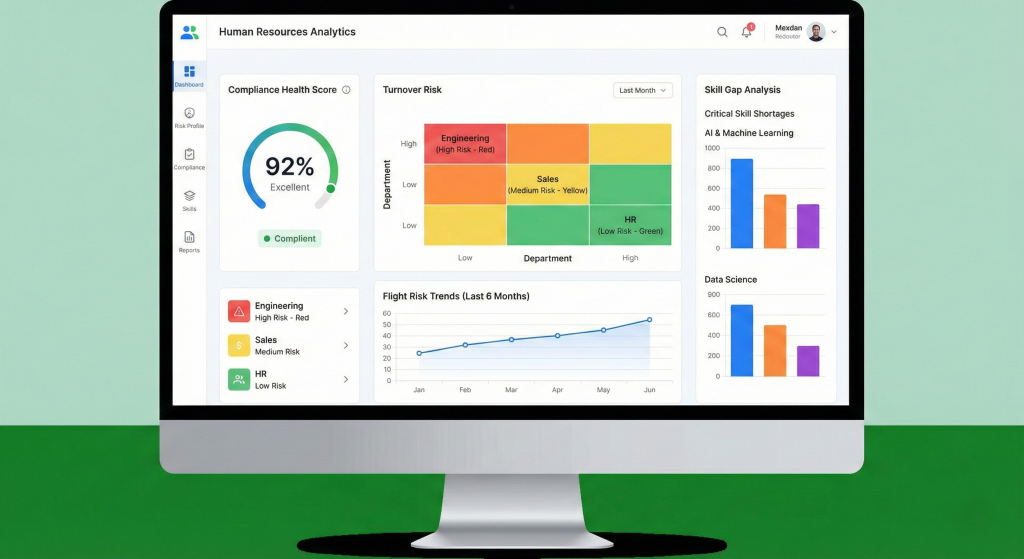
You cannot manage what you cannot measure. Modern organizations rely on human capital risk analytics to turn raw HR data into predictive insights. By utilizing advanced analytics, HR leaders can forecast which departments are at the highest risk of attrition, identify widening skill gaps, and quantify the exact financial impact of potential workforce disruptions.
Engage Leadership and HR Teams
Identifying human capital risk is not just HR’s job. Collaboration between department heads, finance leaders, and executives ensures a holistic view of workforce vulnerabilities.
Measuring Human Capital Risk
Once risks are identified, the next step is to measure their potential impact.
Key Metrics to Monitor
- Turnover Rate: High turnover signals retention challenges.
- Time-to-Fill: Longer hiring cycles may indicate talent shortages.
- Employee Engagement Scores: Low engagement is often a leading indicator of attrition.
- Training and Development Investment: Measures whether you are closing skills gaps proactively.
- Diversity and Inclusion Metrics: Lack of representation can indicate systemic risk areas.
ISO 30414: The Gold Standard for Human Capital Reporting
For enterprise organizations, measuring risk isn’t just an internal HR exercise—it is increasingly a regulatory requirement. To standardize how businesses measure workforce value and risk, the International Organization for Standardization introduced ISO 30414, the first global standard for human capital reporting.
Following the ISO 30414 core tenets, CHROs are required to transparently report on key metrics that indicate workforce health to external investors and the Board of Directors. These core tenets include reporting on:
- Compliance and ethics (grievances and legal disputes)
- Costs of the workforce (total workforce cost, turnover cost, and ROI of hires)
- Diversity, equity, and leadership trust
- Organizational health, safety, and well-being
- Skills and capabilities (training ROI and workforce readiness)
By aligning your measurement strategy with the key metrics of ISO 30414, HR leaders can provide a standardized, audit-ready view of the company’s human capital risk profile.
Quantifying the Financial Impact
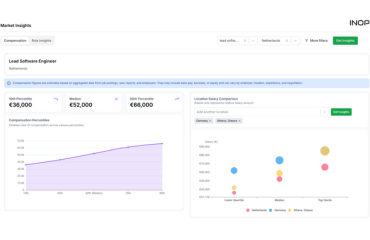
Assign a dollar value to risks where possible. For example, calculate the cost of turnover for a critical role by including recruitment costs, lost productivity, and onboarding time. This helps prioritize which risks to address first.
Mitigating Human Capital Risks
Once vulnerabilities are identified and measured, leadership must take proactive steps to mitigate human capital risk. Effective mitigation is not just about reacting to employees leaving; it requires building a resilient infrastructure that minimizes the likelihood and financial impact of workforce disruptions. Here are the core strategies to safeguard your organization:
Build a Risk-Aware Culture
Promote open communication where employees feel safe to raise concerns about workloads, ethics, or compliance.
Invest in Skills Development
Upskilling and reskilling programs help address future skills gaps before they become a barrier to growth.
Strengthen Succession Planning
Identify critical roles and ensure there is a pipeline of ready talent to step in when needed.
Leverage Strategic Workforce Planning
Strategic Workforce Planning can help organizations anticipate future talent needs, model workforce scenarios, and proactively address vulnerabilities — making it a key tool for closing skills gaps and building long-term workforce resilience.
Adopt Technology-Enabled Solutions
Implement HR software that supports workforce risk management, such as employee engagement platforms, AI-driven recruitment tools, and compliance monitoring systems.
Workforce Risk Management vs. Traditional HR
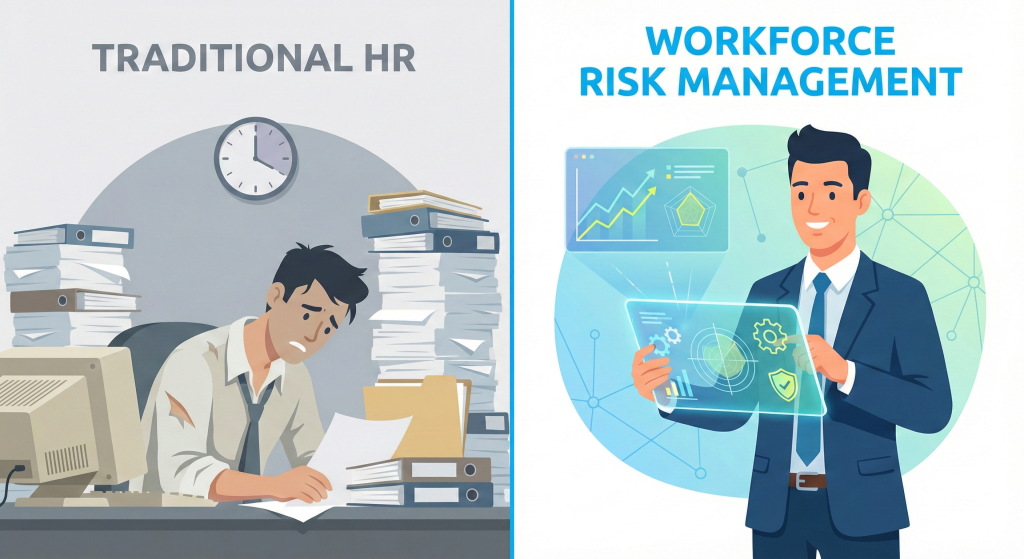
While HR traditionally focuses on hiring and employee administration, workforce risk management takes a forward-looking approach.
| Traditional HR | Workforce Risk Management |
|---|---|
| Primarily reactive | Proactive, predictive, and data-driven |
| Focused on transactions | Focused on preventing future disruptions |
| Limited to HR team | Involves leadership and cross-functional input |
| Looks at current workforce only | Plans for future workforce scenarios |
This proactive approach allows businesses to minimize risk before it becomes a problem.
AI Human Capital Risk Management
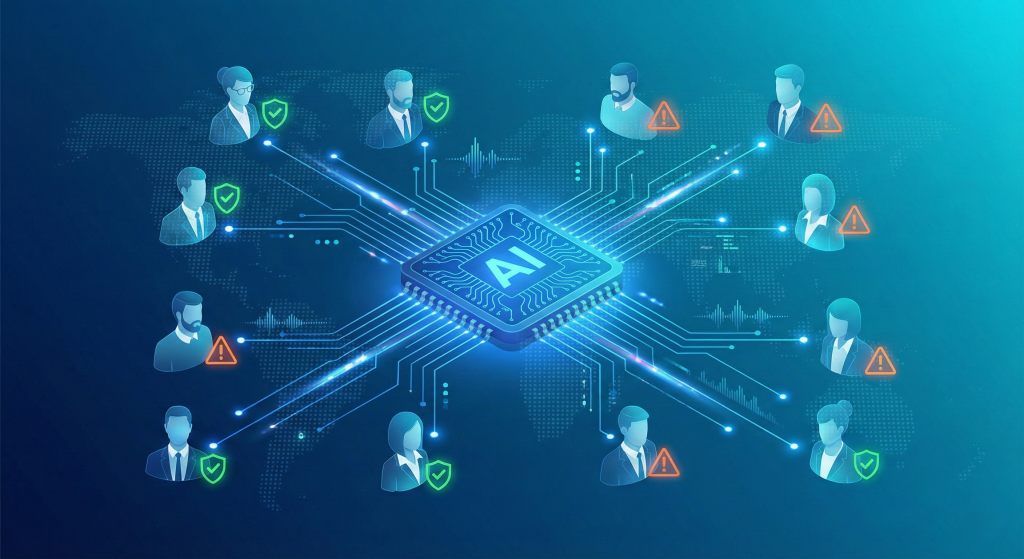
As workforce dynamics become increasingly complex, manual spreadsheets are no longer sufficient to track people-related threats. The future of organizational resilience relies on AI human capital risk management.
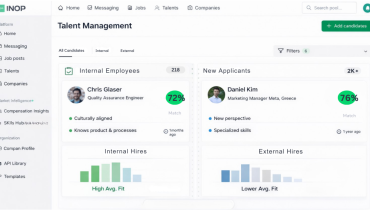
By utilizing an AI-driven Talent Intelligence Platform like INOP, companies can continuously monitor their workforce in real-time. Artificial intelligence automates the detection of skill gaps, monitors internal mobility trends to prevent flight risks, and ensures your compensation structures remain compliant with local regulations. Implementing AI human capital risk management allows organizations to shift from a reactive HR posture to a predictive, strategic workforce planning model—stopping risks long before they affect business performance.
Common Challenges in Managing Human Capital Risk
Even with the right strategy, organizations often face hurdles:
- Data Silos: HR, finance, and operations may not share data, leading to incomplete risk insights.
- Lack of Leadership Buy-In: Executives may underestimate workforce risks until they affect performance.
- Rapid Market Changes: Skills that are relevant today may not be tomorrow, making risk management a continuous process.
Overcoming these challenges requires alignment, leadership support, and continuous improvement.
Conclusion
Human capital risk is no longer just an HR issue — it’s a core business concern that affects profitability, compliance, and long-term growth. By identifying, measuring, and mitigating workforce risks, organizations can build resilience, protect their talent pipeline, and stay competitive in an uncertain market.
The time to act is now. Audit your workforce data, prioritize risk areas, and develop a plan to address them. By doing so, you’re not just reducing risk, you’re unlocking new opportunities for growth and innovation.
Your Turn: How is your organization managing human capital risk today? Share your thoughts in the comments below, or explore our resources on workforce planning and risk mitigation for deeper insights.
Frequently Asked Questions
What is human capital risk in simple terms?
Human capital risk is the possibility that workforce-related issues — like skill shortages, high turnover, or compliance failures — will harm business performance.
How do you measure human capital risk?
Measurement involves tracking key metrics such as turnover rate, time-to-fill, engagement scores, and skills gaps, and then calculating the financial impact of these risks.
What is workforce risk management?
Workforce risk management is the process of identifying, assessing, and mitigating risks related to an organization’s employees, contractors, and talent pipeline.
Why is human capital risk increasing in 2025?
The rise of AI, remote work, and new compliance regulations are accelerating workforce disruptions, making risk management a top priority for organizations.
How can technology help manage human capital risk?
Technology enables predictive analytics, automates compliance monitoring, and provides real-time insights into workforce trends — helping leaders take proactive action.