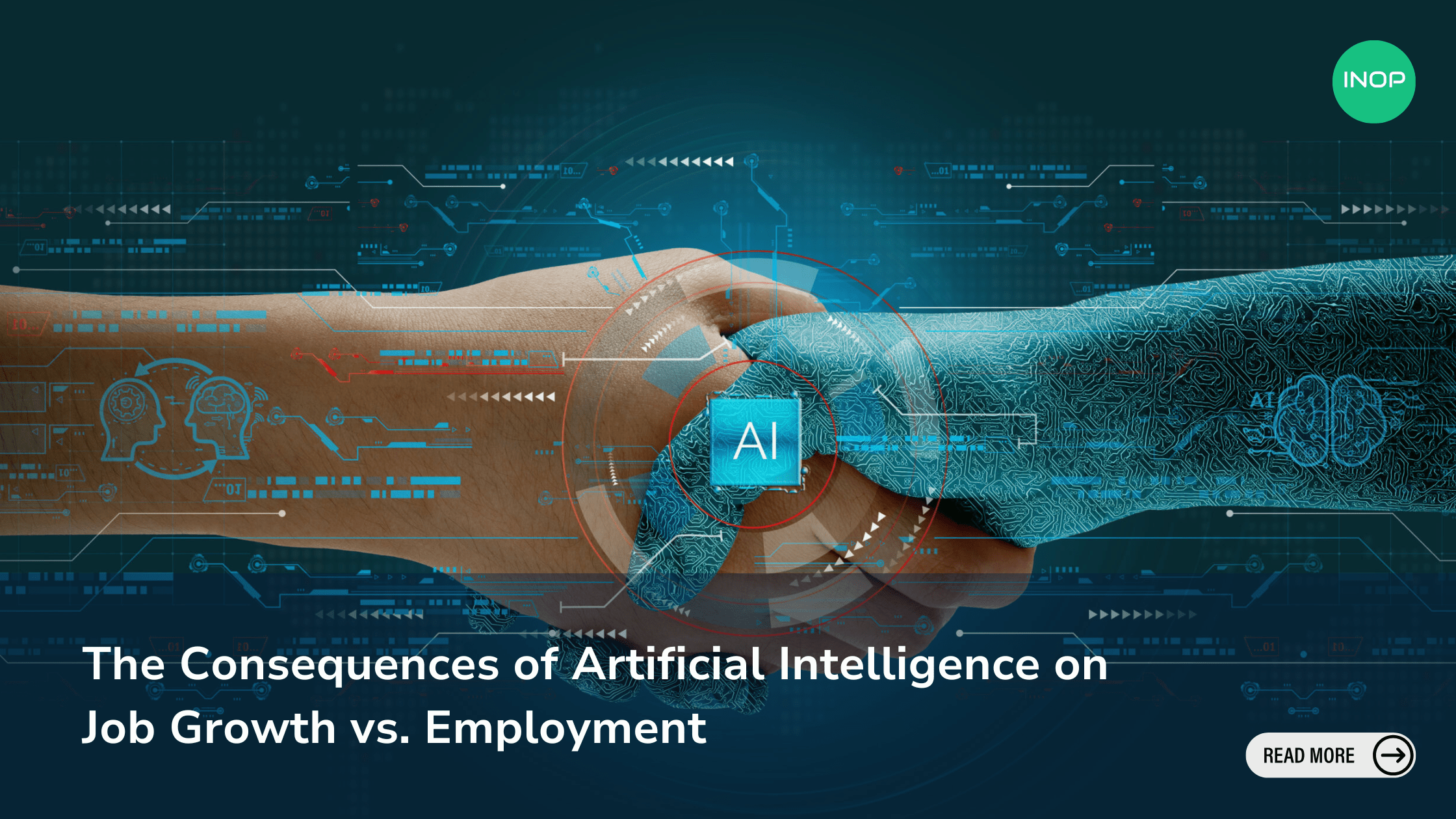
Artificial Intelligence is no longer a futuristic concept—it’s here, actively reshaping industries at an unprecedented pace. From manufacturing floors to corporate boardrooms, AI is rewriting the rules of employment. While AI-driven automation is expected to displace some jobs, it is also creating new opportunities, requiring businesses and professionals to adapt, upskill, and rethink workforce strategies.
For CHROs, Talent Leaders, and Business Executives, this shift isn’t just about automation—it’s about how organizations attract, retain, and develop talent in an AI-driven economy. The challenge is clear: organizations that fail to integrate AI into their workforce strategies risk falling behind, while those that proactively adapt can gain a competitive advantage.
AI’s Influence on Employment: Evolution, Not Extinction
The World Economic Forum’s Future of Jobs Report 2025 paints a complex picture of AI’s impact on employment:
- By 2030, AI and automation will create an estimated 170 million new jobs worldwide.
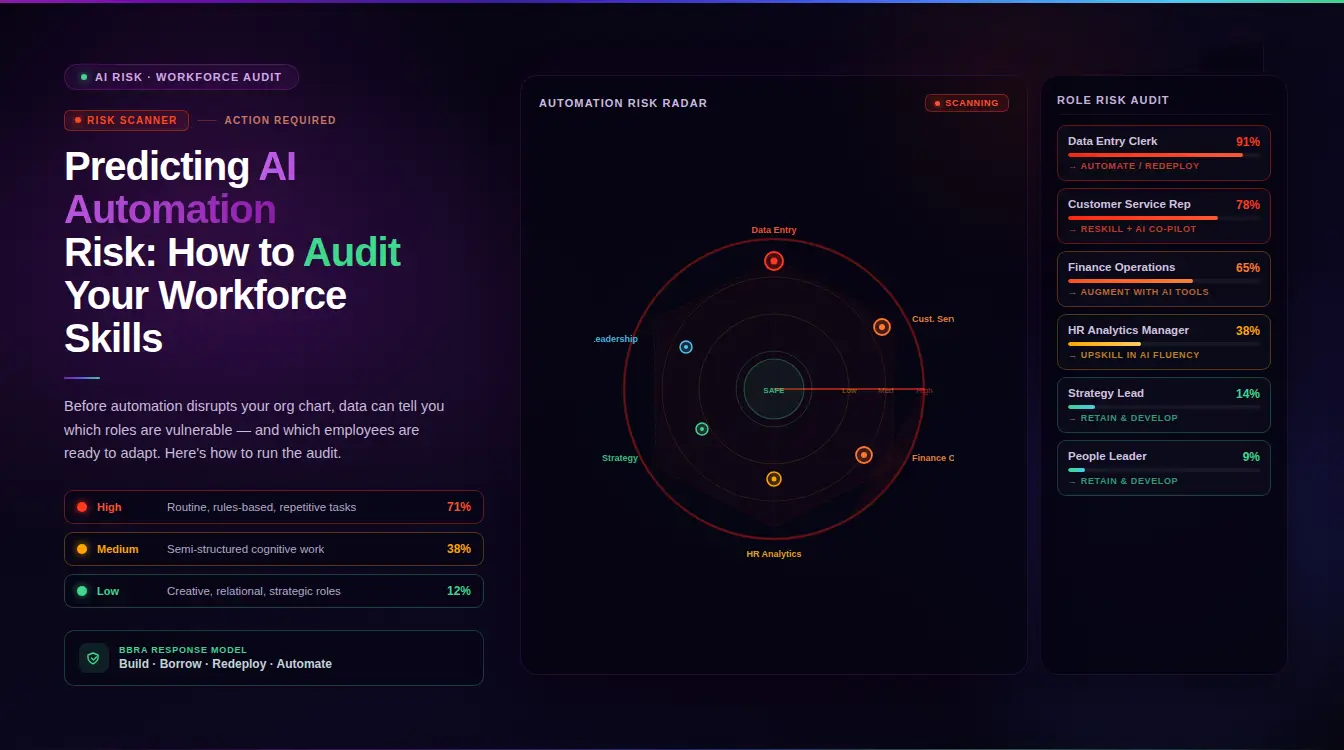
- Simultaneously, around 92 million positions will be eliminated. Primarily those reliant on repetitive, routine tasks.
- The fastest-growing industries will be those rooted in data analytics, AI & machine learning, cybersecurity, and environmental advocacy.
- Traditional white-collar roles in HR, finance, legal, and IT will require a strategic overhaul as AI reshapes hiring, workforce planning, and talent management.
For years, AI adoption was most visible in blue-collar professions—automated assembly lines, self-operating warehouses, and predictive maintenance in factories. Now, with the rise of advanced AI agents from OpenAI and others, white-collar jobs are experiencing the same transformation. Highly skilled professionals who once believed they were immune to automation are finding their roles augmented or redefined by AI-driven decision-making and workflow automation.
Bridging the Skills Gap: A Critical Priority for CHROs
Despite the transformative potential of AI, many organizations lack a concrete plan to adapt. Research indicates that nearly 39% of job skills will transform by 2030, yet only half of employers have a reskilling strategy in place. For CHROs and business leaders, this presents a pressing question:
How can organizations reskill and upskill talent quickly enough to remain competitive?
- Reskilling must be a boardroom priority. AI literacy and a culture of continuous learning are essential to future-proofing the workforce.
- Skills-based hiring is the new standard. Companies are prioritizing adaptability, problem-solving, and tech fluency over traditional degrees.
- AI is enhancing—not eliminating—HR roles. AI-powered tools are freeing recruiters from repetitive screening tasks, allowing them to focus on strategic workforce planning, culture-building, and DEI initiatives.
A study by PwC’s AI Jobs Barometer 2024 shows that while AI-exposed professions such as IT, HR, legal, and teaching are still growing, their growth rate is slowing by 27% compared to lower-exposed roles. This underscores the urgent need for businesses to rethink talent strategies that integrate AI with human expertise.
The Ethical Imperative: AI & Workforce Transformation
AI in workforce planning isn’t just about efficiency—it’s about responsibility. Organizations must ensure AI adoption is ethical, transparent, and inclusive to avoid unintended biases and workforce inequities.
✅ Artificial Intelligence should complement, not replace, human intelligence – HR and talent leaders must champion AI tools that enhance decision-making rather than automate away critical human functions.
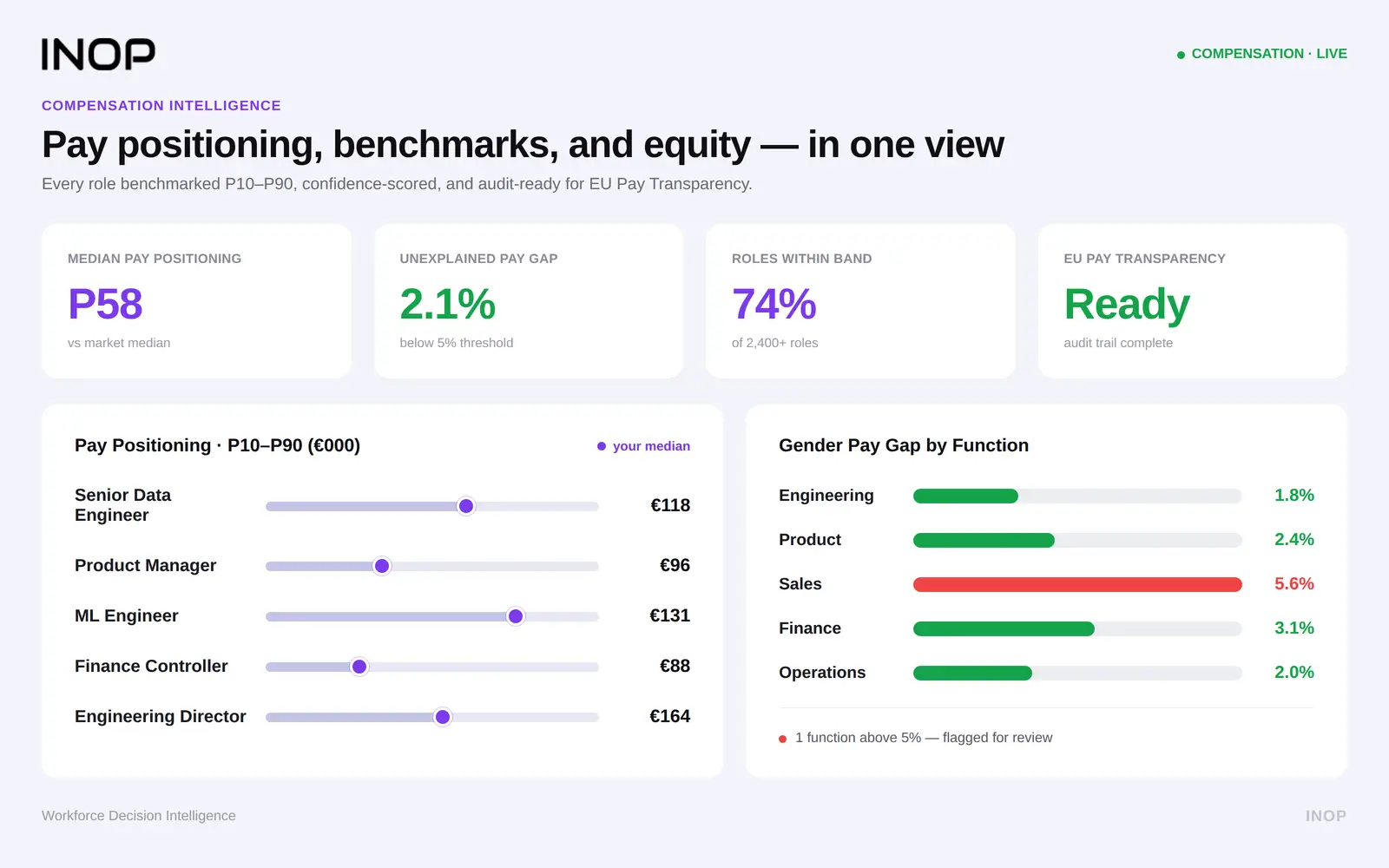
✅ Unbiased AI recruitment is non-negotiable – AI-driven hiring models must prioritize diversity, equity, and inclusion (DEI).
✅ AI literacy is key to retention – Companies must invest in AI training programs to keep employees competitive in an evolving job market.
Having Trouble with Workforce Strategy?
Schedule a live demo with our team Or watch an on-demand product walkthrough
Future-Proofing Workforce Strategy: How INOP is Leading the Way
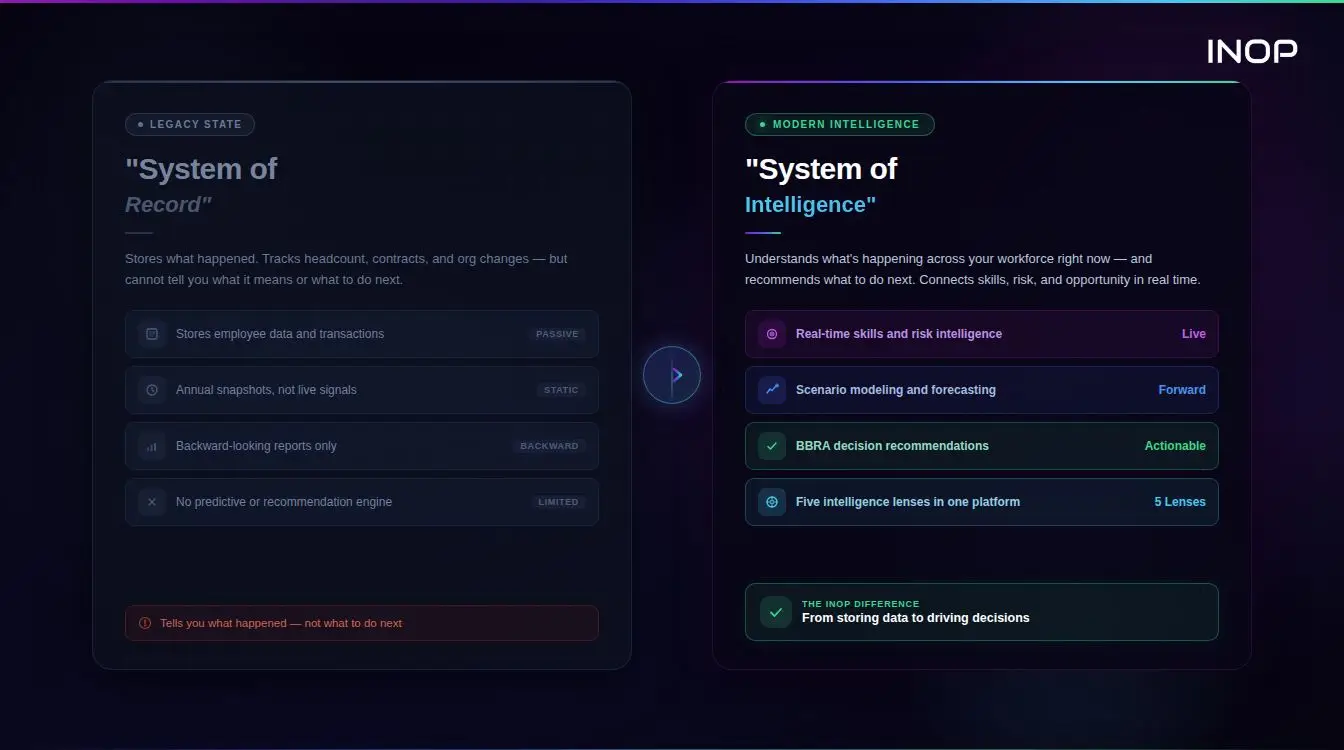
As AI reshapes the professional landscape, HR leaders and business executives must move beyond traditional workforce planning and embrace AI-powered talent strategies.
At INOP, we help organizations stay ahead of disruption by leveraging AI to create a workforce that is agile, diverse, and future-ready.
How INOP Empowers HR Leaders with AI-Driven Insights
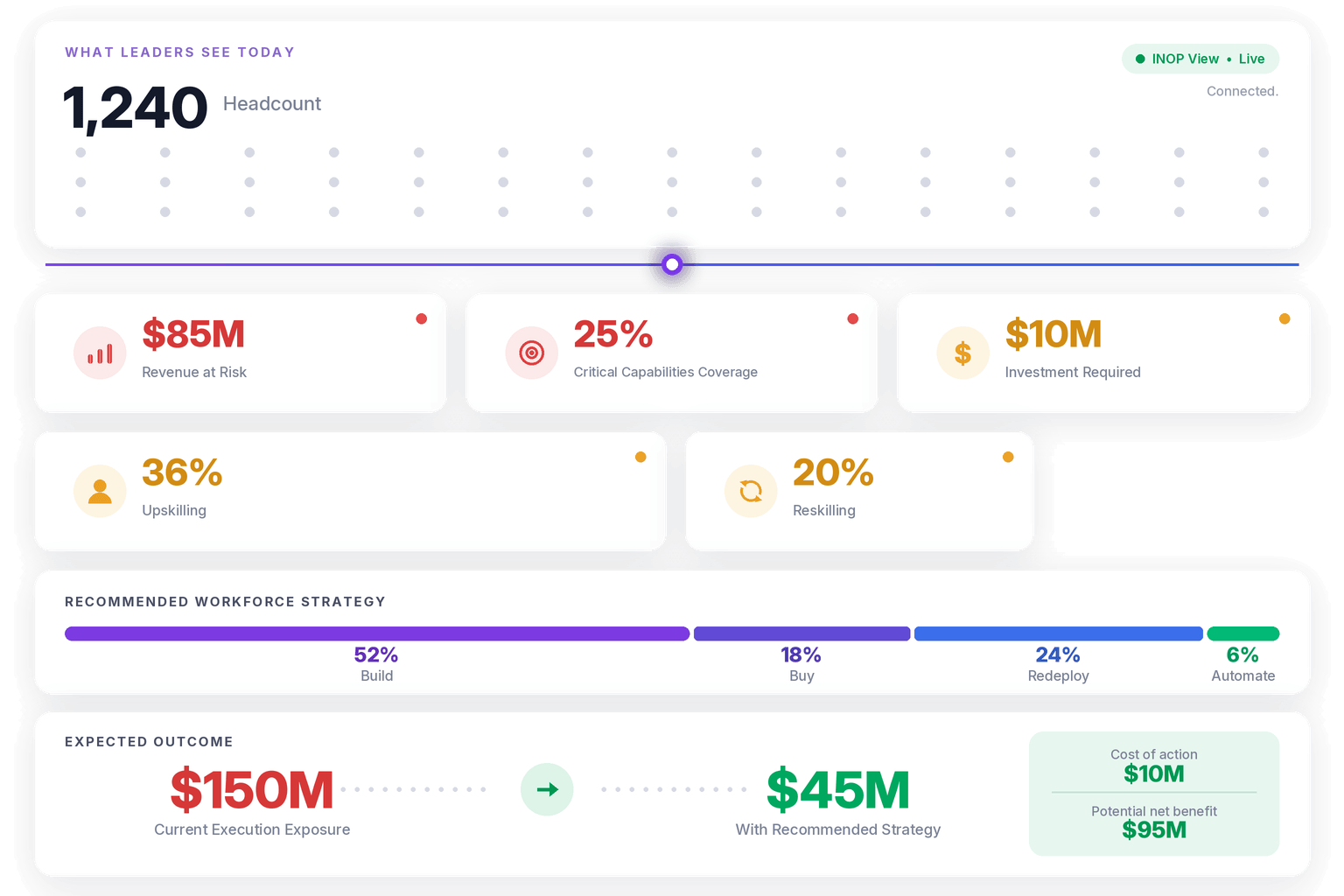
🔹 Proactive Skill Management: Identify emerging skill gaps and ensure companies have the right talent before AI-driven disruptions occur.
🔹 Workforce Automation with Human Oversight: Automate routine HR functions, allowing HR teams to focus on strategic workforce planning, culture-building, and employee experience.
🔹 Precision in Talent Strategy: Optimize workforce planning through AI-powered forecasting of skill shortages and future job openings.
🔹 Enhancing DEI with AI: Ensure hiring decisions remain skills-based, bias-free, and culturally aligned, using AI-driven insights for fairer and more effective hiring.
🔹 Ethical & Transparent AI Adoption: INOP’s AI solutions prioritize transparency and fairness. Ensuring organizations can trust the data-driven insights that guide their workforce strategies.
🔹 Empowering Internal Mobility: Support reskilling and redeployment of existing employees, reducing reliance on external hiring while maximising workforce potential.
🔹 Measurable Business Impact: Our AI solutions help organizations cut recruitment costs, reduce turnover, and improve workforce productivity. By aligning AI with long-term talent strategies. AI is not just a disruptor but an enabler of smarter, more inclusive workforce strategies. The organizations that embrace AI with foresight will lead the next era of business innovation.
AI Is Not Just a Disruptor—It’s an Enabler of Smarter Workforce Strategies
The organizations that embrace AI with foresight and responsibility will lead the next era of business innovation. The key isn’t AI vs. human—it’s AI working alongside HR to create a smarter, more efficient workforce.
💡 Is your HR team prepared for AI integration? Let’s future-proof your talent strategy.