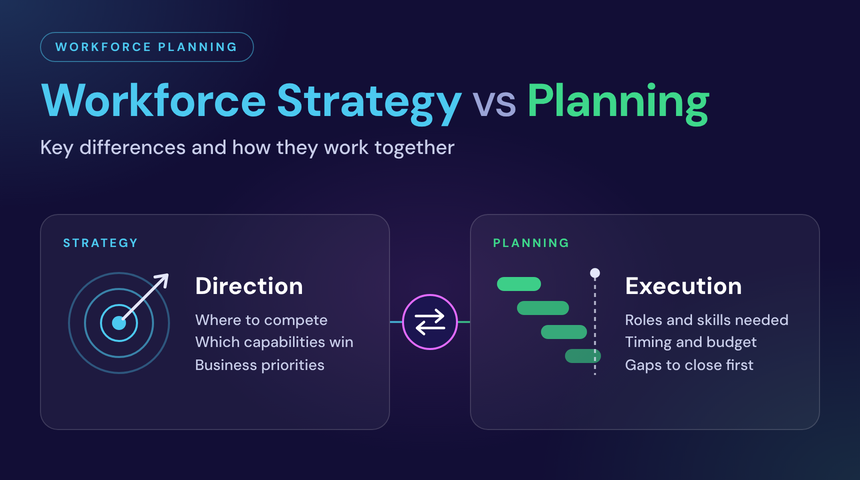
Workforce strategy and workforce planning are often used as if they mean the same thing, but they answer different questions. Workforce strategy decides what capabilities the business needs to win over the next several years and how it will get them. Workforce planning turns that direction into concrete numbers: which roles, which skills, how many people, where and when. A workforce strategy without a plan stays a slide in a board deck. A plan without a strategy fills today’s gaps and misses tomorrow’s. This guide explains what each one is, the key differences, how they work together, how workforce planning differs from related terms and who should own each.
What Is Workforce Strategy?
Workforce strategy is the long-term approach that links people decisions to business goals. It sets direction rather than headcount. It answers questions such as: which capabilities will create advantage, which work should be automated, which skills should the organization build itself and which should it source, and what operating model (remote, hybrid or on-site) fits the business.
A workforce strategy usually covers:
- The capabilities the business strategy depends on
- The role of AI and automation in how work gets done
- The balance between building, sourcing and redeploying talent
- Leadership, culture and the operating model
- Pay philosophy and how the organization competes for skills
Workforce Strategy and Design
Organizational design is the structural side of workforce strategy. Strategy decides what capabilities matter. Design decides how teams, reporting lines, spans of control and decision rights are arranged to deliver them. Read more in our guide to organizational design.
What Is Workforce Planning?
Workforce planning is the process of analyzing current workforce supply, forecasting future demand and closing the gap between the two. It covers headcount, skills, cost and location. Typical activities include:
- Assessing the current workforce: roles, skills, cost and attrition
- Forecasting demand from business plans and market signals
- Identifying gaps and surpluses by role, skill and location
- Choosing actions to close each gap and tracking progress
Forecasting is at the center of it. See our guides to workforce management forecasting and headcount forecasting.
Strategic vs Operational Workforce Planning
Workforce planning itself has two levels. Strategic workforce planning connects the workforce strategy to a multi-year plan. McKinsey describes it as looking three to five years ahead. Operational workforce planning covers the coming quarters: budgets, open roles and capacity by team. Strategic planning is where workforce strategy becomes measurable.
Workforce Strategy vs Workforce Planning: Key Differences
| Dimension | Workforce strategy | Workforce planning |
|---|---|---|
| Core question | What capabilities do we need to win, and how will we get them? | How many people with which skills do we need, where and when? |
| Focus | Direction and choices | Numbers, gaps and actions |
| Time horizon | Several years, tied to the business strategy | Multi-year for strategic plans, quarters for operational plans |
| Output | Priorities, principles and the operating model | Forecasts, gap analysis and action plans |
| Owners | CEO, CHRO and the executive team | HR, finance and business leaders together |
| Measured by | Whether the business has the capabilities its strategy needs | Whether gaps are closed on time and on budget |
How Workforce Strategy and Planning Work Together
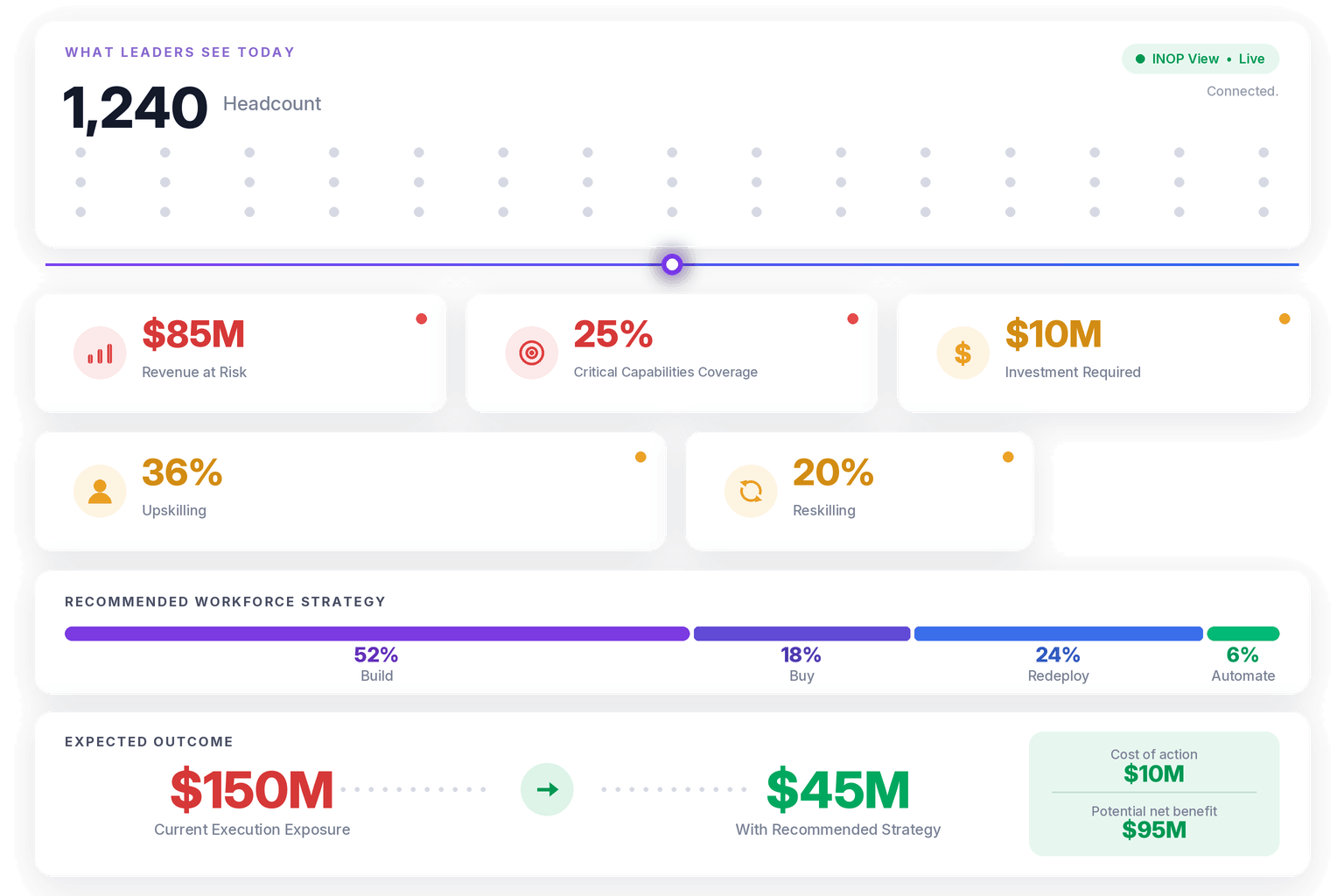
Strategy sets the destination and planning builds the route. The link between them is a clear set of capability gaps, each with a decision about how to close it. INOP’s BBRA decision architecture compares four options for every gap: Build, Buy, Redeploy, Automate, with financial trade-offs across 30-day, 180-day, one-year and three-year horizons.
From Workforce Strategy to a Workforce Plan: An Example
A software company decides that AI-assisted products are central to its strategy. That is workforce strategy. The workforce plan then works out the detail: the company needs more machine learning engineering capacity over two years. Some of it can be built by reskilling backend engineers with adjacent skills, some redeployed from a product line being wound down, some bought from the external market and some covered by automating routine testing work. Each option has a cost, a time to impact and a risk, and the plan sets targets for each.
An Example From Healthcare
A hospital network decides to expand telemedicine over the next several years. That is strategy. Planning works out how many clinicians need virtual care skills each year, which can be trained from current staff, how nurse schedules change and what the plan costs.
Workforce Planning vs Related Terms
Workforce Planning vs Workforce Management
Workforce management is operational and short term: scheduling, time and attendance, and intraday staffing. Workforce planning looks months and years ahead at the size, skills and cost of the workforce. Workforce management answers who works this shift. Workforce planning answers what workforce the business needs next year and beyond.
HR Planning vs Manpower Planning vs Workforce Planning
HR planning is the broad term for planning all HR activities. Manpower planning is an older term focused mainly on staff numbers. Workforce planning is the modern term and includes skills, cost and automation as well as numbers.
Headcount Planning vs Workforce Planning
Headcount planning sets the number of positions and their budget, usually as part of the annual financial plan. Workforce planning is wider: it includes skills, location, contingent workers and automation, and it asks whether headcount is the right answer at all.
Who Owns Workforce Strategy and Workforce Planning?
The CEO and executive team own the workforce strategy, with the CHRO leading it. Workforce planning works best as a shared process: HR runs it, finance owns the cost model and business leaders own demand. When planning sits in HR alone, it tends to become a headcount request process disconnected from the business strategy.
Why the Distinction Matters Now
The pace of change makes both disciplines harder to separate from each other and more important to get right. The World Economic Forum expects 39 percent of workers’ core skills to change by 2030, and McKinsey estimates that up to 30 percent of hours worked could be automated by 2030. A plan built only on last year’s headcount will not keep up with that.
The payoff for getting people decisions right is measurable. McKinsey Global Institute research on about 1,800 companies found that firms that prioritize both people and performance were 1.5 times more likely to remain top performers over a decade, with attrition about five percentage points lower.
Turn your workforce strategy into a priced plan. INOP shows the capability gaps your strategy creates and the cost of each way to close them. Book a demo
Common Mistakes
- Treating a headcount plan as a workforce strategy. Filling next quarter’s roles is not a strategy.
- Writing a strategy with no plan. Without numbers, owners and dates, strategy does not change decisions.
- Leaving planning to HR alone. Finance and business leaders must own demand and cost.
- Ignoring external signals. Market pay, skills supply and automation all change the right answer.
- Assessing AI in isolation. Automation decisions need to be weighed against building, buying and redeploying.
Best Practices for Workforce Strategy and Planning
- Start from the business strategy and translate it into capabilities.
- Measure skills, not only roles, so gaps are visible early. See skills mapping.
- Compare every option for closing a gap, with cost and time to impact.
- Plan scenarios rather than a single forecast.
- Review the plan quarterly and the strategy at least once a year.
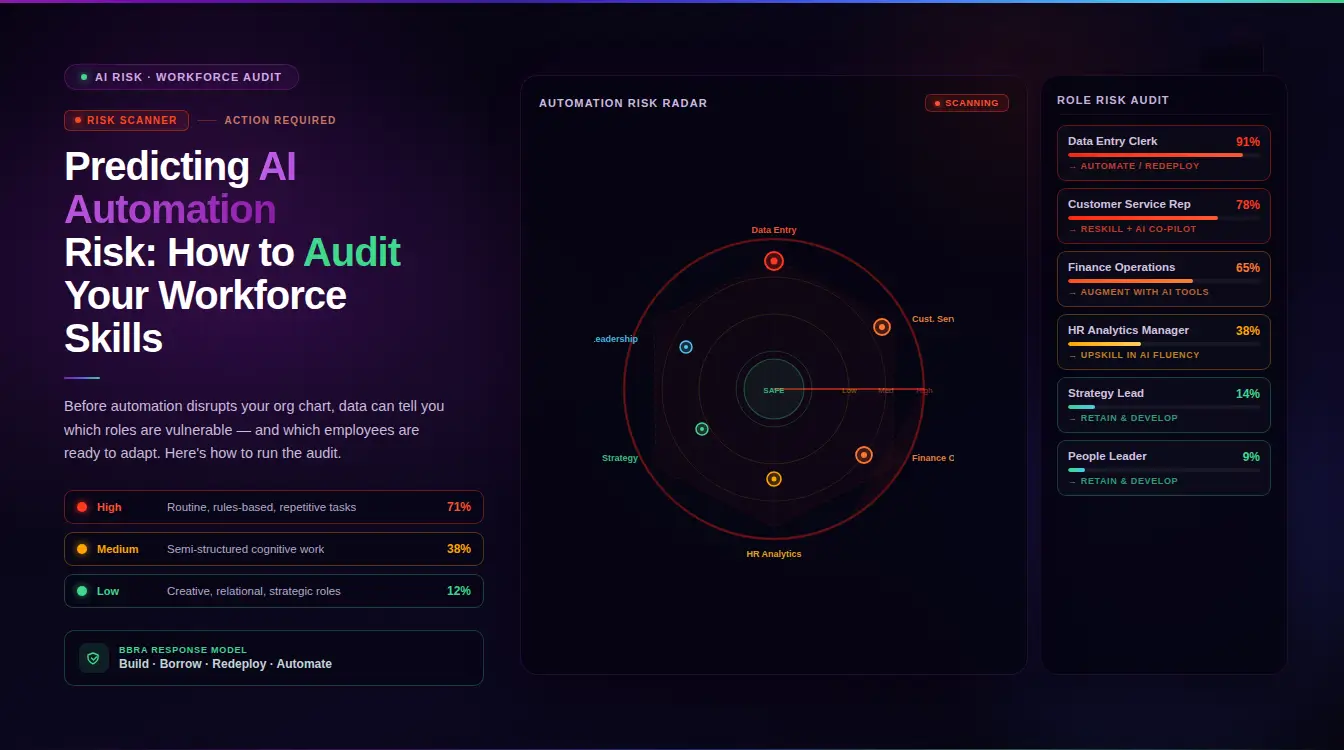
For the business case, read the benefits of workforce planning. To check whether skills are exposed to automation, see how to audit your workforce skills for AI automation risk.
How INOP Connects Workforce Strategy and Planning
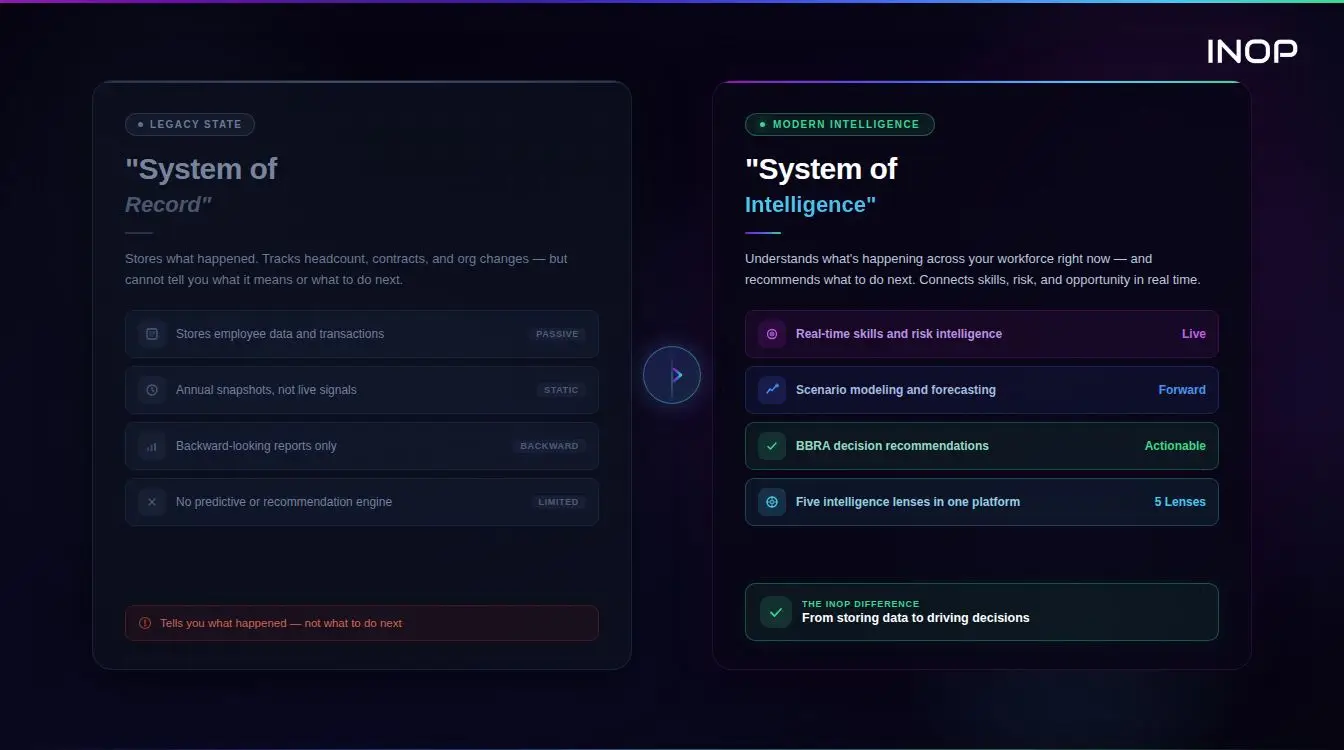
INOP answers whether leaders have the capabilities to execute their strategy today and stay AI-ready. It never assesses AI in isolation and tests every decision against five intelligence lenses: Strategy, Finance, People, Market, and AI and Automation.
- The strategic workforce planning platform turns strategy into capability gaps and compares Build, Buy, Redeploy and Automate options with their costs.
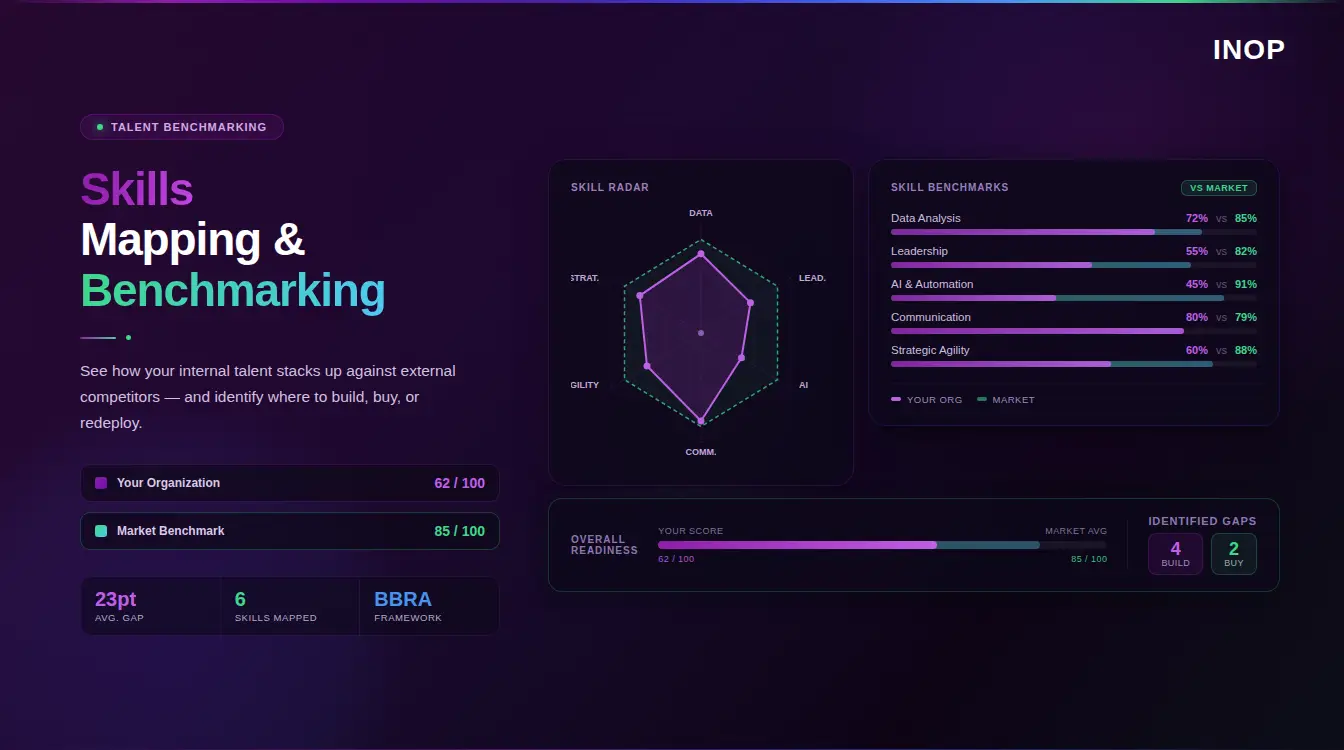
- Skills intelligence shows which skills the workforce holds today and how they compare with the market.
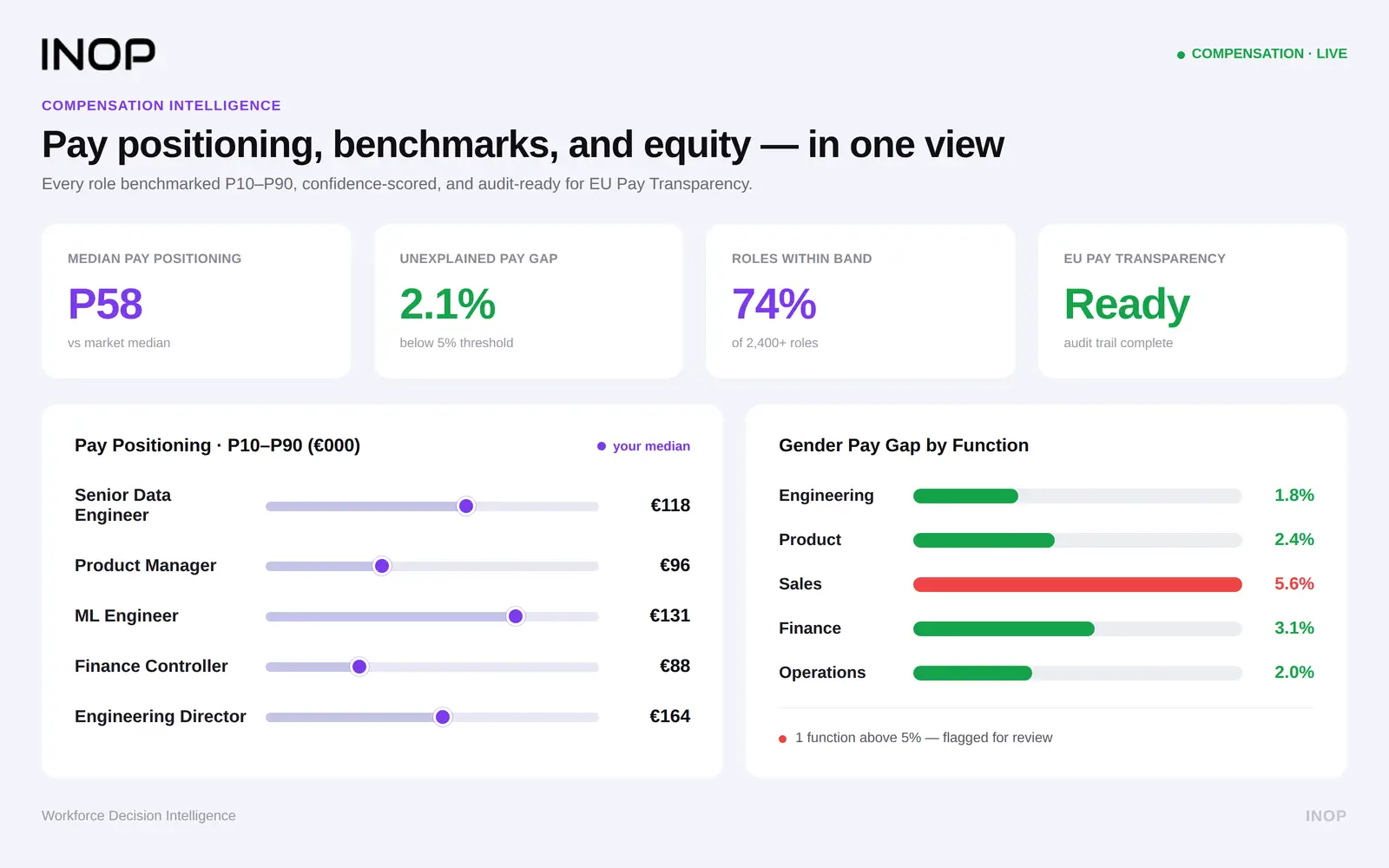
- The compensation analytics platform prices each option with current market pay data.
For investors, the same view supports private equity workforce intelligence across portfolio companies, and it helps leaders quantify human capital risk.
Conclusion
Workforce strategy decides where the organization is going and which capabilities it needs to get there. Workforce planning works out the numbers, the options and the timeline. Treat them as two linked steps: set the strategy, translate it into capability gaps, then plan and price how to close each one.
See whether your workforce can deliver your strategy. INOP links skills, market and cost data to priced workforce decisions. Book a demo
Workforce Strategy vs Workforce Planning FAQs
What is a workforce strategy?
A workforce strategy is the long-term approach that links people decisions to business goals. It defines which capabilities the business needs and how it will get them: building, buying, redeploying or automating.
What is the difference between workforce planning and workforce strategy?
Workforce strategy sets direction and priorities. Workforce planning turns them into forecasts, gap analysis and action plans with numbers, owners and dates.
What is the difference between strategic and operational workforce planning?
Strategic workforce planning looks several years ahead and connects the workforce to the business strategy. Operational planning covers the coming quarters, including budgets, open roles and team capacity.
What is the difference between workforce management and workforce planning?
Workforce management handles short-term operations such as scheduling and attendance. Workforce planning looks ahead at the size, skills and cost of the workforce.
Who should own strategic workforce planning?
The executive team owns the strategy with the CHRO leading it. Planning works best when HR, finance and business leaders share ownership.
Can an organization succeed with only workforce planning?
It can meet short-term needs, but without a strategy it risks filling today’s gaps while missing the capability shifts that automation and market change bring.