The 2025 Gen Z and Millennial Survey from Deloitte gathered 23,482 responses across 44 countries, and its message for employers is direct: younger workers want growth, fair pay, and well-being at the same time, and most managers are not delivering it. Only 36% of Gen Zs say their manager actually teaches and mentors them, while 48% do not feel financially secure. Below are the verified key findings, what they mean for workforce decisions, and how the data compares with Deloitte’s 2026 edition.
Now in its 14th year, the survey is the largest annual study of younger workforce attitudes. It polled 14,751 Gen Zs (born January 1995 to December 2006) and 8,731 millennials (born January 1983 to December 1994) across North America, Latin America, Western Europe, Eastern Europe, the Middle East, Africa, and Asia-Pacific. Fieldwork ran online from 25 October to 24 December 2024, with qualitative interviews conducted between 19 December 2024 and 10 January 2025.
What Are the Key Findings of the 2025 Gen Z and Millennial Survey?
The 2025 Gen Z and Millennial Survey found that 48% of Gen Zs and 46% of millennials do not feel financially secure, up from 30% and 32% a year earlier. Only 6% of Gen Zs name a senior leadership role as their primary career goal, yet learning and development ranks in their top three reasons for choosing an employer. 89% of Gen Zs and 92% of millennials say purpose matters to job satisfaction, and 74% and 77% expect GenAI to change how they work within a year.
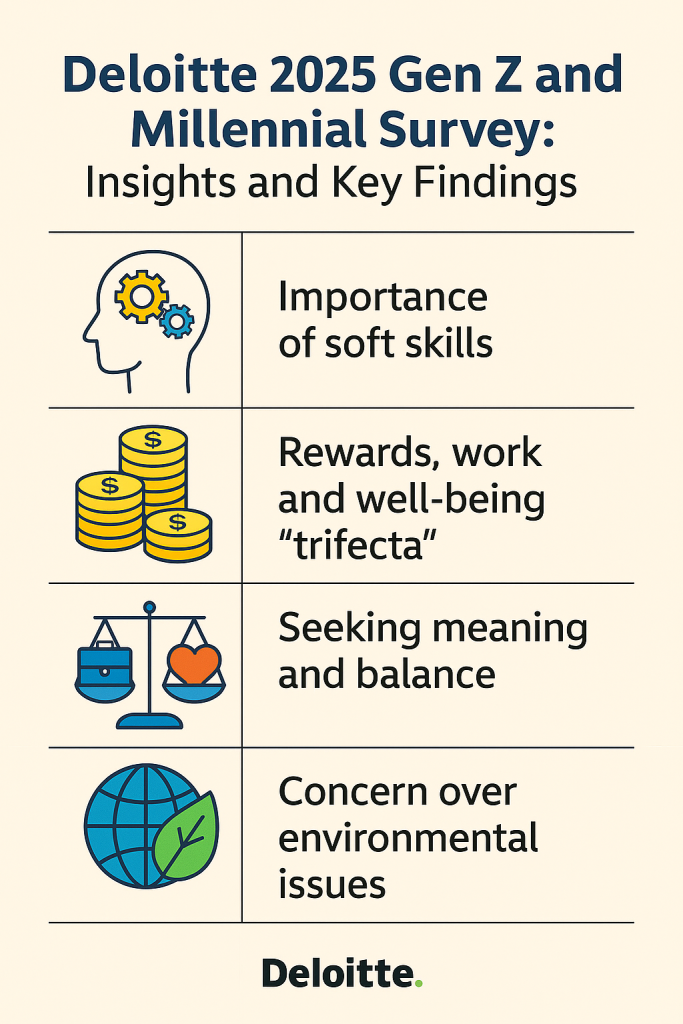
Deloitte frames these findings as a “trifecta”: money, meaning, and well-being. The three are tightly linked. When one fails, the other two weaken with it, and that is exactly what employers are seeing in engagement and turnover data.
2025 Gen Z and Millennial Survey: Key Statistics at a Glance
- 48% of Gen Zs and 46% of millennials do not feel financially secure, up from 30% and 32% in 2024
- 52% of both generations live paycheck to paycheck
- Only 6% of Gen Zs say reaching a senior leadership position is their primary career goal
- 50% of Gen Zs and 48% of millennials believe managers should teach and mentor them, but only 36% and 32% say it happens
- 89% of Gen Zs and 92% of millennials consider purpose important to job satisfaction and well-being
- 57% of Gen Zs and 56% of millennials already use GenAI in their day-to-day work
- 74% of Gen Zs and 77% of millennials believe GenAI will affect how they work within the next year
- 86% of Gen Zs and 85% of millennials say soft skills are required for career advancement
- 40% of Gen Zs and 34% of millennials feel stressed or anxious all or most of the time
- 44% of Gen Zs and 45% of millennials have left a job because it lacked purpose
- 31% of Gen Zs plan to switch employers within the next two years
- 70% of both generations consider a company’s environmental credentials important when evaluating an employer
These two generations matter for every workforce plan: they are projected by Forrester to make up 74% of the global workforce by 2030.
Learning, Development, and the Manager Gap
Ambition Without the Corporate Ladder
Only 6% of Gen Zs say their primary career goal is a senior leadership position. That is not a lack of ambition. It is a different definition of success. When asked why they chose their current employer, Gen Zs placed learning and development in their top three reasons, just behind good work/life balance and opportunities to progress.
They also invest in themselves. 70% of Gen Zs develop career skills at least once a week, compared with 59% of millennials, and about two-thirds of Gen Zs do it outside working hours. This is a growth-oriented generation that simply does not equate growth with reaching the C-suite.
What Younger Workers Expect From Managers
Gen Zs and millennials agree on what helps them grow. 89% of both generations say on-the-job learning helps their careers, and 86% of Gen Zs and 84% of millennials say the same about mentorship from experienced colleagues.
Managers are where that expectation breaks down. The gap between what younger workers believe managers should do and what they experience is wide:
- Provide guidance and support: 59% of Gen Zs expect it, 33% experience it
- Inspire and motivate the team: 51% expect it, 28% experience it
- Set boundaries and protect work/life balance: 44% expect it, 26% experience it
- Teach and mentor: 50% expect it, 36% experience it
The only area where reality exceeds expectations is closely overseeing day-to-day tasks. Managers know this. Deloitte’s Global Human Capital Trends research found that managers spend nearly 40% of their time solving immediate problems and handling administration, and only 13% developing their people. Over a third say they are not sufficiently prepared to manage people at all.
The cost goes beyond engagement. When managers are absorbed by supervision, the hidden talent inside their teams never surfaces, and capable people leave before anyone notices what they could do.
Higher Education Is Being Reassessed
Nearly one-third of Gen Zs (31%) and millennials (32%) decided not to pursue higher education. Among them, 39% cite financial constraints as a primary reason, and roughly a quarter were seeking career paths that do not require a degree, such as apprenticeships, vocational training, or trades.
Skepticism runs through both generations. 40% of Gen Zs and 38% of millennials name tuition cost as their main concern with higher education, while 28% and 27% worry it offers limited practical experience. A degree still pays off financially: 55% of Gen Zs with a university degree feel financially secure, compared with 44% of those with vocational qualifications and 40% of those who stopped after high school.
Yet satisfaction at work barely tracks education level. Gen Zs and millennials without a degree are just as satisfied with their growth opportunities, skill development, and work/life balance. For employers, this is a strong argument for evaluating people on verified capability rather than credentials.
GenAI at Work: Adoption, Anxiety, and the Soft Skills Pivot
Adoption Is Rising Faster Than Confidence
57% of Gen Zs and 56% of millennials already use GenAI in their day-to-day work, and about 30% use it all or most of the time, up from 26% of Gen Zs and 22% of millennials in 2024. The most common uses are data analysis, content creation, and design.
Users see real benefits. 78% of Gen Z users and 82% of millennial users say GenAI improves the quality of their work, and 77% and 79% say it improves their work/life balance. But concern is rising alongside adoption. 63% of Gen Zs and 65% of millennials worry GenAI will eliminate jobs, and 66% and 68% say they will look for roles they see as safe from GenAI disruption, up from 59% and 52% a year earlier.
That shift is an early warning. Younger workers are already making career decisions based on AI automation risk, often before their employers have assessed it themselves.
Why Soft Skills Matter More in the GenAI Era
Training is still catching up: 17% of Gen Zs and 19% of millennials have completed GenAI training, and 36% and 37% plan to within the next year. Yet both generations are clear about where long-term value sits. 86% of Gen Zs and 85% of millennials say soft skills such as communication, empathy, and leadership are required for career advancement, compared with 59% and 62% for GenAI skills.
This is a sophisticated read on the market. Technical tasks can be augmented by AI. Human judgment, influence, and collaboration cannot. Development programs that focus only on technical upskilling miss what this workforce is asking for.

Schedule a live demo with our team Or watch an on-demand product walkthrough
The Trifecta of Money, Meaning, and Well-Being
Financial Insecurity Is Rising
For the fourth year in a row, the cost of living is the top concern for both generations, cited by 39% of Gen Zs and 42% of millennials. Financial insecurity rose sharply: 48% of Gen Zs and 46% of millennials do not feel financially secure, more than half live paycheck to paycheck, and over a third struggle to pay living expenses each month.
The consequences reach far beyond the bank balance. 60% of financially secure Gen Zs say they felt happy over the past year, against just 28% of those who feel insecure. For millennials the gap is 68% versus 31%. More than eight in ten say their long-term financial future and day-to-day finances contribute to their anxiety.
Pay satisfaction also shapes how people experience their work. 62% of Gen Zs who are satisfied with their pay and benefits report good mental well-being, compared with 39% of those who are dissatisfied. And 63% of pay-satisfied Gen Zs feel their job makes a meaningful contribution to society, versus 43% of the dissatisfied. Money is not separate from meaning. It is the foundation underneath it.
Financial security, purpose, and well-being are retention data, not soft metrics. Book a demo to see how INOP helps you close the pay gaps driving this generation’s financial anxiety.
Purpose, Ethics, and Employer Choice
Purpose matters to 89% of Gen Zs and 92% of millennials, up from 86% and 89% in 2024. More than half of both generations say meaningful work is very important when evaluating an employer, and over four in ten say their job is central to their identity.
They act on it. 44% of Gen Zs and 45% of millennials have left a job they felt lacked purpose, and 41% of Gen Zs and 40% of millennials have rejected a potential employer based on personal ethics or beliefs. Purpose is also personal: some define it as social impact, others as earning enough and having the time to make a difference outside work. INOP’s guide on why purpose has become non-negotiable for Gen Z explores how employers can respond.
Mental Health and Workplace Stress
Only 52% of Gen Zs and 58% of millennials rate their mental well-being as good or very good, and 40% of Gen Zs and 34% of millennials feel stressed or anxious all or most of the time. Mental health is now Gen Z’s second biggest societal concern after the cost of living, and ranks fourth for millennials.
The job itself contributes a lot to stress for 35% of Gen Zs and 33% of millennials. Among them, the top drivers are long working hours and not being recognized or rewarded adequately (48% of Gen Zs, 47% of millennials), followed by toxic workplace cultures and unfair decision-making. Stigma persists: 74% of Gen Zs have needed time off due to stress, but only 43% took it, and some gave their employer a different reason.
There is progress. 62% of both generations now agree their employer takes mental health seriously, up roughly eight points on 2024. The remaining gap is not awareness. It is the root causes, workload, recognition, and fair decisions, that managers control every day.
Why Gen Zs and Millennials Change Jobs
Career fluidity defines both generations. 31% of Gen Zs plan to switch employers within two years, compared with 17% of millennials, and around a quarter are no longer working in the industry they originally intended. The top reasons for changing career path are job market conditions (32% of Gen Zs, 33% of millennials), better work/life balance (28%, 26%), and better compensation (26%, 29%).
This is not disloyalty. Deloitte’s data shows job moves are a strategy to find stability, balance, purpose, and new skills. Employers that provide those internally keep the people who would otherwise find them elsewhere.
Climate and Environmental Expectations
The environment remains a source of real anxiety: 65% of Gen Zs and 63% of millennials felt worried about it in the past month. It also shapes career decisions. 70% of both generations consider a company’s environmental credentials important when evaluating an employer, 23% of Gen Zs and 22% of millennials have researched a company’s environmental impact before accepting a job, and 15% and 13% have changed jobs over environmental concerns.
They also push from the inside: 48% of Gen Zs and 47% of millennials say they and their colleagues have pressured their employers to act on the environment. Half of Gen Zs are pessimistic the world will do enough, and 80% believe businesses could and should do more. Sustainability commitments are now part of the employer value proposition, and this generation checks whether they are operational or just communication.
How the 2025 Gen Z and Millennial Survey Compares With the 2026 Edition
Deloitte published its 15th edition on 13 May 2026, based on more than 22,500 respondents across 44 countries. The 2025 signals hardened rather than reversed. 55% of Gen Zs and 52% of millennials now say they are delaying major life decisions because of their finances. Only 25% of Gen Zs and 21% of millennials want fast-paced progression with rapid promotions, and 6% of both generations still name leadership as their primary goal. AI use climbed to 74% of both generations.
Read together, the two editions send employers the same message: pay, skills, and sustainable workloads now matter more than title velocity.
From Survey Data to Employer Action
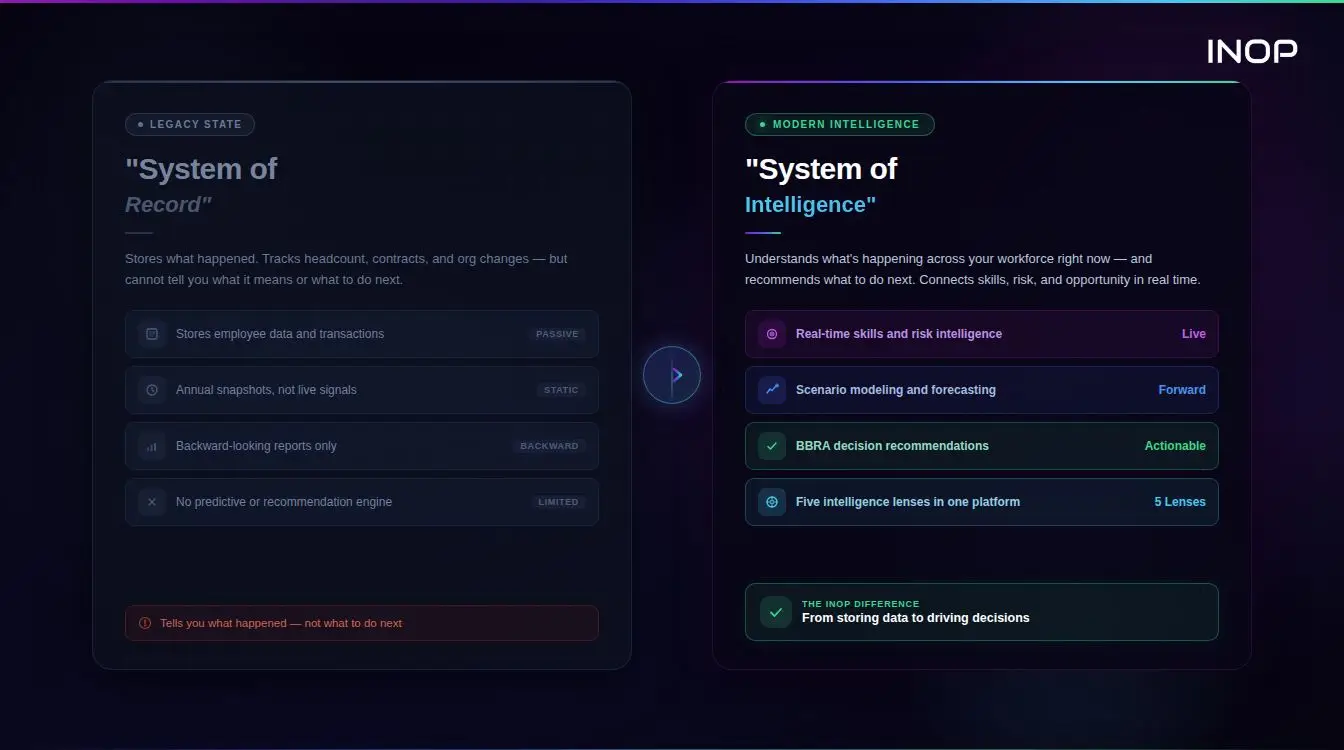
Survey data is only valuable if it changes decisions. INOP reads workforce decisions through five intelligence lenses: Strategy, Finance, People, Market, and AI and Automation. Applied to the 2025 findings, each lens points to a specific action.
Make Manager Development Measurable
Half of Gen Zs want mentorship from their managers, but only 36% get it. This is an incentive problem, not a manager quality problem. Managers spend time on what they are measured on, and most evaluation frameworks measure operational output, not development.
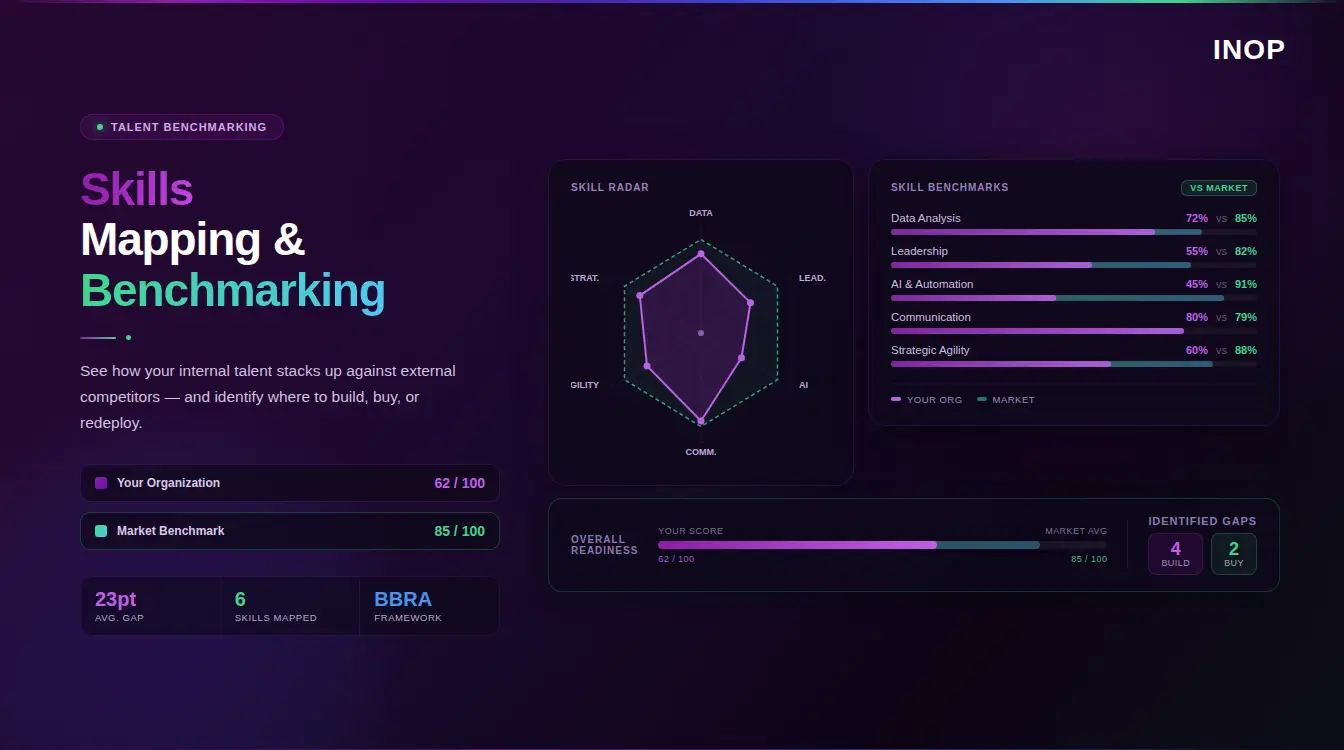
The fix is to add development outcomes to manager performance criteria: skill growth across direct reports, internal mobility from each team, and employee-rated coaching quality. INOP’s skills intelligence tracks skill development at individual and team level, so each manager’s developmental contribution becomes visible rather than assumed.
Replace Annual Pay Reviews With Continuous Benchmarking
With 48% of Gen Zs financially insecure, pay drift is a retention risk employers can actually control. Financial insecurity also erodes purpose and engagement at the same time, so the real question is what employers can do beyond offering competitive pay.
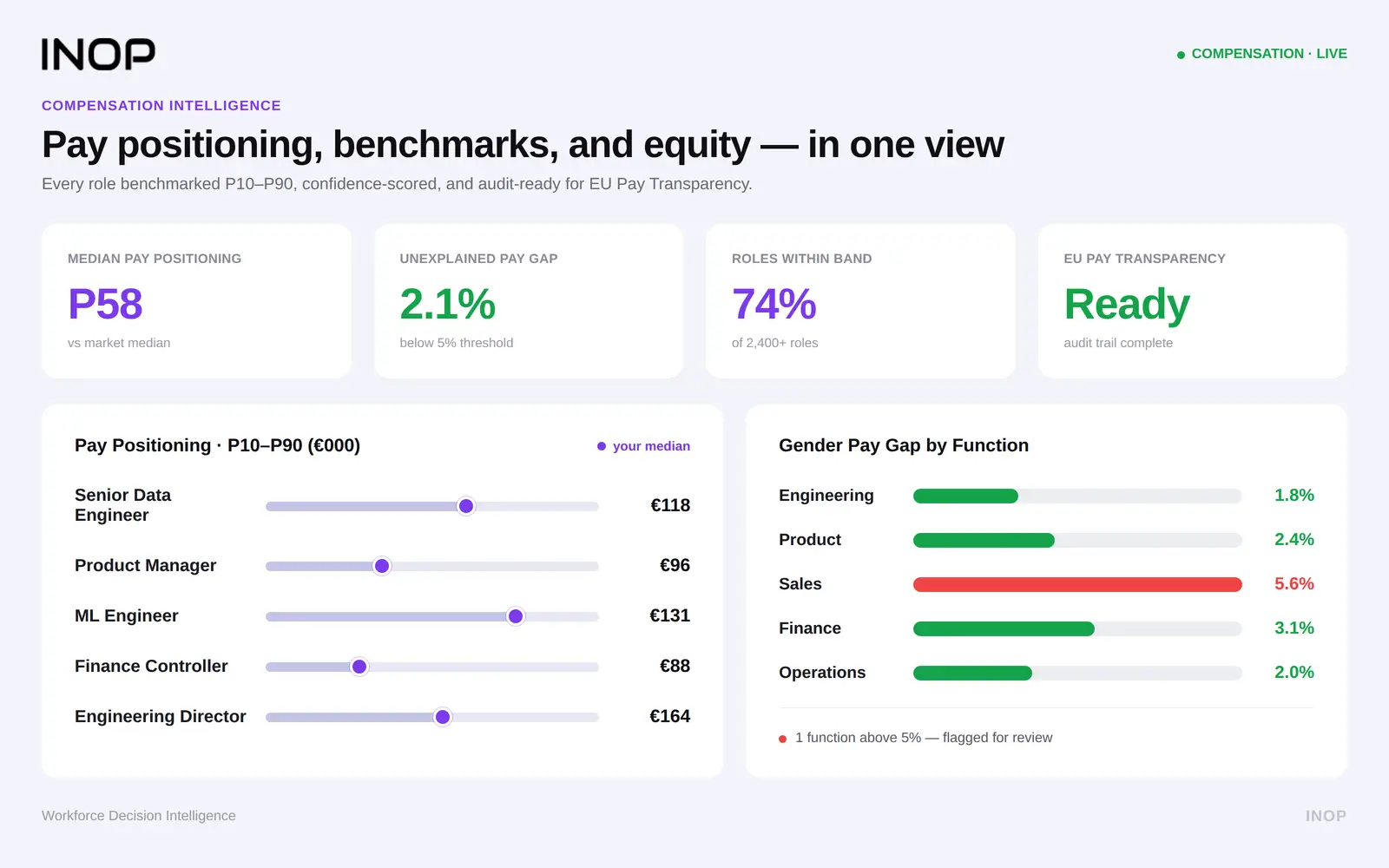
Annual salary surveys are often more than a year old by the time they reach decision-makers. An organization that discovers in November that its data engineers sit well below market has carried that risk all year without knowing it. INOP’s compensation analytics platform connects internal pay positions to live market data, so drift is visible before it becomes attrition. Pairing it with regular pay parity checks addresses the fairness concerns that drive stress around recognition and reward.
Connect Role Definitions to Business Impact
Purpose matters to nearly nine in ten younger workers, but most cannot draw a line from their daily work to outcomes they care about. Role definitions describe tasks, not contributions. “Manage the quarterly reporting cycle” says nothing about impact. “Give Finance and the board the workforce cost visibility needed for accurate capital allocation” makes the contribution explicit.
This is a role design decision, not a communications campaign. INOP’s strategic workforce planning platform maps capabilities against strategic priorities, so employees can see how their work connects to execution. Organizations that go further reward verified capability through skills-based pay, which links development directly to compensation.
Plan for AI Before Your Workforce Does It for You
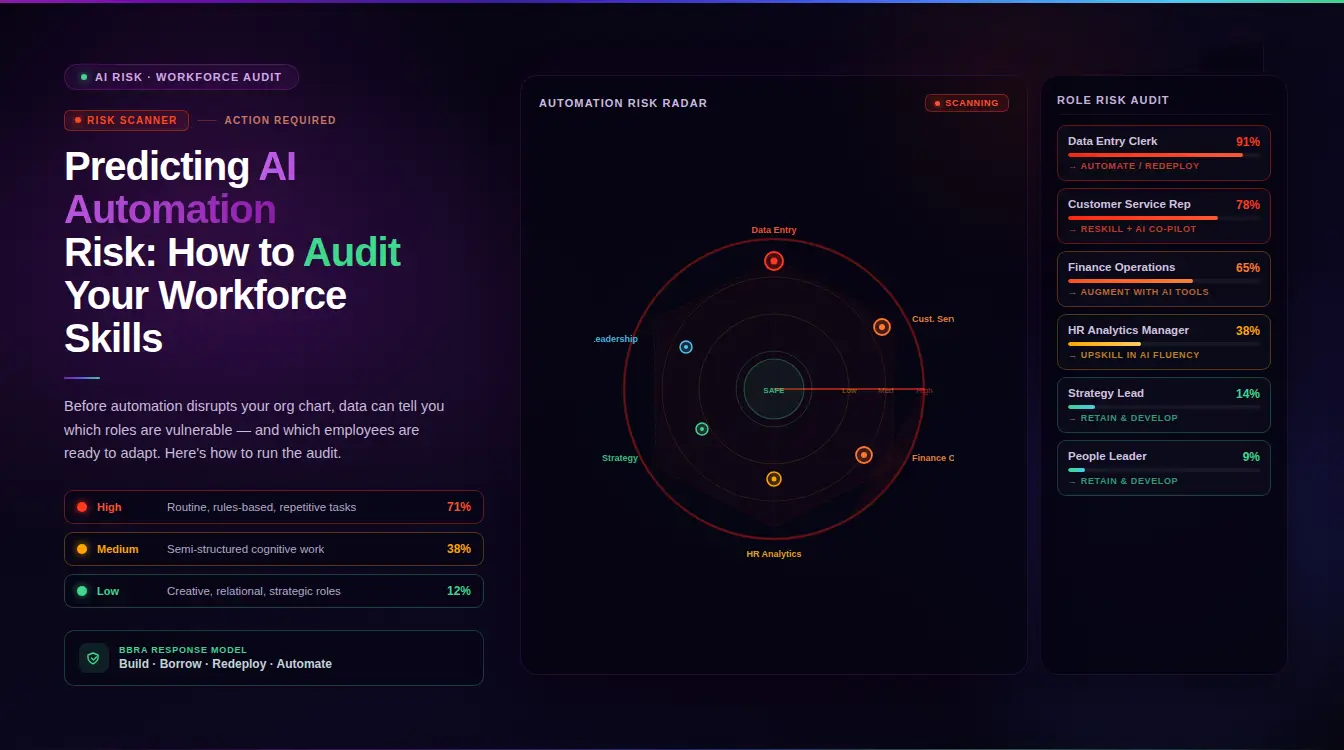
Two-thirds of younger workers are already steering toward roles they see as safe from GenAI. If employers do not plan for AI’s impact on roles, their best people will make that plan on their own, often by leaving.
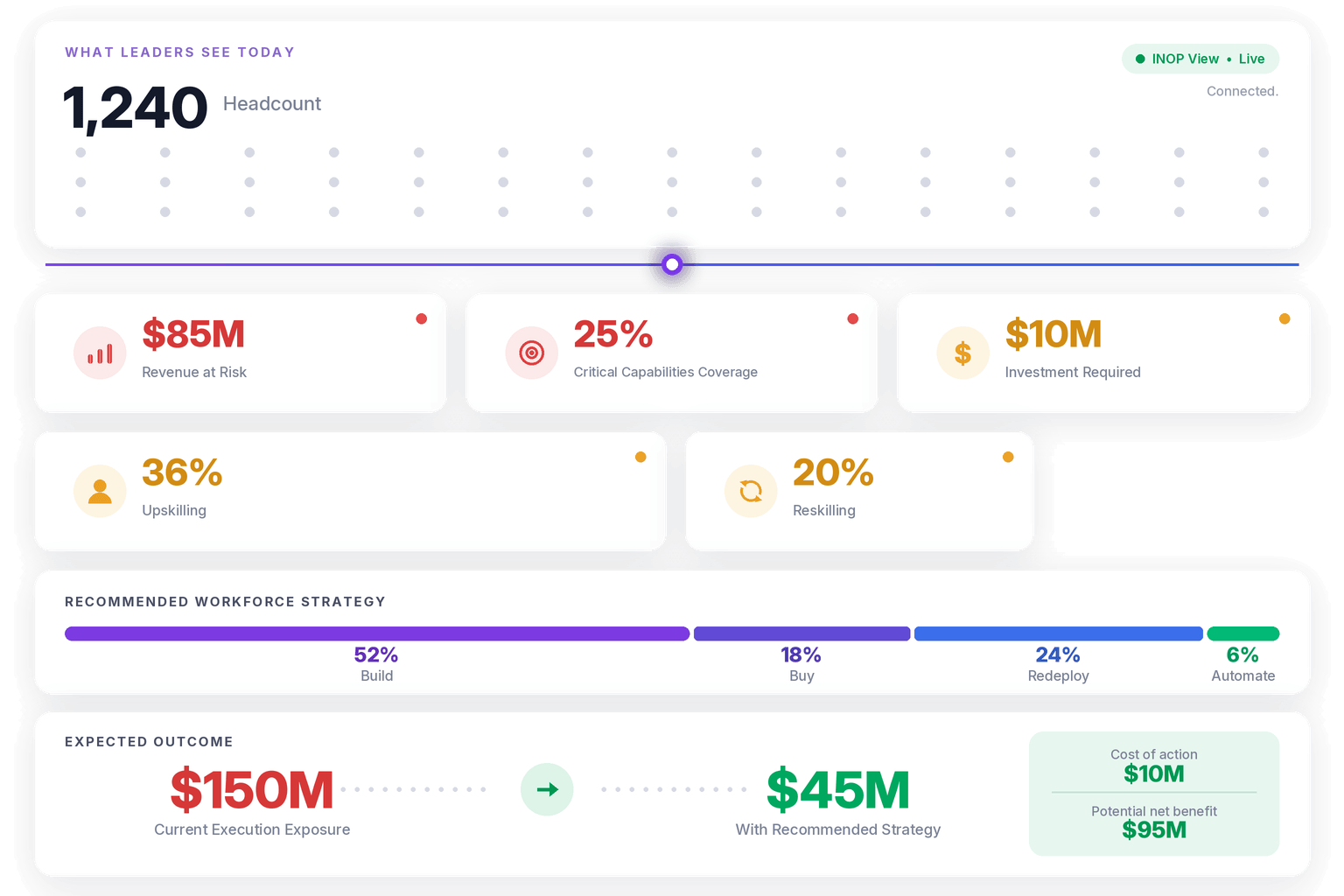
INOP’s proprietary BBRA decision architecture (Build, Buy, Redeploy, Automate) models all four pathways for every capability need, with financial trade-offs across 30-day, 180-day, one-year, and three-year horizons. That turns AI anxiety into a visible plan: which roles change, which skills to build, and where people can be redeployed. It also supports the kind of AI-informed HR decision-making that builds trust instead of eroding it.
Who Should Act on These Insights? Use Cases by Role
HR and People Operations Leaders
Why it matters: HR sits on the front line of stress, engagement, and retention, and the 2025 data shows all three are tied to pay, purpose, and manager quality.
Actions to take:
- Target root causes of stress: workload, recognition, and fair decisions
- Prioritize flexible working hours, the top work/life request in the survey
- Train managers to discuss mental health and point people to support
- Update performance criteria to include development outcomes
Learning and Development Teams
Why it matters: Gen Zs and millennials want growth, not titles, and most already develop skills weekly on their own time.
Actions to take:
- Build structured mentorship programs with time protected for them
- Combine GenAI training with soft skills development
- Equip managers with practical coaching tools
- Create in-house learning programs with dedicated time, the most requested support
Talent and Internal Mobility Teams
Why it matters: 31% of Gen Zs plan to leave within two years, often to find growth they could have had internally.
Actions to take:
- Open internal roles to skills-based moves, not just degree-based ones
- Make internal opportunities visible to every employee
- Offer job rotation and shadowing to build experience
- Communicate environmental and purpose commitments with evidence
People Analytics and Compensation Analysts
Why it matters: Financial insecurity drives stress, lowers happiness, and weakens the sense of meaning at work.
Actions to take:
- Audit pay equity and benchmark retention-critical roles continuously
- Offer flexible benefits that address dependent care, health, or commuting costs
- Track retention risk among high-potential employees
- Connect pay satisfaction data to engagement and turnover outcomes
Managers and Team Leaders
Why it matters: Younger workers want mentors, not supervisors, and managers control most of the drivers of workplace stress.
Actions to take:
- Schedule regular development conversations, separate from task check-ins
- Recognize contributions consistently and visibly
- Set realistic deadlines and model healthy boundaries
- Align team goals with individual strengths and purpose
Executive and Leadership Teams
Why it matters: Purpose starts at the top, and this generation tests whether stated values are real.
Actions to take:
- Define and share organizational values and sustainability goals
- Treat manager capacity for development as a strategic investment
- Communicate clearly how AI will change roles and careers
- Include Gen Z and millennial voices in strategy and culture decisions
PE Operating Partners
Why it matters: Gen Zs and millennials will make up most of the workforce in nearly every portfolio company, and 31% of Gen Zs plan to change employers within two years. That turnover risk sits inside the value creation plan whether anyone measures it or not.
Actions to take:
- Benchmark pay for retention-critical roles continuously, not at the annual review
- Map skills across portfolio companies before restructuring
- Treat manager development quality as a retention lever
- Use INOP for PE firms to see workforce risk across the portfolio in one view
86% of Gen Zs say mentorship drives their growth. Only 36% get it from their manager. Book a demo to see how INOP helps you build the development and internal mobility pathways this workforce is asking for.

Conclusion
The 2025 Gen Z and Millennial Survey shows a workforce that is ambitious, skill-focused, and financially stretched. They want managers who develop them, pay that keeps up with the market, work that means something, and an honest plan for how AI will change their roles. The 2026 edition confirms these priorities are hardening, not fading.
Employers that respond with better data, not just better messaging, will keep the people this survey describes. That means measurable manager development, continuous pay benchmarking, role definitions tied to impact, and workforce plans that account for AI before employees make those plans themselves.
Frequently Asked Questions About the 2025 Gen Z and Millennial Survey
What is the Deloitte 2025 Gen Z and Millennial Survey?
It is the 14th edition of Deloitte’s annual study of younger workers, based on 23,482 respondents (14,751 Gen Zs and 8,731 millennials) across 44 countries, with fieldwork from 25 October to 24 December 2024.
What are the key findings of the 2025 Gen Z and Millennial Survey?
Financial insecurity rose sharply to 48% of Gen Zs and 46% of millennials. Only 6% of Gen Zs aim for senior leadership, but learning and development ranks in their top three reasons for choosing an employer. Purpose matters to 89% of Gen Zs and 92% of millennials.
How do Gen Zs and millennials view GenAI at work?
57% of Gen Zs and 56% of millennials already use it daily, and most say it improves their work quality. But 66% of Gen Zs and 68% of millennials plan to seek jobs they see as safe from GenAI disruption.
Why is there a gap between managers and younger employees?
Half of Gen Zs want their manager to teach and mentor them, but only 36% say it happens. Managers spend most of their time on immediate problems and administration rather than developing their people.
What do the survey findings mean for PE operating partners?
With 31% of Gen Zs planning to change employers within two years, younger-workforce turnover is a value creation risk. Operating partners need continuous pay benchmarking and a skills baseline across portfolio companies to protect retention-critical roles.
Make confident workforce decisions that support strategy and value creation.