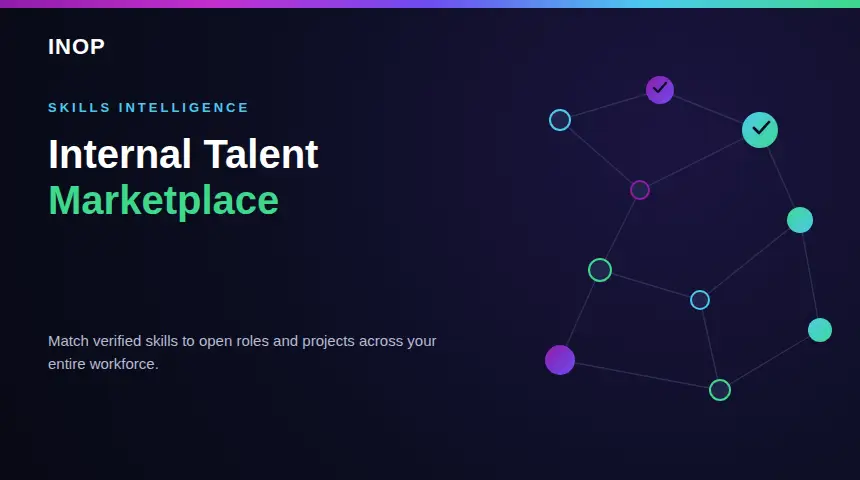
An internal talent marketplace is a platform that matches employees to internal roles, projects, gigs and stretch assignments based on their verified skills, so people can grow inside the organization and leaders can find capability they already have. Most organizations have more talent than they can see. Skills sit in teams where nobody looks, managers keep strong people to themselves, and roles get filled from outside while someone with the right skills works two floors away. This guide explains what an internal talent marketplace is, how it differs from an internal job board and succession planning, how it works, how to build one that people use, whether to build or buy, how to choose talent marketplace software and how to measure success.
What Is an Internal Talent Marketplace?
An internal talent marketplace is a two-sided exchange. Employees create or confirm skills profiles and see opportunities that fit them. Managers post work with the skills it needs and search for people across the organization. A matching engine connects the two, and the data improves with every match. The key shift is from visibility to searchability: instead of hoping the right person sees a posting, the marketplace finds the right people and shows them the opportunity.
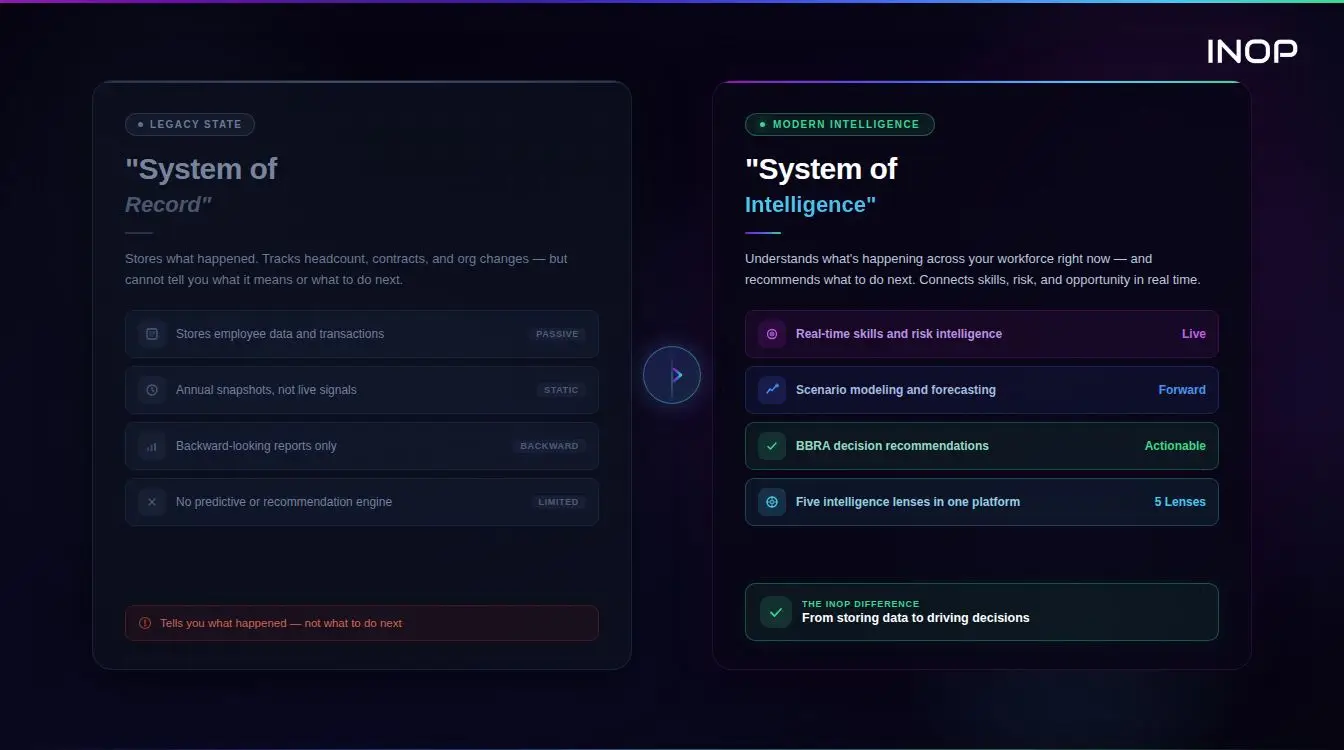
Internal Talent Marketplace vs Internal Job Board
| Dimension | Internal job board | Internal talent marketplace |
|---|---|---|
| How matching happens | Employees browse listings | Skills-based recommendations in both directions |
| Opportunities | Permanent vacancies | Roles, projects, gigs, mentoring and stretch assignments |
| Data used | Job titles and self-applications | Verified and adjacent skills |
| Manager role | Waits for applications | Searches the whole organization by skill |
| Insight for leaders | Number of postings and applications | Skills supply, movement, retention and equity |
Should you replace your internal job board with a talent marketplace? If most of your internal moves are permanent vacancies and your skills data is weak, improve the job board and the skills data first. If you want project-based work, faster redeployment and visibility of hidden talent, a marketplace adds value a job board cannot.
Internal Talent Marketplace vs Traditional Succession Planning
Succession planning prepares named people for a small number of senior roles. It is vertical, slow and limited in scope. An internal talent marketplace is horizontal: it covers moves at every level, short projects and lateral development. The two work best together. Succession planning protects critical leadership roles, while the marketplace builds the wider pipeline and surfaces people succession plans would miss.
Why Organizations Build an Internal Talent Marketplace
The business case rests on retention, cost and speed:
- Retention: LinkedIn found that employees at companies with high internal hiring stay 41 percent longer than those at companies with low internal hiring.
- Cost: research by Wharton’s Matthew Bidwell, summarized by Knowledge at Wharton, found that external hires in the investment banking division studied were paid about 18 to 20 percent more than internal staff promoted into similar jobs.
- Avoided turnover: Gallup estimates that replacing an employee costs one-half to two times their annual salary.
- Speed: redeploying someone with adjacent skills is usually faster than sourcing externally, and it keeps knowledge of the business inside.
For the retention evidence in detail, read about AI for internal mobility.
How an Internal Talent Marketplace Works
- Skills profiles: each employee’s skills are inferred from role history, projects, learning and certifications, then confirmed by the employee and validated where it matters.
- Opportunities with skill requirements: managers post roles, projects and gigs with the skills, time commitment and duration needed.
- Matching: the platform ranks people for each opportunity and recommends opportunities to each person, including adjacent-skill matches.
- Movement and feedback: moves, project outcomes and new skills update profiles, so matches improve over time.
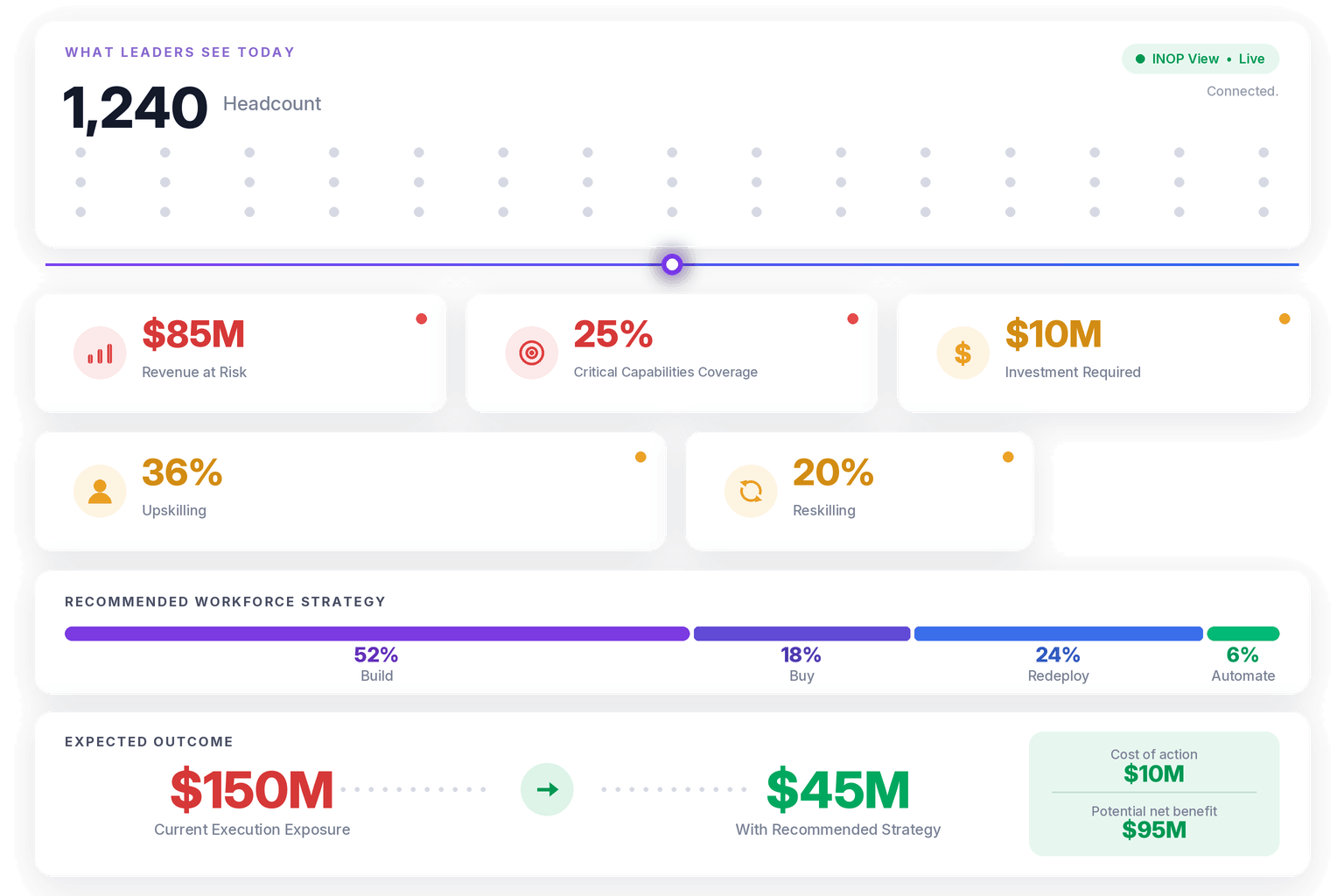
- Insight: leaders see where skills sit, where gaps are and how talent is moving.
The Skills Data Layer Behind an Internal Talent Marketplace
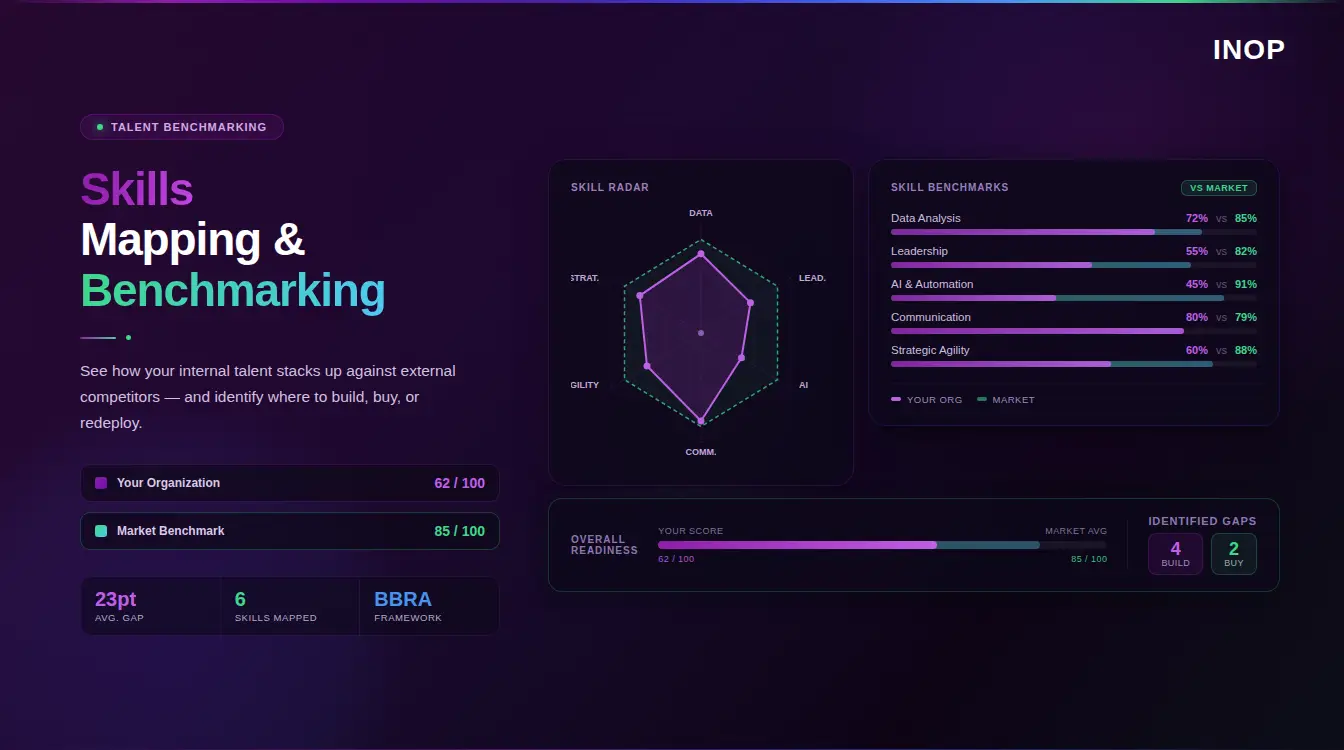
Data quality decides whether a marketplace succeeds. Stale or purely self-reported skills produce poor early matches, and poor matches destroy trust quickly. The skills layer needs to be continuously updated, combine several sources and compare internal skills with external market demand. INOP’s skills intelligence provides that layer, classifying skills as emerging, in demand, stable or declining. See also skills mapping.
Types of Opportunities: Roles, Projects, Gigs and Stretch Assignments
- Permanent roles: lateral moves and promotions.
- Projects: part-time work on a cross-functional initiative alongside a current role.
- Gigs: short, defined tasks that use a specific skill.
- Stretch assignments: work slightly beyond current capability, designed for development.
- Mentoring: pairing people to transfer skills and knowledge.
An internal gig marketplace often starts with projects and gigs, because they are easier for managers to release people for and they build trust in the matching.
How to Build an Internal Talent Marketplace That Works
Start From Workforce Planning, Not Technology
Begin with the capabilities the strategy needs. A marketplace connected to workforce planning fills the gaps that matter. One built in isolation becomes a nicer job board. INOP’s strategic workforce planning platform identifies those gaps and shows where internal supply can close them.
Win Manager Buy-In and Reduce Talent Hoarding
Managers are the biggest obstacle and the biggest lever. Writing for SHRM, John Winsor and Jin H. Paik describe talent hoarding as one of the biggest barriers to internal mobility in their research, and they note a company whose internal platform failed because it lacked buy-in from the relevant managers. Make releasing talent part of how managers are assessed, show them how they can also find talent through the marketplace, and give them a say in timing.
Make Opportunities Transparent and Equitable
Traditional internal moves favor people who are already visible to decision makers. A marketplace shows opportunities to everyone whose skills fit. Track application, match and move rates across groups to confirm that access is fair, and audit matching models regularly.
Launch With High-Value Opportunities
If early postings are trivial, people stop looking. Start with meaningful projects tied to strategic priorities, and make sure senior leaders post and fill opportunities through the marketplace too.
Connect Pay and Progression
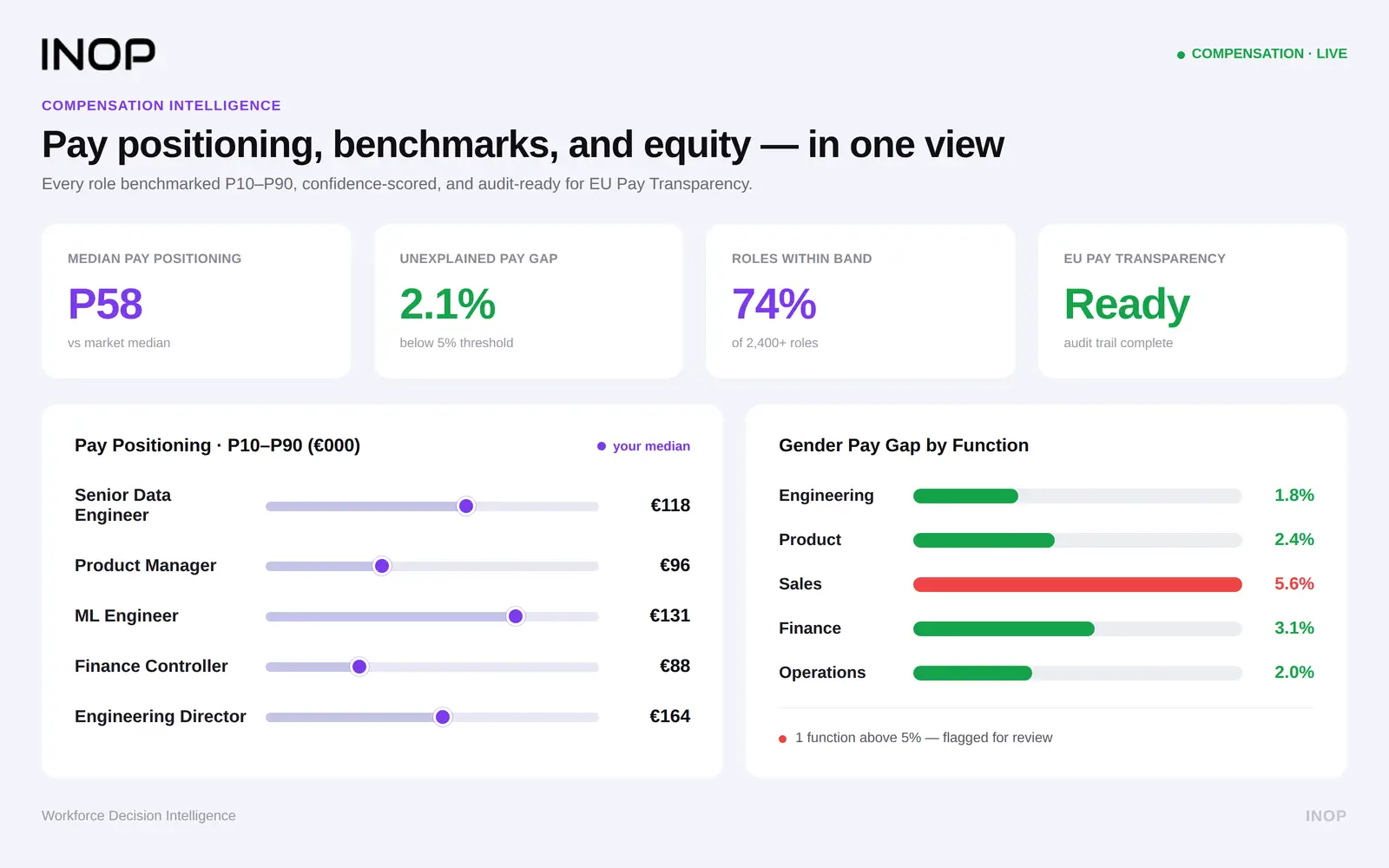
Moves that cost people money or career progress will not happen. Price internal moves against the market with the compensation analytics platform and recognize project work in performance reviews.
Build vs Buy: Should You Build Your Own Internal Marketplace?
| Factor | Build in-house | Buy a platform |
|---|---|---|
| Skills inference and matching | Hard to build and maintain well | Usually included and improved over time |
| External market data | Needs separate sourcing | Often included |
| Fit with your processes | Full control | Configurable within limits |
| Time to value | Long | Shorter if data is ready |
| Ongoing cost | Engineering and maintenance | Subscription and configuration |
Most organizations buy the matching and skills layer and build the processes around it. Building makes sense only when internal mobility is a core differentiator and you have the data and engineering capacity to maintain it.
Selection Criteria for Talent Marketplace Software
| Criterion | What to ask |
|---|---|
| Skills inference | Does it infer and update skills automatically, or rely on self-reported profiles? |
| Matching on skills | Does it match on verified and adjacent skills rather than job titles? |
| Opportunity types | Does it support roles, projects, gigs, mentoring and stretch assignments? |
| External data | Does it show which skills are gaining demand in the market? |
| Manager experience | Can managers search by skill and keep control over timing? |
| Analytics and ROI | Can it report moves, retention, equity and cost avoided? |
| Integration | Does it connect to HRIS, learning and workforce planning? |
| Governance | What security, access and bias-audit controls exist? |
| Global support | Does it handle multiple countries, languages and business units? |
Standalone Talent Marketplace or Combined Learning and Mobility Platform?
A standalone marketplace focuses on matching and movement. A combined platform links learning to opportunities, which helps employees close the gap to the roles they want. If learning and mobility sit with different teams and systems today, a combined approach is often easier to adopt. Either way, the skills layer must be shared. For the wider comparison, see top platforms for skills intelligence.
Implementation Cost and Time
Cost and time depend on workforce size, the number of systems to integrate, the quality of existing skills data and how many opportunity types you launch with. The fastest implementations start with one population and one opportunity type, use an existing skills baseline and expand after the first results are trusted.
See the talent you already have. INOP shows where skills sit, where gaps are opening and when redeploying beats external sourcing. Book a demo
Measuring Internal Talent Marketplace Success
| Metric | What it shows |
|---|---|
| Active profiles and participation | Whether employees use the marketplace |
| Opportunities posted and filled | Whether managers use it |
| Internal fill rate | Share of roles and projects filled internally |
| Time to fill | Whether redeployment is faster than external sourcing |
| Retention of participants | Whether people who move stay longer |
| Equity of access and moves | Whether opportunities reach all groups |
| Cost avoided | External premiums and replacement costs avoided |
| Skills gained | Whether projects build the skills the strategy needs |
Common Pitfalls When Launching an Internal Talent Marketplace
- Stale skills data. Poor early matches destroy trust.
- Managers blocking moves. Without incentives to release talent, participation stalls.
- Only trivial opportunities. People stop looking if nothing meaningful is posted.
- No link to workforce planning. The marketplace fills easy gaps, not strategic ones.
- Ignoring pay. Moves that cost people money will not happen.
- Not measuring equity. Access can narrow without anyone noticing.
To find skills that job titles hide, read how to spot hidden talent inside your organization.
Five Intelligence Lenses for Evaluating a Marketplace Rollout
INOP answers whether leaders have the capabilities to execute their strategy today and stay AI-ready. It never assesses AI in isolation and tests every decision against five intelligence lenses.
| Lens | Question for the marketplace |
|---|---|
| Strategy | Which strategic capabilities should the marketplace help build first? |
| Finance | What is the cost of redeploying compared with sourcing externally? |
| People | Are managers and employees ready, and is access fair? |
| Market | Which skills are scarce externally and most valuable to grow inside? |
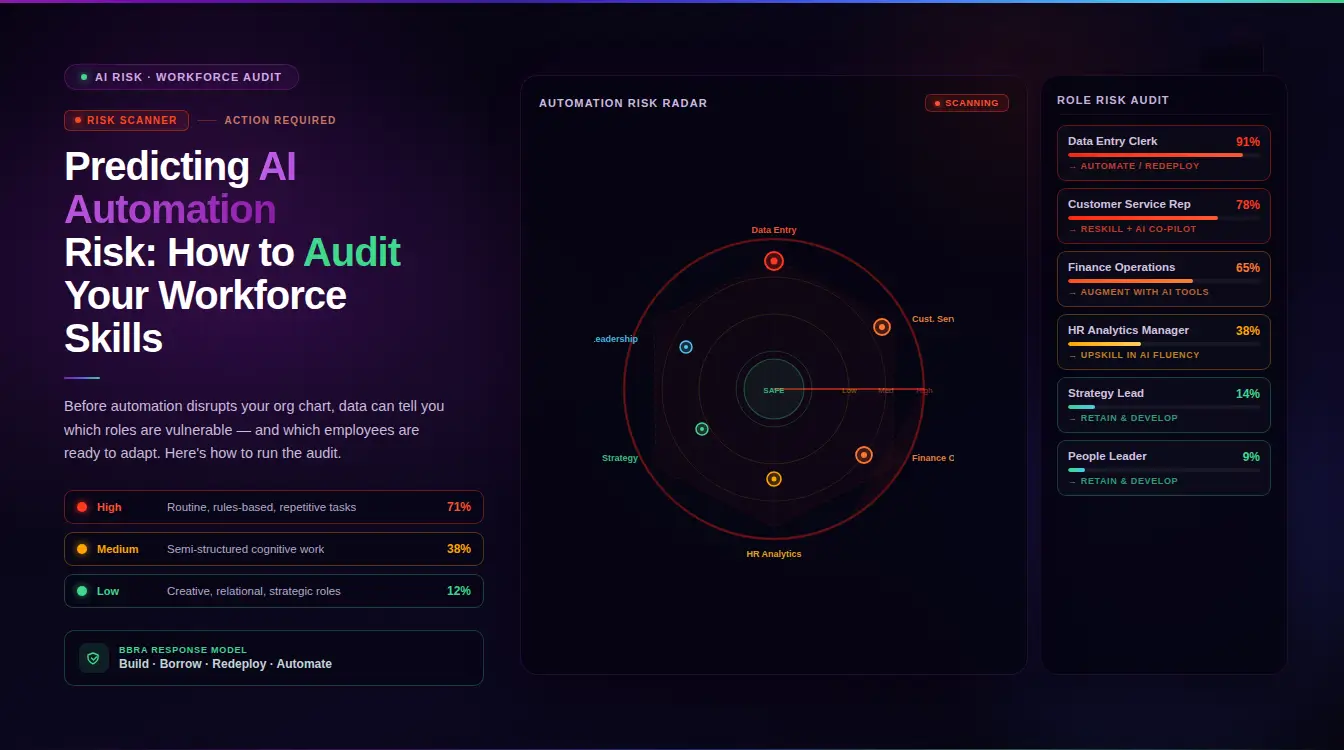
| AI and Automation | Which roles and tasks will change, and where should people move to? |
Deciding How to Close Gaps Using the BBRA Framework
An internal talent marketplace makes the Redeploy option practical. INOP’s BBRA decision architecture compares four ways to close each capability gap: Build, Buy, Redeploy, Automate, with financial trade-offs across 30-day, 180-day, one-year and three-year horizons. Redeploy is often the fastest and cheapest option when adjacent skills exist, Build develops skills for longer-term needs, Buy covers skills that are far from current capability and Automate removes routine work. For skill development, see reskilling vs upskilling.
Internal Talent Marketplace for PE Operating Partners
For private equity operating partners, portfolio-wide skills visibility makes it possible to redeploy capability between companies instead of sourcing the same skills externally several times, especially after an acquisition. Consistent skills data and comparable pay structures across the portfolio are the prerequisites.
Conclusion
An internal talent marketplace turns hidden capability into visible, movable talent. Build it on a live skills layer, connect it to workforce planning, win managers over, start with meaningful opportunities, link moves to pay and progression and measure retention, equity and cost as well as participation. Done well, it becomes the default first option for every capability gap.
Redeploy before you source. INOP links verified skills, market data and cost to priced workforce decisions. Book a demo
Internal Talent Marketplace FAQs
What is an internal talent marketplace?
A platform that matches employees to internal roles, projects, gigs and stretch assignments based on verified skills, so people can grow inside the organization and leaders can find capability they already have.
How is an internal talent marketplace different from an internal job board?
A job board lists permanent vacancies for employees to browse. A marketplace recommends roles, projects and gigs in both directions based on skills, and gives leaders insight into skills supply and movement.
Does an internal talent marketplace replace succession planning?
No. Succession planning still protects a small number of critical leadership roles. The marketplace handles lateral moves, projects and development across the wider workforce.
What data does an internal talent marketplace need?
A continuously updated skills layer that combines role history, projects, learning, certifications and validation, compared with external market demand.
Should we build or buy an internal talent marketplace?
Most organizations buy the skills and matching layer and build the processes around it. Building makes sense only when internal mobility is a core differentiator and you can maintain the data and models.
What are the most important selection criteria for talent marketplace software?
Skills inference, matching on skills rather than titles, support for several opportunity types, external market data, manager experience, analytics, integration, governance and global support.
How do you get managers to support an internal talent marketplace?
Make releasing talent part of how managers are assessed, let them find talent through the marketplace too and give them a say in timing.
How should private equity operating partners think about internal talent marketplaces?
Use portfolio-wide skills visibility to redeploy capability between companies instead of sourcing the same skills externally, especially after acquisitions.