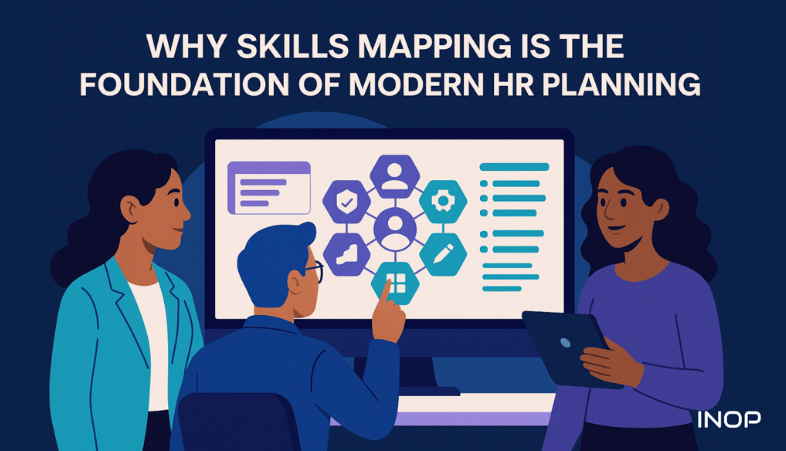
Is your company hiring talent based on yesterday’s needs? If so, you’re not alone. In today’s dynamic workplace, traditional HR practices—like relying solely on job descriptions or static org charts—are no longer enough. Enter skills mapping: the powerful, often underused framework that reveals the true capabilities of your workforce.
Skills mapping is more than just a trendy buzzword. It’s the foundation of modern HR planning, enabling organizations to make smarter hiring decisions, design personalized career paths, and stay agile in a fast-changing economy. This article will explore how skills mapping works, why it matters, and how you can implement it to future-proof your talent strategy. Whether you’re an HR leader or a business decision-maker, mastering this approach could be the turning point for your workforce planning efforts.
What Is Skills Mapping?
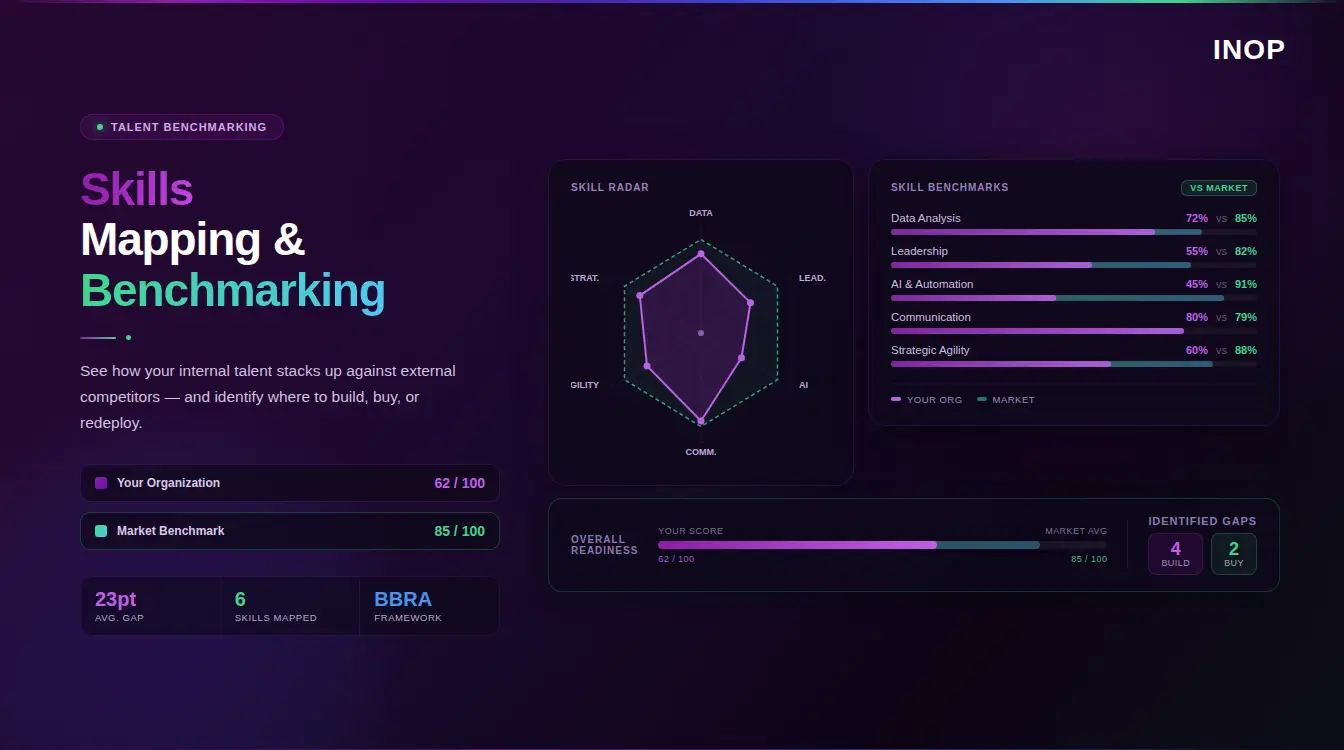
Skills mapping is the structured process of identifying, visualizing, and analyzing the current skills and competencies within your workforce. It involves creating a comprehensive “map” that matches employees’ real-world skills to current and future business needs.
This differs from traditional job descriptions, which tend to focus on expected tasks rather than actual abilities. In fact, comparing skills mapping vs. job descriptions is like comparing Google Maps to a paper atlas: one gives real-time, actionable insights, while the other shows a static ideal.
Skills maps can include:
- Technical and soft skills
- Proficiency levels
- Skill gaps and surpluses
- Potential for upskilling or reskilling
Why Skills Mapping Is a Strategic Imperative
Aligning Talent with Business Objectives
When done right, skills mapping allows HR to align workforce capabilities with the company’s short- and long-term strategic goals. Want to expand into AI-driven services? Your skills map will show whether your team already has machine learning expertise—or if you’ll need to develop it.
Enabling Agile Workforce Planning
Companies can no longer afford to plan HR initiatives in yearly cycles. Markets shift too fast. Skills mapping gives you the flexibility to pivot quickly—whether that means shifting employees to new projects or hiring externally when necessary. It’s also an essential part of AI-powered strategic workforce planning, where data and machine learning are used to match workforce supply with demand in real time.
Powering Internal Mobility
Instead of always looking outward to fill roles, a well-built skills map reveals who already has the skills—or the potential—to grow into a role internally. That means faster onboarding, better culture fit, and lower hiring costs. It also supports stronger retention, as employees feel seen, valued, and developed.
Key Components of an Effective Skills Mapping Strategy
Skills Inventory
Begin by collecting detailed skill data across your organization. This includes technical abilities (e.g., Python, CAD software), soft skills (e.g., leadership, communication), and even niche expertise (e.g., compliance law, UX research). Use:
- Self-assessments
- Peer reviews
- Manager evaluations
- HR systems and performance data
Skills Framework or Taxonomy
Build or adopt a structured framework that categorizes all the skills relevant to your industry or business model. This could be as simple as grouping skills by function (e.g., marketing, finance) or as complex as layering them by proficiency level and role criticality.
Visualization Tools
Use dashboards, heat maps, or AI-driven platforms to make your skills data actionable. The goal isn’t just to collect information—it’s to see the patterns that drive smarter decisions. Many tools now integrate with your existing HRIS or performance management systems.
How Skills Mapping Drives Modern HR Planning
Data-Informed Recruitment
When you know the exact capabilities of your current workforce, you can precisely identify skill gaps and recruit accordingly. No more hiring for redundant roles or missing out on internal talent.
Targeted Learning & Development
Rather than offering generic training sessions, skills mapping helps you create personalized development plans based on actual needs. If 25% of your customer service team lacks conflict-resolution skills, you now have a specific, measurable training goal.
Succession Planning
Skills mapping allows you to identify future leaders early by comparing their current skill sets with leadership benchmarks. This kind of forward-looking insight is key to succession planning, especially in fast-scaling companies.
Enhanced Diversity & Inclusion
By evaluating skills without overemphasizing traditional credentials or titles, you open the door to a more diverse range of candidates—both internally and externally. You focus on what people can do, not just what they’ve done.
Common Challenges and How to Overcome Them
Incomplete or Inaccurate Data
Many companies struggle with out-of-date or self-reported skill data. The solution? Pair employee input with performance metrics and manager validation. Integrating AI or skill analytics tools can also reduce human bias.
Resistance from Employees
Some employees may fear being “evaluated” or categorized. Position skills mapping as an empowerment tool, not a judgment system. Show how it helps them get recognized, promoted, or upskilled more efficiently.
Complexity in Large Organizations
In enterprises with thousands of employees, mapping skills at scale can be overwhelming. Start small: pilot with a single department or business unit, refine the process, and then scale up with lessons learned.
Real-World Example: Skills Mapping at Work
A global financial services company recently introduced a skills mapping initiative after realizing that 40% of their workforce’s skills were undocumented. Using a blend of self-assessments, AI analysis, and manager input, they built a dynamic skills database across 10 departments.
The results:
- Internal mobility increased by 33% in one year
- External hiring for mid-level roles dropped by 22%
- L&D budget allocation became 48% more efficient, as training was directly tied to measurable gaps
This success wasn’t just about tech—it was about culture. Employees began to see their careers in a new light, and HR evolved into a true strategic partner.
Connecting Skills Mapping with Broader Talent Strategy
Skills mapping doesn’t exist in isolation. It works best when embedded into a comprehensive talent lifecycle. For instance:
- During talent screening, skills mapping helps recruiters evaluate candidates beyond titles or past roles.
- To learn how to spot internal talent, HR can rely on skills mapping dashboards that highlight hidden high-potential individuals.
- As part of AI-powered strategic workforce planning, skills data feeds algorithms that forecast demand and suggest reskilling pathways.
This ecosystem approach transforms HR from reactive to proactive—and from cost center to value creator.
Conclusion: Skills Mapping Is No Longer Optional
In a world defined by digital acceleration, talent shortages, and evolving job roles, skills mapping is no longer a “nice-to-have.” It’s the core of effective, future-ready HR planning.
By visualizing what your people can actually do—and how they can grow—your organization gains the agility, inclusivity, and intelligence to thrive.
Ready to begin? Start by auditing your current skills landscape and exploring tools that align with your HR goals. Don’t forget to include stakeholders from across departments. The sooner you start, the sooner you’ll build a workforce that’s not only prepared—but unstoppable.
FAQ: Skills Mapping in Modern HR
What’s the difference between skills mapping and job descriptions?
Job descriptions outline expected tasks for a role. Skills mapping captures actual capabilities of individuals, regardless of title or department. It’s more dynamic and useful for real-time decision-making.
How often should a company update its skills map?
Ideally, skills data should be updated continuously. At minimum, review and revise quarterly to reflect changes in workforce, projects, or business goals.
Is skills mapping only useful for large companies?
Not at all. Small and medium-sized businesses can benefit even more by using skills mapping to optimize lean teams and reduce hiring costs.
How do AI tools support skills mapping?
AI can analyze large datasets, identify patterns, detect skill gaps, and even predict future skill needs. This makes mapping faster, more accurate, and more scalable.
What’s the first step to implementing skills mapping?
Start by creating a basic inventory of current skills using surveys, interviews, and HR data. Then build a framework for organizing and analyzing that information.