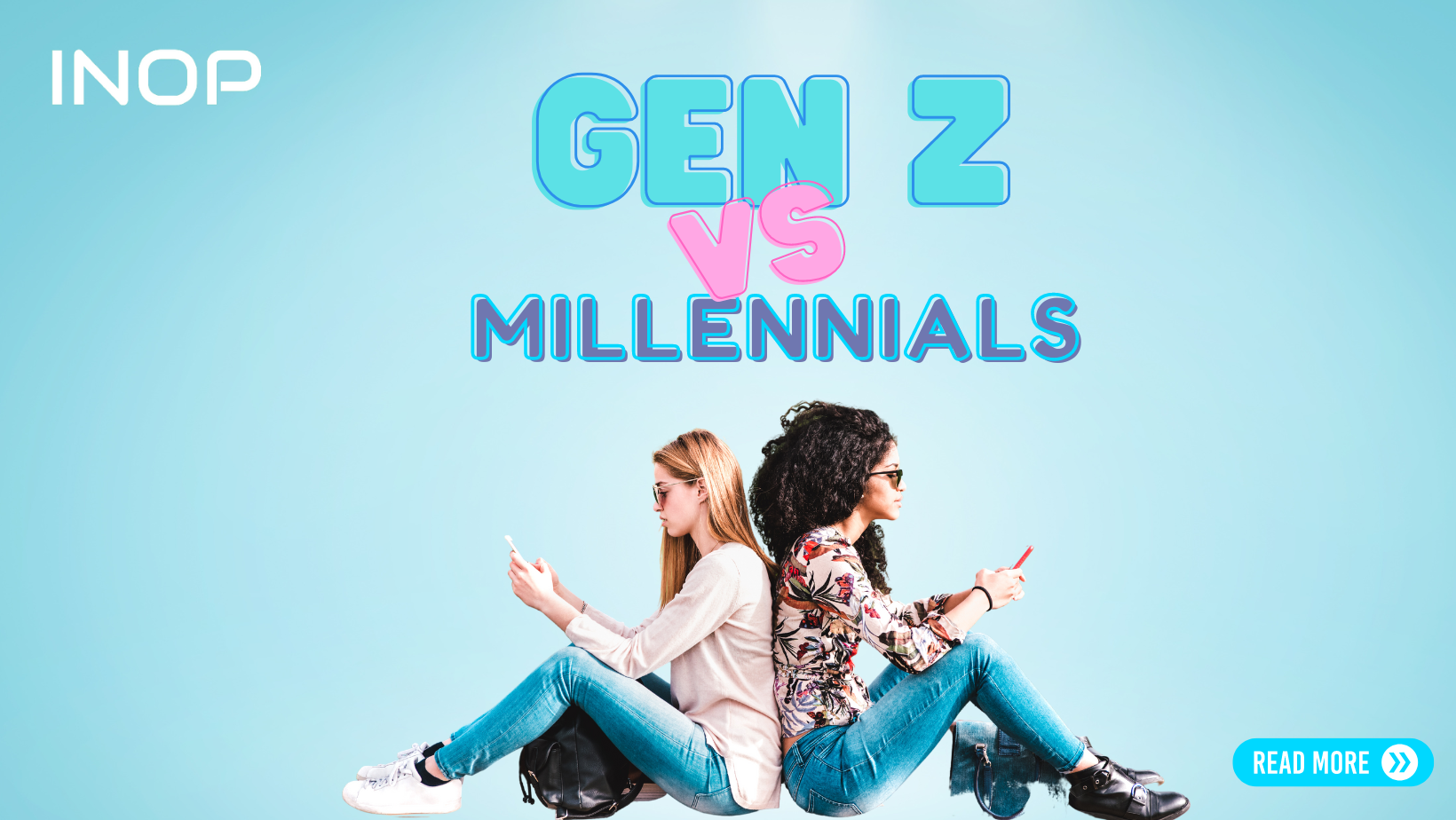
In today’s rapidly changing labor market, companies can no longer afford to treat all young professionals the same. The Gen Z workforce vs Millennials conversation is more than just a generational comparison — it’s a strategic imperative for organizations that want to attract, engage, and retain top talent in 2025 and beyond.
Both generations value purpose-driven work, strong organizational culture, and flexibility — but their approaches, expectations, and behaviors differ in meaningful ways. Understanding these distinctions is essential for designing talent strategies that work.
Let’s explore the key differences and similarities between Gen Z and Millennials — and what they mean for your recruitment, retention, and workforce-planning playbook.
Digital Fluency: Natives vs Adopters
Gen Z, born between 1997 and 2012, are true digital natives. They’ve never known a world without high-speed internet, smartphones, or instant access to information. Their comfort with digital tools gives them a natural edge in tech-driven roles, especially those involving social media, AI tools, or fast-paced platforms.
Millennials, born between 1981 and 1996, experienced the digital revolution in real time — from dial-up to mobile-first. They’re highly tech-savvy but often approach new technologies with a more analytical mindset, shaped by their exposure to both analog and digital eras.
Curious how social channels drive career decisions? Explore how social media impact job hunting for data-backed insights across generations.
Technology Habits & Tool Preferences
Both cohorts are digitally savvy, yet their toolkits differ:
| Workflow Need | Gen Z Favourites | Millennial Favourites |
| Async chat | Discord, Slack threads, Snapchat for micro‑updates | Slack channels, Microsoft Teams |
| Project tracking | Notion databases, ClickUp dashboards | Asana, Trello, Jira |
| Video | TikTok‑style Loom clips < 2 min | Zoom, Google Meet, recorded webinars |
| Learning | YouTube playlists, Coursera micro‑courses, Codecademy | LinkedIn Learning, cohort‑based courses, university certificates |
Employer tip: Offer a multi‑tool stack and let teams choose – enforcing only security and compliance boundaries.
The scale of these generational expectations is documented in depth by the Deloitte 2025 Gen Z and Millennial Survey, one of the most comprehensive annual studies on what younger workers want from employers. The survey data shows that 72% of Gen Z and millennial respondents rank work-life balance as a top priority, and nearly 9 in 10 say having a sense of purpose is essential to job satisfaction. For employers designing retention strategies that work across both generations, this is not soft data, it is the benchmark.
AI at Work: How Gen Z and Millennials Relate to Artificial Intelligence Differently
The technology table above captures tool preferences that have been relatively stable since 2022. The more significant and rapidly evolving technology distinction between these generations in 2026 is their relationship with artificial intelligence.
Gen Z has the highest AI adoption rate of any workforce generation: 57% already use generative AI in their daily work, and 75% use AI tools to develop new skills, according to Apollo Technical’s 2026 analysis. They have integrated AI tools into their workflows faster than any preceding generation, partly because they entered the workforce at the moment when these tools became accessible and partly because their learning style, self-directed and on-demand, aligns naturally with AI-assisted exploration.
But Gen Z also has the highest AI anxiety. 63% worry that AI will eliminate their jobs, and only 61% of Gen Z workers in STEM feel adequately prepared for an AI-driven workplace. This combination, high adoption alongside high anxiety, reflects a generation that is using AI tools pragmatically while simultaneously uncertain about where they stand in an AI-shaped economy.
Millennials show a different pattern. They were the generation that adopted smartphones and social media as adults, developing a more evaluative and sometimes more skeptical relationship with new technologies. The 2026 Deloitte data shows that 77% of Millennials expect generative AI to change their work within the year, a higher awareness figure than even Gen Z, but their adoption curve has been slower. They are watching closely but integrating more deliberately.
For employers, the AI dimension creates two distinct management obligations. For Gen Z, the obligation is providing AI skill development alongside psychological safety around automation uncertainty, creating environments where employees can acknowledge AI anxiety without feeling that doing so marks them as resistant to change. For Millennials, the obligation is active enablement rather than assumed capability: providing structured pathways to AI tool adoption rather than assuming that awareness translates automatically to proficiency.
Both generations, notably, value soft skills as much as technical ones in the AI era. The 2026 Deloitte data shows both cohorts increasingly prioritizing human judgment, collaboration, and communication, capabilities that AI augments but does not replace. Employers designing development programmes for either generation in 2026 should build AI fluency alongside, not instead of, the relational and reasoning capabilities that remain distinctly human.
Feedback, Mentorship & Growth Culture
When it comes to professional development, Millennials and Gen Zs approach growth from different angles — but both generations expect meaningful support. Understanding their preferences can help employers design effective mentorship and performance systems.
Millennials typically value structured mentorship, annual performance reviews, and goal-oriented development plans. Many came of age during the rise of coaching culture and respond well to clear career ladders and consistent feedback loops.
Gen Z employees, on the other hand, prefer frequent, informal feedback. Raised in a digital world of instant responses, they expect real-time recognition, transparency from leadership, and personalized learning paths. This generation thrives when managers act as coaches rather than supervisors.
💡 HR Takeaway: Build a hybrid growth culture. Offer Gen Z opportunities for peer mentorship, on-the-spot feedback, and autonomy in setting goals. At the same time, provide Millennials with structured pathways and long-term development frameworks. A flexible approach supports both retention and productivity.
Entrepreneurial Spirit and Career Mindset
When it comes to ambition, both generations want growth — but they frame it differently.
- Millennials are often associated with a search for meaning in work. They prioritize job satisfaction, alignment with values, and long-term career paths inside companies.
- Gen Z, while also purpose-driven, lean toward entrepreneurship and independence. A recent study by the Centre for Entrepreneurs found that 41 percent of Gen Z respondents want to start their own venture.
Workplace Expectations: Purpose vs Personalization
Millennials and Gen Z both want meaningful work – but they define meaningful differently.
| Generational Lens | What They Ask For | Why It Matters |
|---|---|---|
| Millennials | “Does this company’s mission align with my personal values?” | They matured during corporate‑social‑responsibility (CSR) 2.0 and expect the organization to deliver purpose at scale. |
| Gen Z | “How will this role fit my life and passions?” | Having grown up with algorithmic personalization, they want purpose and a bespoke employee experience – tailored learning paths, mental‑health days, volunteer stipends, and the freedom to shape job duties over time. |
Employer tip: Pair a top‑level mission (to satisfy Millennials) with modular career architecture that lets Gen Zers assemble projects matching their passions.
The 2026 Stability Shift: How Gen Z’s Expectations Have Evolved
The employer narratives that dominated discussions of Gen Z as recently as 2023 characterized the generation primarily through the lens of purpose, flexibility, and entrepreneurial ambition. The 2026 Deloitte data, drawn from 22,500 respondents across 44 countries, shows a meaningful evolution in those priorities.
Gen Z is now prioritizing stability, skills, and wellbeing before career advancement. The “purpose over paycheck” framing was never fully accurate, financial anxiety has always been higher in this generation than popular narratives acknowledged, but the 2026 data makes the shift unmistakable. 48% of Gen Z respondents say they do not feel financially secure, and the oldest Gen Z workers are now approaching 30, navigating housing costs, student debt, and career stage pressures that change what stability means to them.
Only 6% of Gen Z identify leadership title as their primary career goal. They are optimizing for learning velocity, balance, and growth — not the corner office or the management track. This has direct implications for how employers design career pathways for Gen Z: progression systems built around management hierarchy will not engage a generation that defines advancement primarily through skill acquisition and work quality rather than people management responsibility.
The stability shift also explains an apparent paradox in the 2026 data: Gen Z has the highest job-switching frequency of any generation, yet increasingly says it wants stability. The resolution is that Gen Z is not switching away from stability. It is switching toward it — leaving environments where it cannot see a clear development path for environments where it can. The high attrition is a signal about insufficient career architecture, not generational disloyalty.
Communication Styles at Work
Gen Z favors instant messaging and social apps (Slack, Discord, WhatsApp) for quick, informal conversation. A Deloitte survey revealed that 74 percent prefer chat-based communication over email or meetings. You can dive deeper into those findings in the Deloitte Gen Z and Millennial Survey.
Millennials use a broader mix: email, video, in-person, and chat—balancing speed with structure.
Stability, Salary, and Job Security
Financial stability and job security are top concerns for both cohorts — especially in a post-pandemic economy.
A 2023 PwC survey shows that 35 percent of Gen Z and 31 percent of Millennials are considering leaving their jobs within a year. Both generations factor economic uncertainty into career decisions, with Millennials seeking robust benefits and Gen Z prioritizing growth potential and transparent pay.
Salary transparency matters. See how to compare salary tools effectively for guidance on finding fair, competitive compensation data.
The Retention Crisis by the Numbers
The scale of the generational retention challenge is now precisely quantifiable. Gen Z workers average 1.1 years in their first jobs, compared to 1.8 years for Millennials at the same career stage, according to 2026 data from High5Test and Randstad research. Apollo Technical’s 2026 analysis found that Gen Z switches jobs 134% more frequently than Millennials at equivalent career stages. Approximately 54% of Gen Z are regularly browsing for their next role even when currently employed, what researchers describe as growth-hunting rather than disloyalty. The pattern is consistent: Gen Z leaves when it does not see development, recognition, or value alignment, and it typically does not wait long before acting on that conclusion.
For Millennials, the picture is different but not comfortable. The 2026 Deloitte data shows that engagement remains low: globally, only 23% of employees describe themselves as actively engaged, with 52% watching or seeking new jobs. The manager quality lever is the one most consistently associated with whether employees in both generations stay or leave, not compensation, not benefits, not mission. Manager quality.
The employer implication is direct: retention strategy for Gen Z and Millennials cannot be a compensation-first approach. Competitive pay is the entry fee. The differentiation happens through development velocity, manager capability, recognition quality, and the clarity of internal growth pathways.
Work-Life Balance and Flexibility
- Millennials championed flexible work and strive for work-life balance.
- Gen Z, early in their careers, still values flexibility but places greater emphasis on career acceleration and supportive culture.
To accommodate both, organizations should offer adaptable schedules and clearly mapped development paths.
Digital Mental Health & Burnout Awareness
Burnout isn’t just a buzzword — it’s a generational concern, especially for digital-native employees. As workplaces become more tech-driven, the mental health challenges faced by Millennials and Gen Z are evolving in noticeable ways.
Gen Z workers are more vocal about mental health awareness, workplace anxiety, and the need for psychological safety. They’re also more likely to expect employers to provide wellness programs, flexible hours, and boundaries around “always-on” digital culture.
Millennials, while more experienced in navigating hybrid work, often face burnout from prolonged multitasking and constant connectivity. Many have normalized hustle culture but are now re-evaluating their relationship with work-life balance.
💡 HR Takeaway: Proactively support digital well-being. Introduce no-meeting days, mental health days, and burnout prevention training. Normalize open conversations around emotional health. Prioritizing wellness is not just a perk — it’s a retention strategy for younger generations.
Recognition as a Mental Health and Retention Driver: The 2026 Data
The connection between recognition and mental wellbeing in younger workers is now precisely quantifiable. Deloitte’s 2025 Gen Z and Millennial Survey found that 61% of Gen Z workers report good mental wellbeing when satisfied with the recognition they receive at work, compared to only 41% when dissatisfied, a 20 percentage point gap attributable to a single variable. No other workplace factor in the same dataset produced a gap of this magnitude.
This finding has a direct retention implication. Rewordin’s 2026 Gen Z workplace statistics analysis found that financial insecurity and lack of recognition are the two most consistent predictors of active job searching in Gen Z. Given that 54% of Gen Z are already regularly browsing for their next role while in their current position, recognition is not a soft cultural nice-to-have. It is a retention mechanism with a measurable impact on the probability of a Gen Z employee staying through their second year.
For employers, the recognition design implication is specific: generic recognition does not produce the wellbeing effect. The research consistently shows that naming the exact behavior being recognized, providing recognition close in time to the behavior, and ensuring the recognition comes from someone whose opinion the employee values are the three variables that determine whether recognition has a lasting effect. Annual awards and end-of-year bonuses satisfy neither the timing nor the specificity requirements. Manager-level, real-time, behavior-specific recognition does.
Learning Styles: Self-Guided vs Structured
- Gen Z loves self-directed, on-demand content — YouTube tutorials, MOOCs, micro-credentials.
- Millennials still value formal courses and cohort-based programs, though many embrace blended learning.
Diversity, Equity, and Inclusion
Both groups advocate for DEI, but Gen Z demands visible, measurable action. According to McKinsey, nearly 48 percent of Gen Z employees believe companies must prioritize DEI to earn their loyalty.
What This Means for Employers
| Area | Gen Z | Millennials |
|---|---|---|
| Tech Adoption | Digital natives | Digital adopters |
| Career Mindset | Entrepreneurial, rapid growth | Purpose-driven, stable growth |
| Preferred Communication | Instant messaging, video snippets | Multi-channel blend |
| Learning Style | YouTube, micro-learning | Structured, blended |
| DEI Expectations | Non-negotiable, real-time proof | Important, progress-oriented |
Planning headcount around these evolving expectations? Discover AI for workforce planning to align hiring, retention, and succession strategies with real-time talent analytics.
Generational Workforce Dynamics in PE Portfolio Companies
For private equity operating partners, the Gen Z and Millennial workforce composition shift creates specific value creation and retention risks that generic HR guides do not address. Most PE-backed portfolio companies acquired between 2015 and 2022 were staffed and managed with assumptions calibrated to a workforce that was predominantly Millennial. By 2026, the Gen Z cohort in those same organizations has grown substantially, often representing 30% or more of individual contributor headcount in customer-facing, technical, and operational roles. The management practices, performance systems, and career pathways installed during those acquisitions may not be calibrated to retain this newer cohort.
The retention risk is financially quantifiable. Gen Z’s average early-career tenure is 1.1 years. In a portfolio company with 200 employees where 40% are Gen Z individual contributors, an industry-average Gen Z attrition rate produces approximately 35 departures per year in that cohort alone. At an average replacement cost of 75% of annual salary for individual contributor roles, this represents $1.75 million in annual avoidable cost, before accounting for the productivity gap during vacancies and the institutional knowledge lost with early departures.
The development architecture lever is the most cost-efficient response. Gen Z leaves when it cannot see a clear development path. Portfolio companies that invest in transparent career progression frameworks, skill-based advancement criteria, and frequent manager-employee development conversations consistently outperform on Gen Z retention without requiring compensation increases that exceed budget parameters. The investment is primarily in management capability and process design rather than compensation.
For operating partners conducting workforce due diligence, the generational composition of the acquisition target’s employee base is worth specific attention: a target where Gen Z represents more than 35% of headcount and where no structured early-career development programme exists carries meaningful attrition risk that should be modeled into the hold period workforce planning assumptions. INOP’s strategic workforce planning platform supports operating partners in quantifying this risk and building retention-optimized workforce plans. Book a demo to see how INOP models generational workforce risk in PE portfolio environments.
Generational Collaboration: Challenges & Opportunities
Common friction points
- Communication tone – Gen Z’s emoji‑rich, rapid‑fire style can feel abrupt to Millennials.
- Pace of iteration – Gen Z prefers ship‑fast‑fix‑fast; Millennials often want a clearer roadmap first.
- Feedback cadence – Gen Z craves real‑time micro‑feedback; Millennials expect scheduled reviews.
Bridging tactics
- Cross‑mentorship pods: Pair Gen Z tech mentors with Millennial career coaches.
- Shared OKRs: Align both groups around outcome‑based goals, not activity.
- Inclusive rituals: Rotate meeting facilitation; alternate communication tools (Slack huddles one week, structured agenda meetings the next).
Outcome → Teams leverage Gen Z’s speed plus Millennials’ strategic depth.
Conclusion: Bridging Generations for a Future-Ready Workforce
Success in the modern workplace boils down to recognizing, and effectively integrating, the complementary strengths of Gen Z and Millennials. Tailor communication, development, and compensation to their unique expectations, and you’ll build an engaged, future-ready workforce.
Looking Ahead: Gen Alpha Is Entering the Workforce
The generational workforce conversation of 2026 has a third dimension that forward-looking HR leaders are already beginning to address. The oldest members of Gen Alpha, born from 2010 onward, are beginning to appear in summer internships and vocational programmes. By 2028, they will be entering the workforce in meaningful numbers.
Gen Alpha’s relationship with technology is categorically different from Gen Z’s. Where Gen Z grew up with smartphones as a given reality, Gen Alpha is the first cohort to grow up with AI as a routine tool, not a novelty, not a threat, but an ambient collaborator embedded in how they learn, create, and communicate. Approximately 46% of Gen Alpha teenagers already use AI as a primary search and research tool, and around 39% use it for creative and coding work. To an 18-year-old entering the workforce in 2028, a large language model will be as unremarkable as Google was to a Millennial entering the workforce in 2005.
For organizations still working through how to manage a multigenerational workforce of Baby Boomers, Gen X, Millennials, and Gen Z simultaneously, the near-term arrival of Gen Alpha is a planning horizon worth building into workforce strategy now. The AI fluency gap between Gen Alpha and even Gen Z will require yet another recalibration of how technology training, feedback cadence, and knowledge transfer are designed in the workplace.
Frequently Asked Questions
Which generation is more entrepreneurial?
Gen Z shows stronger entrepreneurial intent, with 41 percent looking to launch businesses, compared to lower percentages in previous generations.
How do Gen Z and Millennials differ in communication preferences?
Gen Z leans heavily on instant messaging and social platforms, whereas Millennials prefer a mix of email, chat, and face-to-face communication.
Is salary transparency equally important to both generations?
Yes, but Gen Z tends to prioritize transparent pay ranges earlier in the hiring process, while Millennials focus on total compensation and long-term growth.
How can employers meet both generations’ expectations?
Adopt flexible work policies, provide clear career paths, invest in continuous learning, and use data-driven tools like AI-powered workforce planning to tailor strategies.