Have you ever wondered why some organizations struggle to keep pace with change even when they have the right number of employees? The answer often lies in a skill gap, a mismatch between the skills employees possess and the skills businesses actually need. In today’s rapidly shifting workplace, understanding and addressing this gap isn’t just an HR concern; it’s a direct driver of growth, competitiveness, and long-term survival.
In this article, we’ll dive into the meaning of skill gaps, why they matter, how to identify them, and (most importantly) how to close them effectively. Whether your organization is facing a workforce skill shortage or grappling with a competency gap, this guide will equip you with strategies to future-proof your workforce and fuel business success.
What Is a Skill Gap?
At its core, a skill gap is the difference between the skills your workforce currently has and the skills needed to perform jobs effectively. This doesn’t necessarily mean employees are underqualified, it often reflects how industries, technologies, and business demands evolve faster than employee development programs can keep up.
For example:
A manufacturing company adopting robotics may find its team lacks programming or automation skills.
A retail business embracing e-commerce might realize its sales team needs digital marketing expertise.
The skill gap meaning goes beyond technical ability. It also includes soft skills such as leadership, communication, adaptability, and problem-solving, qualities that are increasingly in demand.
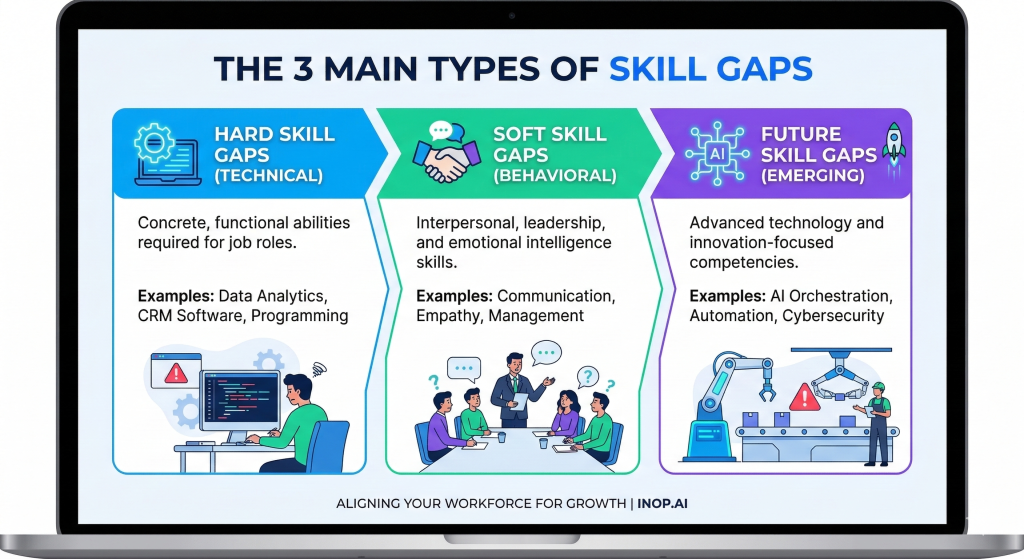
The 3 Main Types of Skill Gaps (With Examples)
Not all skill gaps are created equal. To effectively close them, HR leaders must first understand which type of gap they are dealing with. Skill gaps generally fall into three categories:
1. Hard Skill Gaps (Technical)
This is the most visible type of gap, occurring when employees lack the specific, measurable technical abilities required to perform a task.
- Example: A marketing team transitioning to a new CRM software but lacking the data analytics skills to pull custom reports.
2. Soft Skill Gaps (Behavioral)
Soft skill gaps are harder to measure but often more damaging. These relate to how employees interact, communicate, and solve problems.
- Example: A highly skilled software engineer is promoted to a management position but lacks the conflict resolution and empathy skills needed to lead a team effectively.
3. Future Skill Gaps (Emerging)
These are gaps that don’t necessarily hurt the business today, but will become critical liabilities in the near future due to rapid technological shifts. To stay ahead of these blind spots, HR leaders must proactively map the emerging skills of 2030 to ensure their teams are prepared for AI and automation.
- Example: A financial services firm that currently relies on manual Excel reporting, facing a future gap as the industry moves entirely toward AI-driven predictive analytics.
Why Skill Gaps Matter for Business Growth
Skill gaps aren’t just HR challenges, they impact the entire business ecosystem.
- Reduced productivity: Employees may take longer to complete tasks if they lack the necessary skills.
- Increased costs: Businesses spend more on overtime, external consultants, or inefficient processes.
- Lower competitiveness: Companies unable to innovate quickly risk falling behind competitors.
- Employee dissatisfaction: Workers who feel unprepared for evolving roles may experience burnout or disengagement.
According to a World Economic Forum study, 50% of employees will require reskilling by 2025, highlighting just how urgent this issue is for growth-oriented organizations.
Individual vs. Organizational Skill Gaps
When analyzing talent shortages, it is crucial to distinguish between an individual gap and an organizational gap, as they require entirely different solutions.
- An Individual Skill Gap occurs when a specific employee lacks the capabilities required for their specific role. This is usually solved through targeted training, mentorship, or performance improvement plans (PIPs).
- An Organizational Skill Gap is a systemic issue where the company as a whole lacks a critical capability needed to stay competitive in the market. For instance, if a retail company has zero employees who understand e-commerce logistics, that is an organizational gap. This cannot be solved by training one person; it requires a macro strategy involving reskilling programs, strategic hiring, or corporate restructuring.
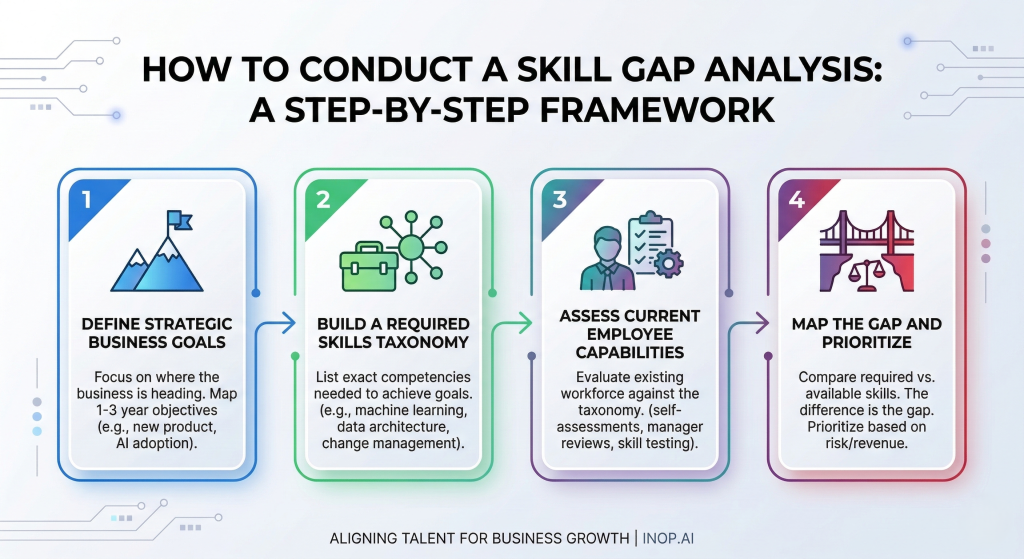
How to Conduct a Skill Gap Analysis: A Step-by-Step Framework
Detecting a skill gap requires a structured, data-driven analysis rather than relying on manager assumptions. Here is a proven, step-by-step framework to conduct a skill gap analysis in your organization:
Step 1: Define Your Strategic Business Goals
You cannot identify missing skills if you don’t know where the business is heading. Start by mapping your company’s 1-to-3-year objectives. Are you launching a new product? Expanding globally? Adopting AI?
Step 2: Build a Required Skills Taxonomy
Based on your goals, list the exact competencies needed to achieve them. This creates a benchmark. For example, if your goal is to adopt AI, your taxonomy might require skills in machine learning, data architecture, and change management.
Step 3: Assess Current Employee Capabilities
Evaluate your existing workforce against the taxonomy you just built. You can do this through:
- Self-assessments: Asking employees to rate their own proficiencies.
- Manager reviews: Gathering observational data on performance.
- Skill testing: Using formal assessments to verify technical capabilities.
Step 4: Map the Gap and Prioritize
Compare the results of Step 2 (what you need) with Step 3 (what you have). The difference is your skill gap. Because you cannot fix everything at once, prioritize closing the gaps that pose the most immediate risk to your revenue or operational stability.
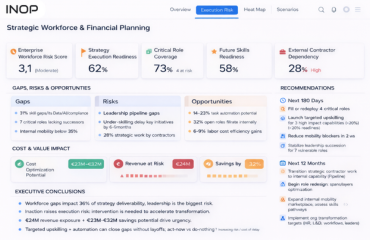
Pro Tip: Implementing a Strategic Workforce Planning tool at this stage can automate this entire process. AI-driven platforms can instantly map your existing talent against future needs, giving HR leaders real-time visibility into critical shortages.
Closing Skill Gaps: Effective Strategies for HR Leaders
Upskilling Existing Employees
Invest in continuous learning and development programs. For example, create tailored training paths using e-learning platforms, workshops, or mentorship. Upskilling boosts employee morale and reduces turnover while addressing gaps internally.
Reskilling for New Roles
Sometimes, entirely new roles emerge. For instance, cybersecurity analysts or sustainability officers didn’t exist in many organizations a decade ago. Reskilling existing employees for these roles is often more efficient than external hiring.
Hiring to Fill Critical Gaps
When urgent needs arise, external recruitment is essential. However, be strategic, hire for roles that cannot be developed internally in the short term.
Partnering with Educational Institutions
Collaborate with universities, technical schools, and bootcamps to design training programs aligned with your industry needs. This helps create a future-ready talent pipeline.
Building a Culture of Continuous Learning
Closing skill gaps isn’t a one-time project. Encourage a growth mindset by rewarding learning efforts and embedding professional development into career progression.
Linking Skill Gaps to Business Growth
Closing skill gaps directly fuels growth in multiple ways:
- Innovation acceleration: Skilled employees adopt and leverage new technologies faster.
- Customer satisfaction: Teams with up-to-date expertise deliver better products and services.
- Agility: Organizations with strong reskilling frameworks adapt quicker to industry disruptions.
- Cost efficiency: Addressing gaps internally reduces reliance on costly external consultants.
In fact, Deloitte reports that companies with strong learning cultures are 92% more likely to innovate and 52% more productive than peers without them.
Common Challenges in Closing Skill Gaps
While strategies are clear, execution can be challenging.
- Budget constraints: Training programs require investment.
- Resistance to change: Employees may fear new technologies or roles.
- Rapid skill obsolescence: By the time training is complete, skills may already be outdated.
- Inconsistent measurement: Without metrics, it’s difficult to track progress or ROI.
Overcoming these requires leadership commitment, continuous monitoring, and adaptability.
Conclusion
Skill gaps are no longer optional to address, they are central to whether a business thrives or struggles in the face of rapid change. By identifying, measuring, and closing skill gaps, organizations not only solve today’s problems but also prepare for tomorrow’s opportunities.
HR leaders must focus on a blend of upskilling, reskilling, strategic hiring, and continuous learning cultures to ensure sustainable business growth. The payoff is immense: a more adaptable workforce, stronger competitiveness, and an organization that thrives in uncertainty.
Are you currently facing a skill gap challenge in your organization? Share your thoughts in the comments or explore our related resources to learn more about closing gaps effectively.
FAQs About Skill Gaps
What is a skill gap in simple terms?
A skill gap is the difference between the skills employees currently have and the skills a business needs to meet its objectives.
How do skill gaps affect business growth?
Skill gaps reduce productivity, slow innovation, increase costs, and may result in dissatisfied employees, all of which hinder business growth.
What is the difference between a skill gap and a competency gap?
A skill gap typically refers to technical or specific abilities, while a competency gap includes broader capabilities like leadership, adaptability, and communication.
What industries face the largest workforce skill shortage?
Sectors like healthcare, technology, and advanced manufacturing often experience the highest shortages due to rapid innovation and evolving customer demands.
What’s the most effective way to close a skill gap?
A mix of upskilling, reskilling, and strategic hiring works best. Building a culture of continuous learning ensures long-term success.